
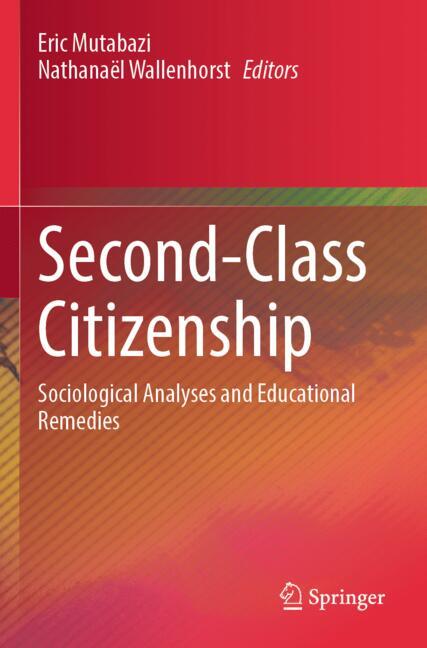
Second-Class Citizenship
☆☆☆☆☆
(0 opinii)
Najniższa cena (z dostawą)
21 478,00 JPY
Typowa cena2 599,27 PLN
Najniższa (90 dni)117,69 PLN
Liczba ofert6
Ostatnia aktualizacja1 tydzień temu
Historia ceny (90 dni)
Pełna historia
2026-08-08
2026-08-15
| Zaktualizowano | Cena |
|---|---|
| 2026-08-08 | 117,69 |
| 2026-08-15 | 117,69 |
| Sprzedawca | Cena produktu | Dostawa | Razem | Dostępność | Aktualizacja | |
|---|---|---|---|---|---|---|
| SP SpringerNatureLink Shop INT | 21 449,00 JPY | 29,00 JPY | 21 478,00 JPY | Dostępny | 5 dni temu | Zobacz ofertę |
| SP Springer Nature Author | 21 449,00 JPY | 0 zł | 21 449,00 JPY | Dostępny | 1 tydzień temu | Zobacz ofertę |
| SP SpringerNatureLink Shop INT | 149,99 USD | 29,00 USD | 178,99 USD | Dostępny | 5 dni temu | Zobacz ofertę |
| SP SpringerNatureLink Shop INT | 169,99 USD | 0 zł | 169,99 USD | Dostępny | 5 dni temu | Zobacz ofertę |
| SP SpringerNatureLink Shop INT | 169,99 USD | 0 zł | 169,99 USD | Dostępny | 5 dni temu | Zobacz ofertę |
| SP SpringerNatureLink Shop INT | 177,00 EUR | 19,00 EUR | 196,00 EUR | Dostępny | 5 dni temu | Zobacz ofertę |
Ceny i dostępność mogą ulec zmianie. Ostatnia aktualizacja: 08.08.2026 23:28.
0,0
☆☆☆☆☆
0 opinii
5★
0%
4★
0%
3★
0%
2★
0%
1★
0%
Opinie o produkcie
Brak opinii — bądź pierwszy!
A number of features of the contemporary period are preventing people from exercising their citizenship: the acceleration and permanent change in the conditions shaping habitability of planet Earth, the digital and techno-scientific revolution, the rise of religious and political radicalisation, the explosion of social inequalities, the hegemony of the economic drive to maximise individual interests, etc. For many individuals, citizenship appears to be prevented at the first hurdle. What is more, though officially or legally, it is not possible to speak of second-class citizenship-- so what can be done when the actors themselves use such terminology? There is something essential here which must be taken into account as a basis for thinking about the social, its inequalities and its injustices. The authors of this book propose the notion of 'second-class citizenship' as a way of thinking about the scale of contemporary social and political inequalities. In view of this observation, the contributors outline a movement based on the conviction that education is the repository of the power to prepare for the future. How can we learn to build a shared world together and overcome the obstacles that prevent us from doing so? How can we learn new habits of relationships marked by responsibility and hospitality? The collective reflection in this book lends credence to the way in which players talk about their experience, even experiencing differences in their ability to participate in the mechanisms of power. This book presents empirical studies and conceptual tools for thinking about the impact of economic factors on the ways in which citizens participate in the decisions of power. This book is particularly suited for educators as well as policy-makers and researchers.
Podobne produkty
 50 Years of Philosophy and Medicine
od $107.30
50 Years of Philosophy and Medicine
od $107.30
 Understanding Cybersecurity Law and Digital Privacy
od $122.63
Understanding Cybersecurity Law and Digital Privacy
od $122.63
 Decisions in International Trade and Logistics
od $122.63
Decisions in International Trade and Logistics
od $122.63
 Advances in Economic Measurement
od $122.63
Advances in Economic Measurement
od $122.63
 Nanomaterials
od $137.96
Nanomaterials
od $137.96
 Sustainable Scaffolds-based Strategies in Tissue Engineering and Regenerative Medicine
od $162.87
Sustainable Scaffolds-based Strategies in Tissue Engineering and Regenerative Medicine
od $162.87
 Narratives in Educational Research
od $162.87
Narratives in Educational Research
od $162.87
 Environmental Biology of the Young Chinese Sturgeon
od $210.78
Environmental Biology of the Young Chinese Sturgeon
od $210.78