
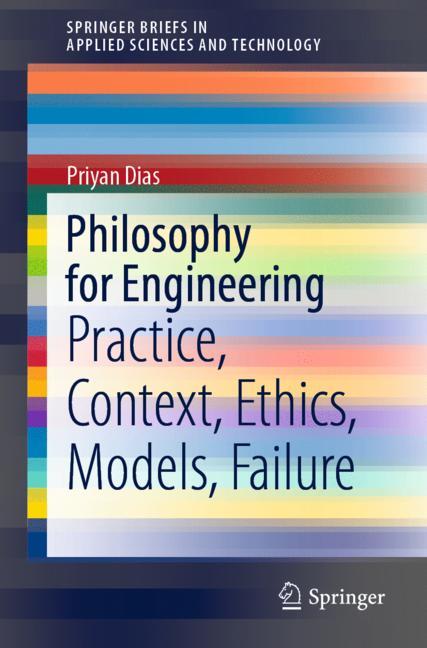
Philosophy for Engineering
☆☆☆☆☆
(0 opinii)
Najniższa cena (z dostawą)
39,55 EUR
Typowa cena3 449,10 PLN
Najniższa (90 dni)35,20 PLN
Liczba ofert2
Ostatnia aktualizacja1 tydzień temu
| Sprzedawca | Cena produktu | Dostawa | Razem | Dostępność | Aktualizacja | |
|---|---|---|---|---|---|---|
| SP SpringerNatureLink Shop INT | 39,55 EUR | 0 zł | 39,55 EUR | Dostępny | 6 dni temu | Zobacz ofertę |
| SP Springer Nature Author | 6 863,00 JPY | 29,00 JPY | 6 892,00 JPY | Dostępny | 1 tydzień temu | Zobacz ofertę |
Ceny i dostępność mogą ulec zmianie. Ostatnia aktualizacja: 08.08.2026 23:11.
EAN
9789811512711
Springer Nature
0,0
☆☆☆☆☆
0 opinii
5★
0%
4★
0%
3★
0%
2★
0%
1★
0%
Opinie o produkcie
Brak opinii — bądź pierwszy!
This book highlights the unique need for philosophy among engineers, which stems from issues regarding their knowledge (epistemology), role or being (ontology) and influence (ethics). It discusses practice, context, ethics, models and failure as key aspects of engineering, and provides an easy but essential introduction to philosophy for engineers by presenting four key philosophers and linking them to these aspects: Karl Popper (failure), Thomas Kuhn (models), Michael Polanyi (practice & ethics) and Martin Heidegger (context & ethics). Popper, Kuhn and Polanyi are philosophers of science (epistemologists) who have challenged the view that science is a ‘cool, detached’ discipline, since it also depends on human imagination (Popper), consensus (Kuhn) and judgment plus artistry (Polanyi); factors that are central to engineering. Heidegger (an ontologist) critiqued technology on the one hand (ethics), but also stressed the importance of ‘doing’ over ‘knowing,’ thus ‘authenticating’ the highly pragmatic engineering profession. Science is the ‘core’ component of engineering, which is overlaid by a variety of heuristics . Practice-based knowledge can be formalized, with artificial intelligence (AI) offering a valuable tool for engineering, just as mathematics has done for science. The book also examines systems thinking in engineering. Featuring numerous diagrams, tables and examples throughout, the book is easily accessible to engineers.
Podobne produkty
 50 Years of Philosophy and Medicine
od $107.30
50 Years of Philosophy and Medicine
od $107.30
 Understanding Cybersecurity Law and Digital Privacy
od $122.63
Understanding Cybersecurity Law and Digital Privacy
od $122.63
 Decisions in International Trade and Logistics
od $122.63
Decisions in International Trade and Logistics
od $122.63
 Advances in Economic Measurement
od $122.63
Advances in Economic Measurement
od $122.63
 Nanomaterials
od $137.96
Nanomaterials
od $137.96
 Sustainable Scaffolds-based Strategies in Tissue Engineering and Regenerative Medicine
od $162.87
Sustainable Scaffolds-based Strategies in Tissue Engineering and Regenerative Medicine
od $162.87
 Narratives in Educational Research
od $162.87
Narratives in Educational Research
od $162.87
 Environmental Biology of the Young Chinese Sturgeon
od $210.78
Environmental Biology of the Young Chinese Sturgeon
od $210.78