
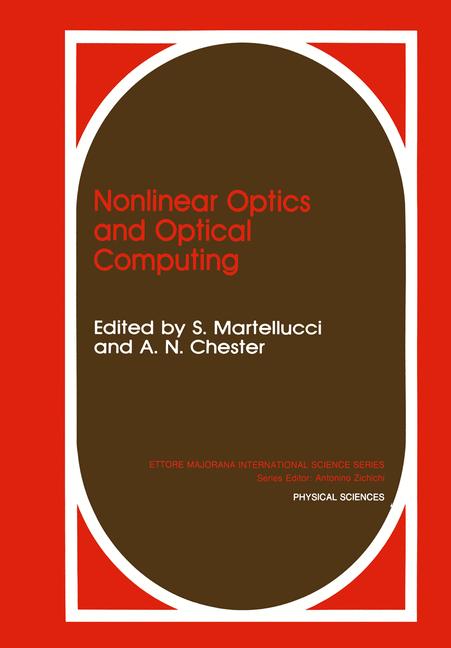
Nonlinear Optics and Optical Computing
☆☆☆☆☆
(0 opinii)
Najniższa cena (z dostawą)
7 178,00 JPY
Typowa cena491,72 PLN
Najniższa (90 dni)44,99 PLN
Liczba ofert7
Ostatnia aktualizacja1 tydzień temu
Historia ceny (90 dni)
Pełna historia
2026-08-08
2026-08-15
| Zaktualizowano | Cena |
|---|---|
| 2026-08-08 | 49,99 |
| 2026-08-14 | 44,99 |
| 2026-08-15 | 51,99 |
| Sprzedawca | Cena produktu | Dostawa | Razem | Dostępność | Aktualizacja | |
|---|---|---|---|---|---|---|
| SP SpringerNatureLink Shop INT | 7 149,00 JPY | 29,00 JPY | 7 178,00 JPY | Dostępny | 5 dni temu | Zobacz ofertę |
| SP Springer Nature Author | 7 149,00 JPY | 25,00 JPY | 7 174,00 JPY | Dostępny | 1 tydzień temu | Zobacz ofertę |
| SP SpringerNatureLink Shop INT | 49,99 USD | 0 zł | 49,99 USD | Dostępny | 5 dni temu | Zobacz ofertę |
| SP SpringerNatureLink Shop INT | 49,99 USD | 15,00 USD | 64,99 USD | Dostępny | 5 dni temu | Zobacz ofertę |
| SP SpringerNatureLink Shop INT | 54,99 USD | 15,00 USD | 69,99 USD | Dostępny | 5 dni temu | Zobacz ofertę |
| SP SpringerNatureLink Shop INT | 54,99 USD | 0 zł | 54,99 USD | Dostępny | 5 dni temu | Zobacz ofertę |
| SP SpringerNatureLink Shop INT | 59,00 EUR | 0 zł | 59,00 EUR | Dostępny | 5 dni temu | Zobacz ofertę |
Ceny i dostępność mogą ulec zmianie. Ostatnia aktualizacja: 08.08.2026 23:12.
0,0
☆☆☆☆☆
0 opinii
5★
0%
4★
0%
3★
0%
2★
0%
1★
0%
Opinie o produkcie
Brak opinii — bądź pierwszy!
The conference "Nonlinear Optics and Optical Computing" was held May 11-19, 1988 in Erice, Sicily. This was the 13th conference organized by the International School of Quantum Electronics, under the auspices of the "Ettore Majorana" Center for Scientific Culture. This volume contains both the invited and contributed papers presented at the conference, providing tutorial background, the latest research results, and future directions for the devices, structures and architectures of optical computing. The invention of the transistor and the integrated circuit were followed by an explosion of application as ever faster and more complex microelectronics chips became available. The information revolution occa sioned by digital computers and optical communications is now reaching the limits of silicon semiconductor technology, but the demand for faster com putation is still accelerating. The fundamental limitations of information processing today derive from the performance and cost of three technical factors: speed, density, and software. Optical computation offers the potential for improvements in all three of these critical areas: Speed is provided by the transmission of impulses at optical veloc ities, without the delays caused by parasitic capacitance in the case of conventional electrical interconnects. Speed can also be achieved through the massive parallelism characteristic of many optical computing architec tures; Density can be provided in optical computers in two ways: by high spatial resolution, on the order of wavelengths of light, and by computa tion or interconnection in three dimensions.
Podobne produkty
 50 Years of Philosophy and Medicine
od $107.30
50 Years of Philosophy and Medicine
od $107.30
 Understanding Cybersecurity Law and Digital Privacy
od $122.63
Understanding Cybersecurity Law and Digital Privacy
od $122.63
 Decisions in International Trade and Logistics
od $122.63
Decisions in International Trade and Logistics
od $122.63
 Advances in Economic Measurement
od $122.63
Advances in Economic Measurement
od $122.63
 Nanomaterials
od $137.96
Nanomaterials
od $137.96
 Sustainable Scaffolds-based Strategies in Tissue Engineering and Regenerative Medicine
od $162.87
Sustainable Scaffolds-based Strategies in Tissue Engineering and Regenerative Medicine
od $162.87
 Narratives in Educational Research
od $162.87
Narratives in Educational Research
od $162.87
 Environmental Biology of the Young Chinese Sturgeon
od $210.78
Environmental Biology of the Young Chinese Sturgeon
od $210.78