
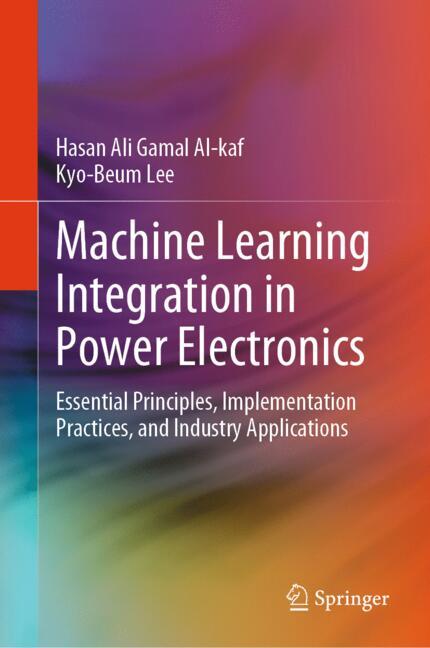
Machine Learning Integration in Power Electronics
☆☆☆☆☆
(0 opinii)
Najniższa cena (z dostawą)
19 476,00 JPY
Typowa cena3 374,67 PLN
Najniższa (90 dni)159,00 PLN
Liczba ofert2
Ostatnia aktualizacja1 tydzień temu
Historia ceny (90 dni)
Pełna historia
2026-08-08
2026-08-15
| Zaktualizowano | Cena |
|---|---|
| 2026-08-08 | 159,00 |
| 2026-08-15 | 160,50 |
| Sprzedawca | Cena produktu | Dostawa | Razem | Dostępność | Aktualizacja | |
|---|---|---|---|---|---|---|
| SP Springer Nature Author | 19 447,00 JPY | 29,00 JPY | 19 476,00 JPY | Dostępny | 1 tydzień temu | Zobacz ofertę |
| SP SpringerNatureLink Shop INT | 160,50 EUR | 25,00 EUR | 185,50 EUR | Dostępny | 6 dni temu | Zobacz ofertę |
Ceny i dostępność mogą ulec zmianie. Ostatnia aktualizacja: 08.08.2026 23:32.
EAN
9789819538454
Springer Nature
0,0
☆☆☆☆☆
0 opinii
5★
0%
4★
0%
3★
0%
2★
0%
1★
0%
Opinie o produkcie
Brak opinii — bądź pierwszy!
This book provides a comprehensive guide for integrating machine learning techniques to enhance power electronic systems, with a focus on real-time applications, fault detection, and advanced control systems. Machine learning applications in power electronics delve into the transformative potential of machine learning in the field of power electronics. It is designed for professionals, researchers, and students who seek to leverage machine learning to address complex challenges and optimize performance in power electronics. The book explores the synergies between machine learning and power electronics, highlighting the importance of these technologies in industries such as renewable energy, electric vehicles, and industrial automation. It provides practical insights into implementing machine learning solutions, covering essential concepts, algorithms, workflows, and real-time deployment. Readers can gain valuable knowledge on integration strategies and advanced applications, including control of permanent magnet synchronous motor (PMSM) drives and fault detection in neutral point clamped (NPC) inverters. Additionally, the book offers best practices for selecting appropriate machine learning methods, such as integrating physics-informed models, utilizing lightweight neural networks, ensuring transparency with explainable methods, and employing conformal prediction for reliable outcomes. Beyond practical guidance, this book presents innovative ideas from recent literature, showcasing cutting-edge applications and future research directions. With its practical focus, detailed methodologies, and forward-looking insights, this book is an essential resource for anyone looking to harness the power of machine learning to drive innovation and improve system performance in power electronics.
Podobne produkty
 50 Years of Philosophy and Medicine
od $107.30
50 Years of Philosophy and Medicine
od $107.30
 Understanding Cybersecurity Law and Digital Privacy
od $122.63
Understanding Cybersecurity Law and Digital Privacy
od $122.63
 Decisions in International Trade and Logistics
od $122.63
Decisions in International Trade and Logistics
od $122.63
 Advances in Economic Measurement
od $122.63
Advances in Economic Measurement
od $122.63
 Nanomaterials
od $137.96
Nanomaterials
od $137.96
 Sustainable Scaffolds-based Strategies in Tissue Engineering and Regenerative Medicine
od $162.87
Sustainable Scaffolds-based Strategies in Tissue Engineering and Regenerative Medicine
od $162.87
 Narratives in Educational Research
od $162.87
Narratives in Educational Research
od $162.87
 Environmental Biology of the Young Chinese Sturgeon
od $210.78
Environmental Biology of the Young Chinese Sturgeon
od $210.78