
Low Back Pain and Sciatica
☆☆☆☆☆
(0 opinii)
Najniższa cena (z dostawą)
73,10 EUR
Typowa cena1 172,00 PLN
Najniższa (90 dni)58,10 PLN
Liczba ofert3
Ostatnia aktualizacja1 tydzień temu
Historia ceny (90 dni)
Pełna historia
2026-08-08
2026-08-15
| Zaktualizowano | Cena |
|---|---|
| 2026-08-08 | 58,10 |
| 2026-08-15 | 58,10 |
| Sprzedawca | Cena produktu | Dostawa | Razem | Dostępność | Aktualizacja | |
|---|---|---|---|---|---|---|
| SP SpringerNatureLink Shop INT | 58,10 EUR | 15,00 EUR | 73,10 EUR | Dostępny | 6 dni temu | Zobacz ofertę |
| SP SpringerNatureLink Shop INT | 10 009,00 JPY | 15,00 JPY | 10 024,00 JPY | Dostępny | 6 dni temu | Zobacz ofertę |
| SP Springer Nature Author | 10 009,00 JPY | 29,00 JPY | 10 038,00 JPY | Dostępny | 1 tydzień temu | Zobacz ofertę |
Ceny i dostępność mogą ulec zmianie. Ostatnia aktualizacja: 08.08.2026 21:18.
EAN
9783031785368
Springer Nature
0,0
☆☆☆☆☆
0 opinii
5★
0%
4★
0%
3★
0%
2★
0%
1★
0%
Opinie o produkcie
Brak opinii — bądź pierwszy!
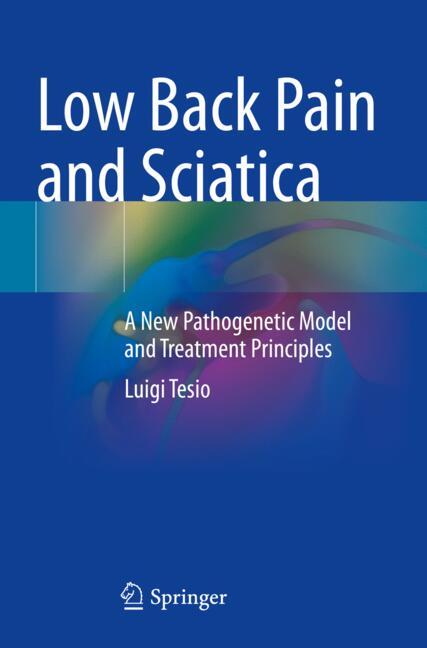
Chronic benign “back pain “, with or without sciatica, is a descriptive diagnosis hiding the mechanisms leading to this symptom. The literature still refers to it as a “non-specific” disease. Not surprisingly, both conservative and invasive treatments are inconsistent and highly subjective. The book aims to highlight the main pathogenetic mechanisms leading to pain based on a thorough analysis of the lumbar spine anatomy and mechanics (including its vascular content) and a selection of published evidence converging towards an original integrated model. The result is a downgrading of back pain from a “non-specific” disease to a symptom and clarifying the underlying causes. The book presents an original pathogenetic model named CoVIn (Compressive-Venous-Inflammatory). The cornerstones of the model are a) the compression of nerve endings within the narrow spinal canal from disc herniation or arthritic spurs, b) local inflammation caused by discal material and/or local phlebitis and -most importantly- c) venous congestion of the Batson (epidural) plexus. The model explains the diversity of the clinical pictures: e.g., pain at rest vs. pain during spinal loading; pain unrelated to the severity of MRI or CT imaging; changes of pain (spontaneous or caused by treatments) with no changes in imaging, and others. Consistent with the model, a few physiotherapy treatments are proposed to widen the spinal canal and decongest local veins. These are “flexor” lumbar exercises, water exercises, and—first choice—Active Lumbar Traction (former “Autotraction”). Treatments targeting pain become a second-choice approach. Surgery is shown to be rational only after conservative treatments fail. Other rare causes of back pain, unrelated to the CoVin model, are overviewed and discussed. The book will interest Physical Medicine and Rehabilitation Physicians, Physiotherapists, Orthopedic and Trauma Surgeons, Neurosurgeons, Rheumatologists, Neurologists, and Family physicians.
Podobne produkty
 50 Years of Philosophy and Medicine
od $107.30
50 Years of Philosophy and Medicine
od $107.30
 Understanding Cybersecurity Law and Digital Privacy
od $122.63
Understanding Cybersecurity Law and Digital Privacy
od $122.63
 Decisions in International Trade and Logistics
od $122.63
Decisions in International Trade and Logistics
od $122.63
 Advances in Economic Measurement
od $122.63
Advances in Economic Measurement
od $122.63
 Nanomaterials
od $137.96
Nanomaterials
od $137.96
 Sustainable Scaffolds-based Strategies in Tissue Engineering and Regenerative Medicine
od $162.87
Sustainable Scaffolds-based Strategies in Tissue Engineering and Regenerative Medicine
od $162.87
 Narratives in Educational Research
od $162.87
Narratives in Educational Research
od $162.87
 Environmental Biology of the Young Chinese Sturgeon
od $210.78
Environmental Biology of the Young Chinese Sturgeon
od $210.78