
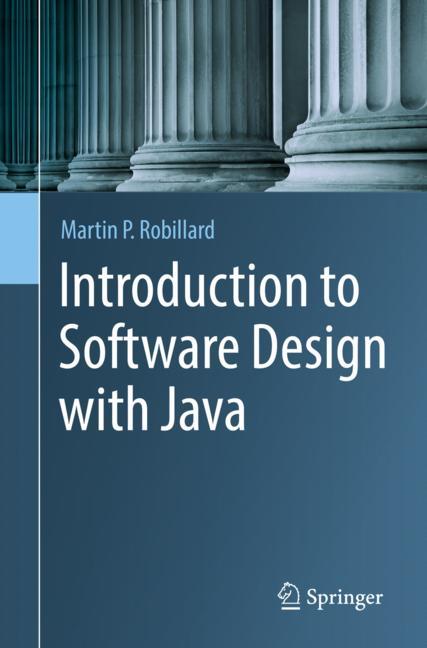
Introduction to Software Design with Java
☆☆☆☆☆
(0 opinii)
Najniższa cena (z dostawą)
5 719,00 JPY
Typowa cena126,89 PLN
Najniższa (90 dni)27,99 PLN
Liczba ofert2
Ostatnia aktualizacja1 dzień temu
| Sprzedawca | Cena produktu | Dostawa | Razem | Dostępność | Aktualizacja | |
|---|---|---|---|---|---|---|
| SP Springer Nature Author | 5 719,00 JPY | 0 zł | 5 719,00 JPY | Dostępny | 14 godzin temu | Zobacz ofertę |
| SP SpringerNatureLink Shop INT | 41,99 USD | 0 zł | 41,99 USD | Dostępny | 1 dzień temu | Zobacz ofertę |
Ceny i dostępność mogą ulec zmianie. Ostatnia aktualizacja: 08.08.2026 09:12.
0,0
☆☆☆☆☆
0 opinii
5★
0%
4★
0%
3★
0%
2★
0%
1★
0%
Opinie o produkcie
Brak opinii — bądź pierwszy!
This textbook provides an in-depth introduction to software design, with a focus on object-oriented design, and using the Java programming language. Its goal is to help readers learn software design by discovering the experience of the design process. To this end, a narrative is used that introduces each element of design know-how in context, and explores alternative solutions in that context. The narrative is supported by hundreds of code fragments and design diagrams. The first chapter is a general introduction to software design. The subsequent chapters cover design concepts and techniques, which are presented as a continuous narrative anchored in specific design problems. The design concepts and techniques covered include effective use of types and interfaces, encapsulation, composition, inheritance, design patterns, unit testing, and many more. A major emphasis is placed on coding and experimentation as a necessary complement to reading the text. To support this aspect of the learning process, a companion website with practice problems is provided, and three sample applications that capture numerous design decisions are included. Guidance on these sample applications is provided in a section called “Code Exploration” at the end of each chapter. Although the Java language is used as a means of conveying design-related ideas, the book’s main goal is to address concepts and techniques that are applicable in a host of technologies. This book is intended for readers who have a minimum of programming experience and want to move from writing small programs and scripts to tackling the development of larger systems. This audience naturally includes students in university-level computer science and software engineering programs. As the prerequisites to specific computing concepts are kept to a minimum, the content is also accessible to programmers without a primary training in computing. In a similar vein, understanding the code fragments requires only a minimal grasp of the language, such as would be taught in an introductory programming course.
Podobne produkty
 Patient Safety Coaching
od $91.97
Patient Safety Coaching
od $91.97
 Ethnography and Diversity
od $69.30
Ethnography and Diversity
od $69.30
 Smart Villages
od $91.97
Smart Villages
od $91.97
 Nuclear Non-Proliferation in International Law - Volume VI
od $91.97
Nuclear Non-Proliferation in International Law - Volume VI
od $91.97
 The Price of Freedom
od $91.97
The Price of Freedom
od $91.97
 Eco-Social Policy in the OECD and the World Bank
od $91.97
Eco-Social Policy in the OECD and the World Bank
od $91.97
 Special Topics in Policing
od $122.58
Special Topics in Policing
od $122.58
 Music from the Heart
od $91.97
Music from the Heart
od $91.97