
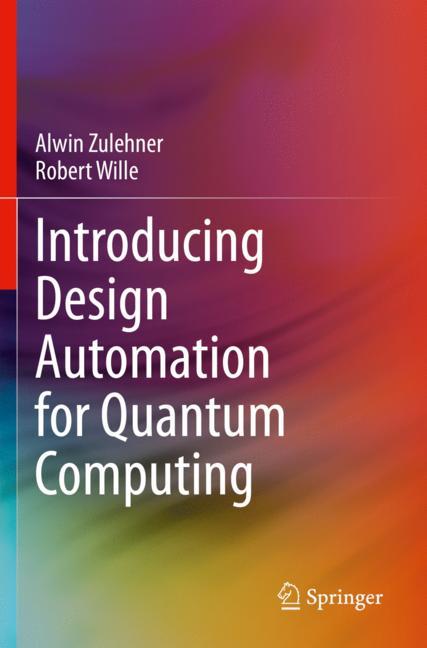
Introducing Design Automation for Quantum Computing
☆☆☆☆☆
(0 opinii)
Najniższa cena (z dostawą)
87,19 EUR
Typowa cena88,45 PLN
Najniższa (90 dni)83,19 PLN
Liczba ofert2
Ostatnia aktualizacja1 tydzień temu
Historia ceny (90 dni)
Pełna historia
2026-08-08
2026-08-15
| Zaktualizowano | Cena |
|---|---|
| 2026-08-08 | 83,19 |
| 2026-08-15 | 87,19 |
| Sprzedawca | Cena produktu | Dostawa | Razem | Dostępność | Aktualizacja | |
|---|---|---|---|---|---|---|
| SP SpringerNatureLink Shop INT | 87,19 EUR | 0 zł | 87,19 EUR | Dostępny | 6 dni temu | Zobacz ofertę |
| SP Springer Nature Author | 94,50 EUR | 29,00 EUR | 123,50 EUR | Dostępny | 1 tydzień temu | Zobacz ofertę |
Ceny i dostępność mogą ulec zmianie. Ostatnia aktualizacja: 08.08.2026 13:19.
EAN
9783030417550
Springer Nature
0,0
☆☆☆☆☆
0 opinii
5★
0%
4★
0%
3★
0%
2★
0%
1★
0%
Opinie o produkcie
Brak opinii — bądź pierwszy!
This book offers readers an easy introduction into quantum computing as well as into the design for corresponding devices. The authors cover several design tasks which are important for quantum computing and introduce corresponding solutions. A special feature of the book is that those tasks and solutions are explicitly discussed from a design automation perspective, i.e., utilizing clever algorithms and data structures which have been developed by the design automation community for conventional logic (i.e., for electronic devices and systems) and are now applied for this new technology. By this, relevant design tasks can be conducted in a much more efficient fashion than before – leading to improvements of several orders of magnitude (with respect to runtime and other design objectives). Describes the current state of the art for designing quantum circuits, for simulating them, and for mapping them to real hardware; Provides a first comprehensive introduction into design automation for quantum computing that tackles practically relevant tasks; Targets the quantum computing community as well as the design automation community, showing both perspectives to quantum computing, and what impressive improvements are possible when combining the knowledge of both communities.
Podobne produkty
 50 Years of Philosophy and Medicine
od $107.30
50 Years of Philosophy and Medicine
od $107.30
 Understanding Cybersecurity Law and Digital Privacy
od $122.63
Understanding Cybersecurity Law and Digital Privacy
od $122.63
 Decisions in International Trade and Logistics
od $122.63
Decisions in International Trade and Logistics
od $122.63
 Advances in Economic Measurement
od $122.63
Advances in Economic Measurement
od $122.63
 Nanomaterials
od $137.96
Nanomaterials
od $137.96
 Sustainable Scaffolds-based Strategies in Tissue Engineering and Regenerative Medicine
od $162.87
Sustainable Scaffolds-based Strategies in Tissue Engineering and Regenerative Medicine
od $162.87
 Narratives in Educational Research
od $162.87
Narratives in Educational Research
od $162.87
 Environmental Biology of the Young Chinese Sturgeon
od $210.78
Environmental Biology of the Young Chinese Sturgeon
od $210.78