
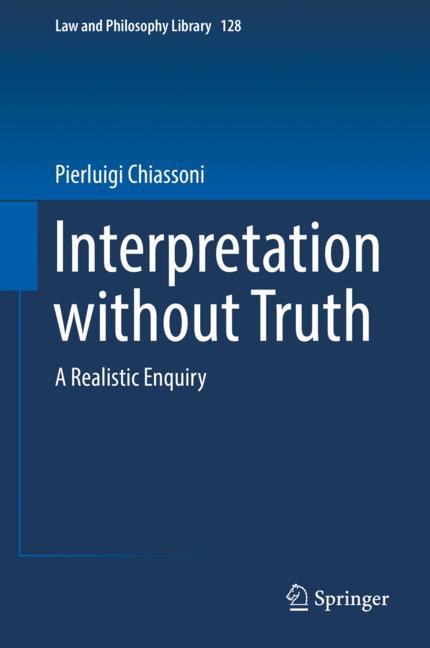
Interpretation without Truth
☆☆☆☆☆
(0 opinii)
Najniższa cena (z dostawą)
17 178,00 JPY
Typowa cena691,43 PLN
Najniższa (90 dni)87,50 PLN
Liczba ofert2
Ostatnia aktualizacja22 godziny temu
| Sprzedawca | Cena produktu | Dostawa | Razem | Dostępność | Aktualizacja | |
|---|---|---|---|---|---|---|
| SP Springer Nature Author | 17 159,00 JPY | 19,00 JPY | 17 178,00 JPY | Dostępny | 21 godzin temu | Zobacz ofertę |
| SP SpringerNatureLink Shop INT | 109,99 GBP | 0 zł | 109,99 GBP | Dostępny | 1 dzień temu | Zobacz ofertę |
Ceny i dostępność mogą ulec zmianie. Ostatnia aktualizacja: 08.08.2026 22:18.
0,0
☆☆☆☆☆
0 opinii
5★
0%
4★
0%
3★
0%
2★
0%
1★
0%
Opinie o produkcie
Brak opinii — bądź pierwszy!
This book engages in an analytical and realistic enquiry into legal interpretation and a selection of related matters including legal gaps, judicial fictions, judicial precedent, legal defeasibility, and legislation. Chapter 1 provides an outline of the central theoretical and methodological tenets of analytical realism. Chapter 2 presents a conceptual apparatus concerning the phenomenon of legal interpretation, which it subsequently applies to investigate the truth-in-legal-interpretation issue. Chapters 3 to 6 argue for a theory of legal interpretation - pragmatic realism - by outlining a theory of interpretive games, revisiting the debate between literalism and contextualism in contemporary philosophy of language, and underscoring the many shortcomings of the container-retrieval view and pragmatic formalism. In turn, Chapter 7, focusing on comparative legal theory, advocates an interpretation-sensitive theory of legal gaps, as opposed to purely normativist ones. Chapter 8 explores the connection between judicial reasoning and judicial fictions, casting light on the structure and purpose of fictional reasoning. Chapter 9 provides an analytical enquiry into judicial precedent, examining a variety of ideal-typical systems in terms of their normative or de iure relevance. Chapter 10 addresses defeasibility and legal indeterminacy. In closing, Chapter 11 highlights the central tenets of a realistic theory of legislation.
Podobne produkty
 Patient Safety Coaching
od $91.97
Patient Safety Coaching
od $91.97
 Ethnography and Diversity
od $69.30
Ethnography and Diversity
od $69.30
 Smart Villages
od $91.97
Smart Villages
od $91.97
 Nuclear Non-Proliferation in International Law - Volume VI
od $91.97
Nuclear Non-Proliferation in International Law - Volume VI
od $91.97
 The Price of Freedom
od $91.97
The Price of Freedom
od $91.97
 Eco-Social Policy in the OECD and the World Bank
od $91.97
Eco-Social Policy in the OECD and the World Bank
od $91.97
 Special Topics in Policing
od $122.58
Special Topics in Policing
od $122.58
 Music from the Heart
od $91.97
Music from the Heart
od $91.97