
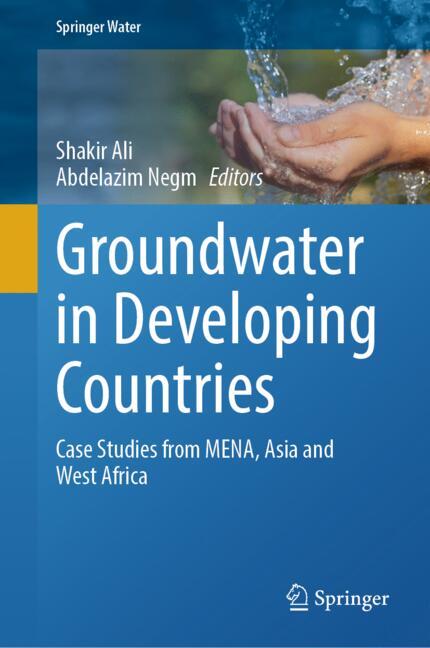
Groundwater in Developing Countries
☆☆☆☆☆
(0 opinii)
Najniższa cena (z dostawą)
19 466,00 JPY
Typowa cena159,75 PLN
Najniższa (90 dni)159,00 PLN
Liczba ofert3
Ostatnia aktualizacja6 dni temu
| Sprzedawca | Cena produktu | Dostawa | Razem | Dostępność | Aktualizacja | |
|---|---|---|---|---|---|---|
| SP SpringerNatureLink Shop INT | 19 447,00 JPY | 19,00 JPY | 19 466,00 JPY | Dostępny | 6 dni temu | Zobacz ofertę |
| SP SpringerNatureLink Shop INT | 119,50 GBP | 19,00 GBP | 138,50 GBP | Dostępny | 1 tydzień temu | Zobacz ofertę |
| SP Springer Nature Author | 160,50 EUR | 25,00 EUR | 185,50 EUR | Dostępny | 1 tydzień temu | Zobacz ofertę |
Ceny i dostępność mogą ulec zmianie. Ostatnia aktualizacja: 15.08.2026 08:08.
EAN
9783031791222
Springer Nature
0,0
☆☆☆☆☆
0 opinii
5★
0%
4★
0%
3★
0%
2★
0%
1★
0%
Opinie o produkcie
Brak opinii — bądź pierwszy!
This book comprehensively discusses different scientific approaches, including groundwater sustainability, numerical modeling, index approach, isotope hydrology, environmental Isotopes, and advanced GRACE satellite data from different regions in developing countries globally, to help understand the groundwater system for strategic management of freshwater resources. This would help estimate an accepted logistic framework that might help control, and evaluate the significance of predicted climatic and anthropogenic impacts on groundwater resources. The book presents and discusses unique case studies from Asia (Turkey, Afghanistan, and Kyrgyzstan), MENA (Middle East and North Africa), particularly focussing on Algeria, Egypt New Delta, and KSA and West Africa (Nigeria) and has chapters covering most of the other MENA countries. The book presents a comprehensive investigation of the methods employed for groundwater utilization, with a dual focus on elucidating existing issues and confronting contemporary challenges. The findings are significant as they provide a deeper understanding of the complex issues surrounding groundwater utilization. Approaches for enhancing and rationalizing water extraction from Saharan aquifers are discussed to promote regional advancement and preserve long-term sustainability. The book will be of great help to numerous researchers and academicians, and will be an important account for stakeholders.
Podobne produkty
 50 Years of Philosophy and Medicine
od $107.30
50 Years of Philosophy and Medicine
od $107.30
 Understanding Cybersecurity Law and Digital Privacy
od $122.63
Understanding Cybersecurity Law and Digital Privacy
od $122.63
 Decisions in International Trade and Logistics
od $122.63
Decisions in International Trade and Logistics
od $122.63
 Advances in Economic Measurement
od $122.63
Advances in Economic Measurement
od $122.63
 Nanomaterials
od $137.96
Nanomaterials
od $137.96
 Sustainable Scaffolds-based Strategies in Tissue Engineering and Regenerative Medicine
od $162.87
Sustainable Scaffolds-based Strategies in Tissue Engineering and Regenerative Medicine
od $162.87
 Narratives in Educational Research
od $162.87
Narratives in Educational Research
od $162.87
 Environmental Biology of the Young Chinese Sturgeon
od $210.78
Environmental Biology of the Young Chinese Sturgeon
od $210.78