
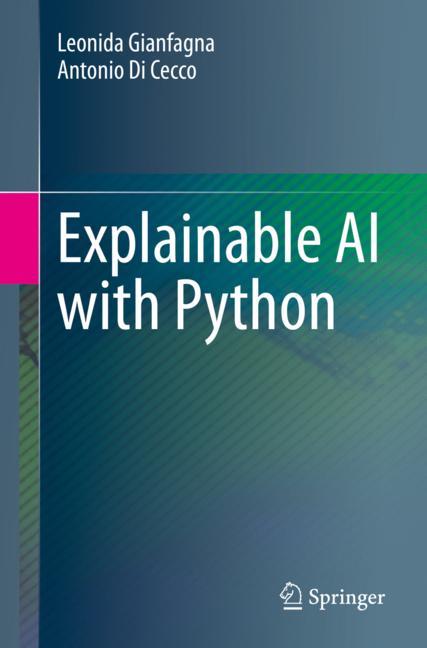
Explainable AI with Python
☆☆☆☆☆
(0 opinii)
Najniższa cena (z dostawą)
8 007,00 JPY
Typowa cena2 051,25 PLN
Najniższa (90 dni)66,00 PLN
Liczba ofert2
Ostatnia aktualizacja3 dni temu
| Sprzedawca | Cena produktu | Dostawa | Razem | Dostępność | Aktualizacja | |
|---|---|---|---|---|---|---|
| SP Springer Nature Author | 8 007,00 JPY | 0 zł | 8 007,00 JPY | Dostępny | 3 dni temu | Zobacz ofertę |
| SP SpringerNatureLink Shop INT | 66,00 EUR | 19,00 EUR | 85,00 EUR | Dostępny | 3 dni temu | Zobacz ofertę |
Ceny i dostępność mogą ulec zmianie. Ostatnia aktualizacja: 08.08.2026 23:17.
EAN
9783030686406
Springer Nature
0,0
☆☆☆☆☆
0 opinii
5★
0%
4★
0%
3★
0%
2★
0%
1★
0%
Opinie o produkcie
Brak opinii — bądź pierwszy!
This book provides a full presentation of the current concepts and available techniques to make “machine learning” systems more explainable. The approaches presented can be applied to almost all the current “machine learning” models: linear and logistic regression, deep learning neural networks, natural language processing and image recognition, among the others. Progress in Machine Learning is increasing the use of artificial agents to perform critical tasks previously handled by humans (healthcare, legal and finance, among others). While the principles that guide the design of these agents are understood, most of the current deep-learning models are "opaque" to human understanding. Explainable AI with Python fills the current gap in literature on this emerging topic by taking both a theoretical and a practical perspective, making the reader quickly capable of working with tools and code for Explainable AI. Beginning with examples of what Explainable AI (XAI) is and why it is needed in the field, the book details different approaches to XAI depending on specific context and need. Hands-on work on interpretable models with specific examples leveraging Python are then presented, showing how intrinsic interpretable models can be interpreted and how to produce “human understandable” explanations. Model-agnostic methods for XAI are shown to produce explanations without relying on ML models internals that are “opaque.” Using examples from Computer Vision, the authors then look at explainable models for Deep Learning and prospective methods for the future. Taking a practical perspective, the authors demonstrate how to effectively use ML and XAI in science. The final chapter explains Adversarial Machine Learning and how to do XAI with adversarial examples.
Podobne produkty
 Patient Safety Coaching
od $91.97
Patient Safety Coaching
od $91.97
 Ethnography and Diversity
od $69.30
Ethnography and Diversity
od $69.30
 Smart Villages
od $91.97
Smart Villages
od $91.97
 Nuclear Non-Proliferation in International Law - Volume VI
od $91.97
Nuclear Non-Proliferation in International Law - Volume VI
od $91.97
 The Price of Freedom
od $91.97
The Price of Freedom
od $91.97
 Eco-Social Policy in the OECD and the World Bank
od $91.97
Eco-Social Policy in the OECD and the World Bank
od $91.97
 Special Topics in Policing
od $122.58
Special Topics in Policing
od $122.58
 Music from the Heart
od $91.97
Music from the Heart
od $91.97