
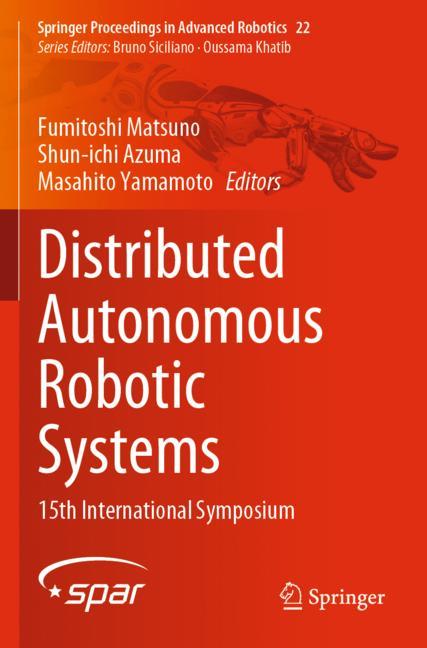
Distributed Autonomous Robotic Systems
☆☆☆☆☆
(0 opinii)
Najniższa cena (z dostawą)
35 768,00 JPY
Typowa cena4 715,50 PLN
Najniższa (90 dni)267,49 PLN
Liczba ofert3
Ostatnia aktualizacja1 tydzień temu
Historia ceny (90 dni)
Pełna historia
2026-08-08
2026-08-15
| Zaktualizowano | Cena |
|---|---|
| 2026-08-08 | 274,99 |
| 2026-08-15 | 267,49 |
| Sprzedawca | Cena produktu | Dostawa | Razem | Dostępność | Aktualizacja | |
|---|---|---|---|---|---|---|
| SP SpringerNatureLink Shop INT | 35 749,00 JPY | 19,00 JPY | 35 768,00 JPY | Dostępny | 6 dni temu | Zobacz ofertę |
| SP Springer Nature Author | 35 749,00 JPY | 0 zł | 35 749,00 JPY | Dostępny | 1 tydzień temu | Zobacz ofertę |
| SP SpringerNatureLink Shop INT | 295,00 EUR | 0 zł | 295,00 EUR | Dostępny | 6 dni temu | Zobacz ofertę |
Ceny i dostępność mogą ulec zmianie. Ostatnia aktualizacja: 08.08.2026 23:40.
EAN
9783030927929
Springer Nature
0,0
☆☆☆☆☆
0 opinii
5★
0%
4★
0%
3★
0%
2★
0%
1★
0%
Opinie o produkcie
Brak opinii — bądź pierwszy!
This book presents the state of the art in distributed autonomous systems composed of multiple robots, robotic modules, or robotic agents. Swarms in nature can not only adapt to their environments, but can also construct suitable habitats to their own advantage. Distributed autonomous robotic systems can do many things that its individuals cannot do alone. As the global pandemic was still ongoing, the 15th International Symposium on Distributed Autonomous Robotic Systems (DARS2021) was held on June 1–4, 2021, as an online meeting. The scope of DARS201 was to create a bridge between biologists and engineers interested in the distributed intelligence of living things and to establish a new academic field by integrating knowledge from both disciplines. Topics of DARS2021 were swarm intelligence, swarm robotics, multi-agent system, modular robotics, decentralized control, distributed system, etc. The papers in this book provide a very good overview of the state of the art in distributedautonomous robotic systems (DARS). They reflect current research themes in DARS with important contributions. We hope that this book helps to sustain the interest in DARS and triggers new research.
Podobne produkty
 50 Years of Philosophy and Medicine
od $107.30
50 Years of Philosophy and Medicine
od $107.30
 Understanding Cybersecurity Law and Digital Privacy
od $122.63
Understanding Cybersecurity Law and Digital Privacy
od $122.63
 Decisions in International Trade and Logistics
od $122.63
Decisions in International Trade and Logistics
od $122.63
 Advances in Economic Measurement
od $122.63
Advances in Economic Measurement
od $122.63
 Nanomaterials
od $137.96
Nanomaterials
od $137.96
 Sustainable Scaffolds-based Strategies in Tissue Engineering and Regenerative Medicine
od $162.87
Sustainable Scaffolds-based Strategies in Tissue Engineering and Regenerative Medicine
od $162.87
 Narratives in Educational Research
od $162.87
Narratives in Educational Research
od $162.87
 Environmental Biology of the Young Chinese Sturgeon
od $210.78
Environmental Biology of the Young Chinese Sturgeon
od $210.78