
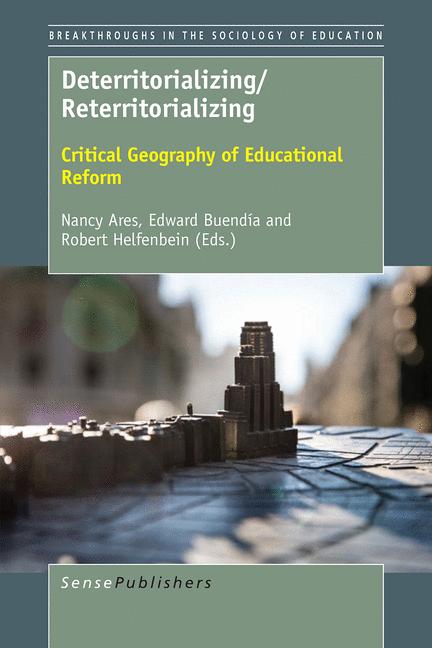
Deterritorializing/Reterritorializing
☆☆☆☆☆
(0 opinii)
Najniższa cena (z dostawą)
52,45 EUR
Typowa cena80,18 PLN
Najniższa (90 dni)37,45 PLN
Liczba ofert3
Ostatnia aktualizacja1 dzień temu
| Sprzedawca | Cena produktu | Dostawa | Razem | Dostępność | Aktualizacja | |
|---|---|---|---|---|---|---|
| SP Springer Nature Author | 37,45 EUR | 15,00 EUR | 52,45 EUR | Dostępny | 1 dzień temu | Zobacz ofertę |
| SP SpringerNatureLink Shop INT | 41,50 EUR | 15,00 EUR | 56,50 EUR | Dostępny | 1 dzień temu | Zobacz ofertę |
| VI VitalSource | 227,70 ZAR | 15,00 ZAR | 242,70 ZAR | Dostępny | 1 dzień temu | Zobacz ofertę |
Ceny i dostępność mogą ulec zmianie. Ostatnia aktualizacja: 08.08.2026 05:32.
EAN
9789463009775
Springer Nature
0,0
☆☆☆☆☆
0 opinii
5★
0%
4★
0%
3★
0%
2★
0%
1★
0%
Opinie o produkcie
Brak opinii — bądź pierwszy!
This volume features scholars who use a critical geography framework to analyze how constructions of social space shape education reform. In particular, they situate their work in present-day neoliberal policies that are pushing responsibility for economic and social welfare, as well as education policy and practice, out of federal and into more local entities. States, cities, and school boards are being given more responsibility and power in determining curriculum content and standards, accompanied by increasing privatization of public education through the rise of charter schools and for-profit organizations’ incursion into managing schools. Given these pressures, critical geography’s unique approach to spatial constructions of schools is crucially important. Reterritorialization and deterritorialization, or the varying flows of people and capital across space and time, are highlighted to understand spatial forces operating on such things as schools, communities, people, and culture. Authors from multiple fields of study contribute to this book’s examination of how social, political, and historical dimensions of spatial forces, especially racial/ethnic and other markers of difference, shape are shaped by processes and outcomes of school reform.
Podobne produkty
 Gamma Knife Neurosurgery in the Management of Intracranial Disorders
od $210.78
Gamma Knife Neurosurgery in the Management of Intracranial Disorders
od $210.78
 SDGs in Construction Economics and Organization
od $210.78
SDGs in Construction Economics and Organization
od $210.78
 Emerging Therapies in Neurorehabilitation III
od $210.78
Emerging Therapies in Neurorehabilitation III
od $210.78
 Ground Improvement Techniques
od $220.36
Ground Improvement Techniques
od $220.36
 Anomaly Detection in Video Surveillance
od $220.36
Anomaly Detection in Video Surveillance
od $220.36
 Mechanism and Machine Science
od $287.42
Mechanism and Machine Science
od $287.42
 Protein-Protein Interactions as New Drug Targets
od $287.42
Protein-Protein Interactions as New Drug Targets
od $287.42
 Proceedings of the 7th International Conference of Transportation Research Group of India (CTRG 2023
od $287.42
Proceedings of the 7th International Conference of Transportation Research Group of India (CTRG 2023
od $287.42