
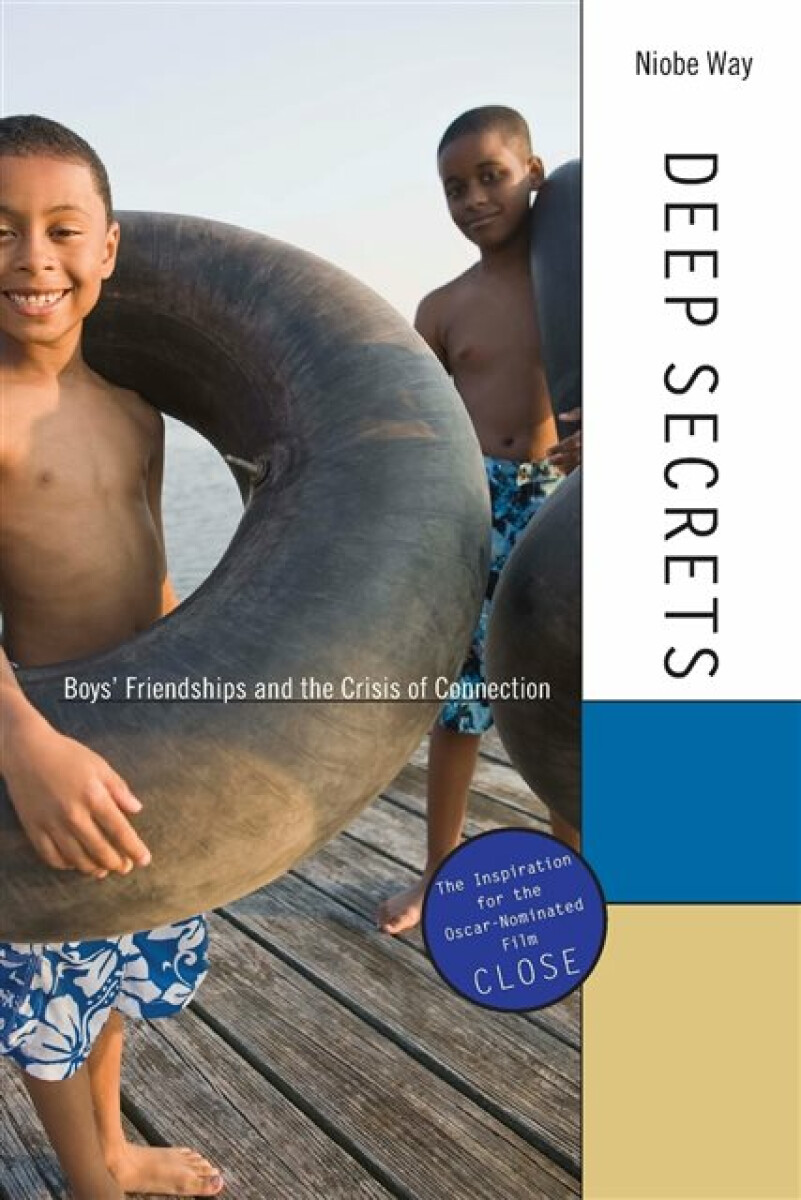
Deep Secrets – Boys Friendships and the Crisis of Connection - Niobe Way
☆☆☆☆☆
(0 opinii)
Najniższa cena (z dostawą)
39,38 USD
Typowa cena71,51 PLN
Najniższa (90 dni)17,46 PLN
Liczba ofert3
Ostatnia aktualizacja1 tydzień temu
Historia ceny (90 dni)
Pełna historia
2026-08-07
2026-08-09
| Zaktualizowano | Cena |
|---|---|
| 2026-08-07 | 17,46 |
| 2026-08-08 | 33,64 |
| 2026-08-09 | 18,20 |
| Sprzedawca | Cena produktu | Dostawa | Razem | Dostępność | Aktualizacja | |
|---|---|---|---|---|---|---|
| KN Knetbooks.com | 20,38 USD | 19,00 USD | 39,38 USD | Dostępny | 1 tydzień temu | Zobacz ofertę |
| KN KnihyDobrovsky.cz | 692,00 CZK | 25,00 CZK | 717,00 CZK | Dostępny | 2 dni temu | Zobacz ofertę |
| VI VitalSource | 455,40 ZAR | 0 zł | 455,40 ZAR | Dostępny | 1 tydzień temu | Zobacz ofertę |
Ceny i dostępność mogą ulec zmianie. Ostatnia aktualizacja: 09.08.2026 05:17.
EAN
9780674072428
Harvard University Press
0,0
☆☆☆☆☆
0 opinii
5★
0%
4★
0%
3★
0%
2★
0%
1★
0%
Opinie o produkcie
Brak opinii — bądź pierwszy!
“Boys are emotionally illiterate and don’t want intimate friendships.†In this empirically grounded challenge to our stereotypes about boys and men, Niobe Way reveals the intense intimacy among teenage boys especially during early and middle adolescence. Boys not only share their deepest secrets and feelings with their closest male friends, they claim that without them they would go “wacko.†Yet as boys become men, they become distrustful, lose these friendships, and feel isolated and alone. Drawing from hundreds of interviews conducted throughout adolescence with black, Latino, white, and Asian American boys, Deep Secrets reveals the ways in which we have been telling ourselves a false story about boys, friendships, and human nature. Boys’ descriptions of their male friendships sound more like “something out of Love Story than Lord of the Flies.†Yet in late adolescence, boys feel they have to “man up†by becoming stoic and independent. Vulnerable emotions and intimate friendships are for girls and gay men. “No homo†becomes their mantra. These findings are alarming, given what we know about links between friendships and health, and even longevity. Rather than a “boy crisis,†Way argues that boys are experiencing a “crisis of connection†because they live in a culture where human needs and capacities are given a sex (female) and a sexuality (gay), and thus discouraged for those who are neither. Way argues that the solution lies with exposing the inaccuracies of our gender stereotypes and fostering these critical relationships and fundamental human skills.
Podobne produkty
 Sustainable Development
od $2,281.25
Sustainable Development
od $2,281.25
 Author Title and Subject Guide
od $1,780.26
Author Title and Subject Guide
od $1,780.26
 Debating Issues in American Education
od $825.02
Debating Issues in American Education
od $825.02
 Karl Popper
od $1,978.07
Karl Popper
od $1,978.07
 Encyclopedia of Journalism
od $1,058.62
Encyclopedia of Journalism
od $1,058.62
 NUR 110 Print+Ebook Bundle
od $1,908.35
NUR 110 Print+Ebook Bundle
od $1,908.35
 GMR Springfield Paramedic 9E Flipped Bundle Updated .
od $1,382.58
Nursing Volume 1 & 2 with Clinical Nursing Skills Volume 3 & MyNursingLab Package
od $1,183.17
GMR Springfield Paramedic 9E Flipped Bundle Updated .
od $1,382.58
Nursing Volume 1 & 2 with Clinical Nursing Skills Volume 3 & MyNursingLab Package
od $1,183.17