
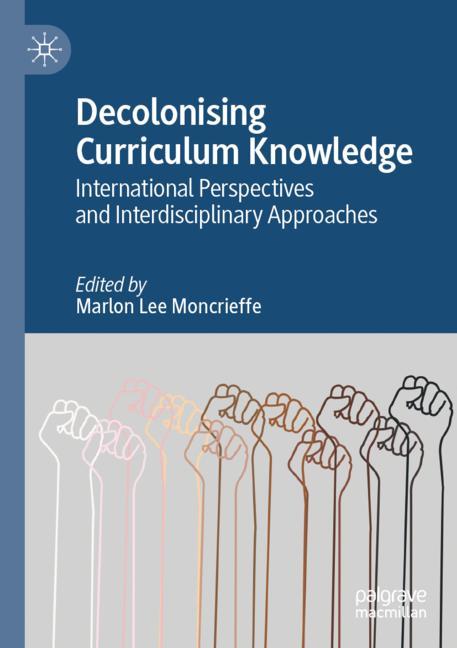
Decolonising Curriculum Knowledge
☆☆☆☆☆
(0 opinii)
Najniższa cena (z dostawą)
157,39 USD
Typowa cena2 815,30 PLN
Najniższa (90 dni)128,39 PLN
Liczba ofert8
Ostatnia aktualizacja6 dni temu
Historia ceny (90 dni)
Pełna historia
2026-08-08
2026-08-15
| Zaktualizowano | Cena |
|---|---|
| 2026-08-08 | 128,39 |
| 2026-08-15 | 139,99 |
| Sprzedawca | Cena produktu | Dostawa | Razem | Dostępność | Aktualizacja | |
|---|---|---|---|---|---|---|
| SP SpringerNatureLink Shop INT | 128,39 USD | 29,00 USD | 157,39 USD | Dostępny | 6 dni temu | Zobacz ofertę |
| SP SpringerNatureLink Shop INT | 128,39 EUR | 19,00 EUR | 147,39 EUR | Dostępny | 6 dni temu | Zobacz ofertę |
| SP SpringerNatureLink Shop INT | 22 879,00 JPY | 19,00 JPY | 22 898,00 JPY | Dostępny | 6 dni temu | Zobacz ofertę |
| SP Springer Nature Author | 22 879,00 JPY | 19,00 JPY | 22 898,00 JPY | Dostępny | 1 tydzień temu | Zobacz ofertę |
| SP SpringerNatureLink Shop INT | 159,99 USD | 0 zł | 159,99 USD | Dostępny | 6 dni temu | Zobacz ofertę |
| SP SpringerNatureLink Shop INT | 179,99 USD | 29,00 USD | 208,99 USD | Dostępny | 6 dni temu | Zobacz ofertę |
| SP SpringerNatureLink Shop INT | 179,99 USD | 29,00 USD | 208,99 USD | Dostępny | 6 dni temu | Zobacz ofertę |
| SP SpringerNatureLink Shop INT | 189,00 EUR | 25,00 EUR | 214,00 EUR | Dostępny | 6 dni temu | Zobacz ofertę |
Ceny i dostępność mogą ulec zmianie. Ostatnia aktualizacja: 15.08.2026 04:43.
0,0
☆☆☆☆☆
0 opinii
5★
0%
4★
0%
3★
0%
2★
0%
1★
0%
Opinie o produkcie
Brak opinii — bądź pierwszy!
This book offers a unique blend of writing from a broad range of international perspectives, showing interdisciplinary research approaches to decolonising curriculum knowledge. With a focus on the intellectual, emotional, economic, and political reversal of colonial injustices, the decolonial research and writing in this book challenge dominant viewpoints and assumptions of curriculum knowledge by amplifying and disseminating the knowledge and perspectives of peoples that curriculum knowledge has historically silenced and marginalized. The chapters in this book allow the reader to learn from the historical, social, political, cultural, and educational contexts of the UK, Nepal, South Africa, Namibia, Australia, Colombia, Canada, Thailand, Mauritius, Poland, Russia, Norway, and the Netherlands. This internationality provides the reader with a multitude of research themes and critical analytical perspectives for seeing how epistemic power permeates as cultural imperialism in educationpolicies and practices across the world.
Podobne produkty
 50 Years of Philosophy and Medicine
od $107.30
50 Years of Philosophy and Medicine
od $107.30
 Understanding Cybersecurity Law and Digital Privacy
od $122.63
Understanding Cybersecurity Law and Digital Privacy
od $122.63
 Decisions in International Trade and Logistics
od $122.63
Decisions in International Trade and Logistics
od $122.63
 Advances in Economic Measurement
od $122.63
Advances in Economic Measurement
od $122.63
 Nanomaterials
od $137.96
Nanomaterials
od $137.96
 Sustainable Scaffolds-based Strategies in Tissue Engineering and Regenerative Medicine
od $162.87
Sustainable Scaffolds-based Strategies in Tissue Engineering and Regenerative Medicine
od $162.87
 Narratives in Educational Research
od $162.87
Narratives in Educational Research
od $162.87
 Environmental Biology of the Young Chinese Sturgeon
od $210.78
Environmental Biology of the Young Chinese Sturgeon
od $210.78