
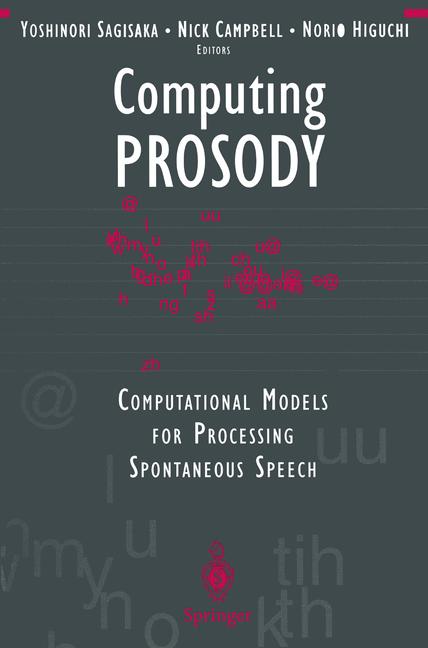
Computing PROSODY
☆☆☆☆☆
(0 opinii)
Najniższa cena (z dostawą)
15 744,00 JPY
Typowa cena1 416,73 PLN
Najniższa (90 dni)109,99 PLN
Liczba ofert2
Ostatnia aktualizacja4 dni temu
| Sprzedawca | Cena produktu | Dostawa | Razem | Dostępność | Aktualizacja | |
|---|---|---|---|---|---|---|
| SP Springer Nature Author | 15 729,00 JPY | 15,00 JPY | 15 744,00 JPY | Dostępny | 4 dni temu | Zobacz ofertę |
| SP SpringerNatureLink Shop INT | 114,39 EUR | 15,00 EUR | 129,39 EUR | Dostępny | 4 dni temu | Zobacz ofertę |
Ceny i dostępność mogą ulec zmianie. Ostatnia aktualizacja: 08.08.2026 23:26.
0,0
☆☆☆☆☆
0 opinii
5★
0%
4★
0%
3★
0%
2★
0%
1★
0%
Opinie o produkcie
Brak opinii — bądź pierwszy!
This book presents a collection of papers from the Spring 1995 Work shop on Computational Approaches to Processing the Prosody of Spon taneous Speech, hosted by the ATR Interpreting Telecommunications Re search Laboratories in Kyoto, Japan. The workshop brought together lead ing researchers in the fields of speech and signal processing, electrical en gineering, psychology, and linguistics, to discuss aspects of spontaneous speech prosody and to suggest approaches to its computational analysis and modelling. The book is divided into four sections. Part I gives an overview and theoretical background to the nature of spontaneous speech, differentiating it from the lab-speech that has been the focus of so many earlier analyses. Part II focuses on the prosodic features of discourse and the structure of the spoken message, Part ilIon the generation and modelling of prosody for computer speech synthesis. Part IV discusses how prosodic information can be used in the context of automatic speech recognition. Each section of the book starts with an invited overview paper to situate the chapters in the context of current research. We feel that this collection of papers offers interesting insights into the scope and nature of the problems concerned with the computational analysis and modelling of real spontaneous speech, and expect that these works will not only form the basis of further developments in each field but also merge to form an integrated computational model of prosody for a better understanding of human processing of the complex interactions of the speech chain.
Podobne produkty
 Patient Safety Coaching
od $91.97
Patient Safety Coaching
od $91.97
 Ethnography and Diversity
od $69.30
Ethnography and Diversity
od $69.30
 Smart Villages
od $91.97
Smart Villages
od $91.97
 Nuclear Non-Proliferation in International Law - Volume VI
od $91.97
Nuclear Non-Proliferation in International Law - Volume VI
od $91.97
 The Price of Freedom
od $91.97
The Price of Freedom
od $91.97
 Eco-Social Policy in the OECD and the World Bank
od $91.97
Eco-Social Policy in the OECD and the World Bank
od $91.97
 Special Topics in Policing
od $122.58
Special Topics in Policing
od $122.58
 Music from the Heart
od $91.97
Music from the Heart
od $91.97