
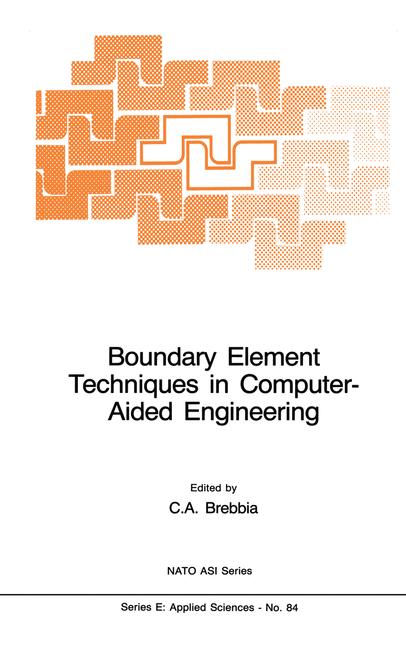
Boundary Element Techniques in Computer-Aided Engineering
☆☆☆☆☆
(0 opinii)
Najniższa cena (z dostawą)
28 599,00 JPY
Typowa cena4 427,45 PLN
Najniższa (90 dni)179,99 PLN
Liczba ofert7
Ostatnia aktualizacja1 tydzień temu
Historia ceny (90 dni)
Pełna historia
2026-08-08
2026-08-15
| Zaktualizowano | Cena |
|---|---|
| 2026-08-08 | 179,99 |
| 2026-08-15 | 207,99 |
| Sprzedawca | Cena produktu | Dostawa | Razem | Dostępność | Aktualizacja | |
|---|---|---|---|---|---|---|
| SP SpringerNatureLink Shop INT | 28 599,00 JPY | 0 zł | 28 599,00 JPY | Dostępny | 1 tydzień temu | Zobacz ofertę |
| SP Springer Nature Author | 28 599,00 JPY | 0 zł | 28 599,00 JPY | Dostępny | 1 tydzień temu | Zobacz ofertę |
| SP SpringerNatureLink Shop INT | 199,99 USD | 15,00 USD | 214,99 USD | Dostępny | 1 tydzień temu | Zobacz ofertę |
| SP SpringerNatureLink Shop INT | 219,99 USD | 0 zł | 219,99 USD | Dostępny | 1 tydzień temu | Zobacz ofertę |
| SP SpringerNatureLink Shop INT | 219,99 USD | 0 zł | 219,99 USD | Dostępny | 1 tydzień temu | Zobacz ofertę |
| SP SpringerNatureLink Shop INT | 219,99 USD | 19,00 USD | 238,99 USD | Dostępny | 1 tydzień temu | Zobacz ofertę |
| SP SpringerNatureLink Shop INT | 236,00 EUR | 19,00 EUR | 255,00 EUR | Dostępny | 1 tydzień temu | Zobacz ofertę |
Ceny i dostępność mogą ulec zmianie. Ostatnia aktualizacja: 08.08.2026 23:38.
0,0
☆☆☆☆☆
0 opinii
5★
0%
4★
0%
3★
0%
2★
0%
1★
0%
Opinie o produkcie
Brak opinii — bądź pierwszy!
This book constitutes the edited proceedings of the Advanced Studies Institute on Boundary Element Techniques in Computer Aided Engineering held at The Institute of Computational Mechanics, Ashurst Lodge, Southampton, England, from September 19 to 30, 1984. The Institute was held under the auspices of the newly launched "Double Jump Programme" which aims to bring together academics and industrial scientists. Consequently the programme was more industr ially based than other NATO ASI meetings, achieving an excellent combination of theoretical and practical aspects of the newly developed Boundary Element Method. In recent years engineers have become increasingly interested in the application of boundary element techniques for'the solution of continuum mechanics problems. The importance of boundary elements is that it combines the advantages of boundary integral equations (i.e. reduction of dimensionality of the problems, possibility of modelling domains extending to infinity, numerical accura'cy) with the versatility of finite elements (i.e. modelling of arbitrary curved surfaces). Because of this the technique has been well received by the engineering and scientific communities. Another important advantage of boundary elements stems from its reduction of dimensionality, that is that the technique requires much less data input than classical finite elements. This makes the method very well suited for Computer Aided Design and in great part explains the interest of the engineering profession in the new technique.
Podobne produkty
 50 Years of Philosophy and Medicine
od $107.30
50 Years of Philosophy and Medicine
od $107.30
 Understanding Cybersecurity Law and Digital Privacy
od $122.63
Understanding Cybersecurity Law and Digital Privacy
od $122.63
 Decisions in International Trade and Logistics
od $122.63
Decisions in International Trade and Logistics
od $122.63
 Advances in Economic Measurement
od $122.63
Advances in Economic Measurement
od $122.63
 Nanomaterials
od $137.96
Nanomaterials
od $137.96
 Sustainable Scaffolds-based Strategies in Tissue Engineering and Regenerative Medicine
od $162.87
Sustainable Scaffolds-based Strategies in Tissue Engineering and Regenerative Medicine
od $162.87
 Narratives in Educational Research
od $162.87
Narratives in Educational Research
od $162.87
 Environmental Biology of the Young Chinese Sturgeon
od $210.78
Environmental Biology of the Young Chinese Sturgeon
od $210.78