
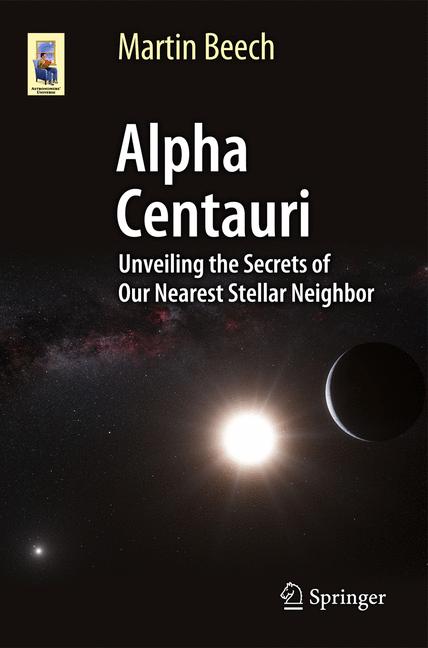
Alpha Centauri
☆☆☆☆☆
(0 opinii)
Najniższa cena (z dostawą)
56,50 EUR
Typowa cena202,91 PLN
Najniższa (90 dni)9,90 PLN
Liczba ofert3
Ostatnia aktualizacja18 godzin temu
Historia ceny (90 dni)
Pełna historia
2026-08-07
2026-08-08
| Zaktualizowano | Cena |
|---|---|
| 2026-08-07 | 9,90 |
| 2026-08-08 | 28,46 |
| Sprzedawca | Cena produktu | Dostawa | Razem | Dostępność | Aktualizacja | |
|---|---|---|---|---|---|---|
| SP SpringerNatureLink Shop INT | 31,50 EUR | 25,00 EUR | 56,50 EUR | Dostępny | 17 godzin temu | Zobacz ofertę |
| SP Springer Nature Author | 5 433,00 JPY | 0 zł | 5 433,00 JPY | Dostępny | 3 godziny temu | Zobacz ofertę |
| VI VitalSource | 40,65 EUR | 25,00 EUR | 65,65 EUR | Dostępny | 1 dzień temu | Zobacz ofertę |
Ceny i dostępność mogą ulec zmianie. Ostatnia aktualizacja: 08.08.2026 08:26.
EAN
9783319093710
Springer Nature
0,0
☆☆☆☆☆
0 opinii
5★
0%
4★
0%
3★
0%
2★
0%
1★
0%
Opinie o produkcie
Brak opinii — bądź pierwszy!
As our closest stellar companion and composed of two Sun-like stars and a third small dwarf star, Alpha Centauri is an ideal testing ground of astrophysical models and has played a central role in the history and development of modern astronomy—from the first guesses at stellar distances to understanding how our own star, the Sun, might have evolved. It is also the host of the nearest known exoplanet, an ultra-hot, Earth-like planet recently discovered. Just 4.4 light years away Alpha Centauri is also the most obvious target for humanity’s first directed interstellar space probe. Such a mission could reveal the small-scale structure of a new planetary system and also represent the first step in what must surely be humanity’s greatest future adventure—exploration of the Milky Way Galaxy itself. For all of its closeness, α Centauri continues to tantalize astronomers with many unresolved mysteries, such as how did it form, how many planets does it contain andwhere are they, and how might we view its extensive panorama directly? In this book we move from the study of individual stars to the study of our Solar System and our nearby galactic neighborhood. On the way we will review the rapidly developing fields of exoplanet formation and detection.
Podobne produkty
 Patient Safety Coaching
od $91.97
Patient Safety Coaching
od $91.97
 Ethnography and Diversity
od $69.30
Ethnography and Diversity
od $69.30
 Smart Villages
od $91.97
Smart Villages
od $91.97
 Nuclear Non-Proliferation in International Law - Volume VI
od $91.97
Nuclear Non-Proliferation in International Law - Volume VI
od $91.97
 The Price of Freedom
od $91.97
The Price of Freedom
od $91.97
 Eco-Social Policy in the OECD and the World Bank
od $91.97
Eco-Social Policy in the OECD and the World Bank
od $91.97
 Special Topics in Policing
od $122.58
Special Topics in Policing
od $122.58
 Music from the Heart
od $91.97
Music from the Heart
od $91.97