
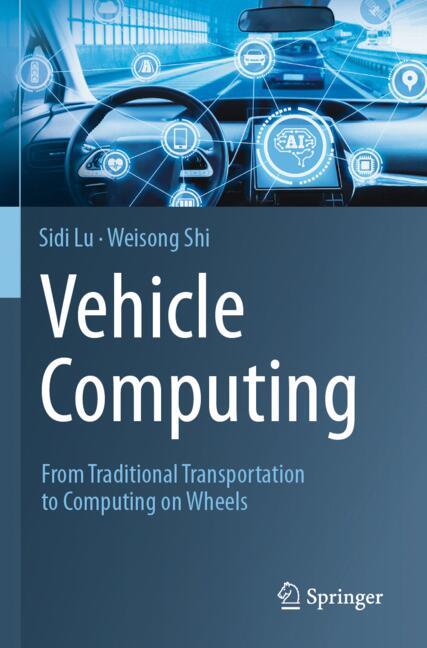
Vehicle Computing
☆☆☆☆☆
(0 reviews)
Lowest price (incl. delivery)
7 164,00 JPY
Typical price245,63 PLN
Lowest (90 days)27,99 PLN
Offers2
Last updated2일 전
| 판매자 | Product price | Delivery | 합계 | 재고 여부 | Updated | |
|---|---|---|---|---|---|---|
| SP Springer Nature Author | 7 149,00 JPY | 15,00 JPY | 7 164,00 JPY | 구매 가능 | 1일 전 | View offer |
| SP SpringerNatureLink Shop INT | 79,99 USD | free | 79,99 USD | 구매 가능 | 2일 전 | View offer |
가격과 재고 여부는 변경될 수 있습니다. 마지막 업데이트: 08.08.2026 12:17.
0,0
☆☆☆☆☆
0 reviews
5★
0%
4★
0%
3★
0%
2★
0%
1★
0%
Product reviews
No reviews yet — be the first!
Over the past century, vehicles have predominantly functioned as a means of transportation. However, as vehicular computation and communication capacities continue to expand, it is anticipated that upcoming connected vehicle (CVs) will not only serve their conventional transport functions but also act as versatile mobile computing platforms. This book presents the concept of Vehicle Computing, encompassing five primary functionalities of CVs: computation, communication, energy management, sensing, and data storage. It proposes a potential business model and explores the challenges and opportunities associated with these domains. Vehicle Computing serves as an important resource for the research community and practitioners in the field of edge computing and cyber physical system, capturing the essence of a rapidly changing industry, addressing the challenges and opportunities associated with connected vehicles (including software-defined vehicles, autonomous vehicles, electric vehicles), machine learning, communication, sensing, data storage, energy management, and computer systems. It synthesizes the latest research and real-world applications, offering valuable insights to both academia and industry professionals. Vehicle Computing covers topics such as: The fundamentals of Vehicle Computing, including its historical context and key components. Advanced communication and networking technologies for connected vehicles. Sensing and data acquisition techniques, including edge and cloud computing integration. Energy management and storage, focusing on electric vehicle infrastructure and vehicle-to-grid. Data storage and processing strategies for vehicular environments. Business models, opportunities, and challenges associated with Vehicle Computing. Real-world applications and case studies, highlighting best practices and future trends.
Similar products
 Patient Safety Coaching
from $91.97
Patient Safety Coaching
from $91.97
 Ethnography and Diversity
from $69.30
Ethnography and Diversity
from $69.30
 Smart Villages
from $91.97
Smart Villages
from $91.97
 Nuclear Non-Proliferation in International Law - Volume VI
from $91.97
Nuclear Non-Proliferation in International Law - Volume VI
from $91.97
 The Price of Freedom
from $91.97
The Price of Freedom
from $91.97
 Eco-Social Policy in the OECD and the World Bank
from $91.97
Eco-Social Policy in the OECD and the World Bank
from $91.97
 Special Topics in Policing
from $122.58
Special Topics in Policing
from $122.58
 Music from the Heart
from $91.97
Music from the Heart
from $91.97