
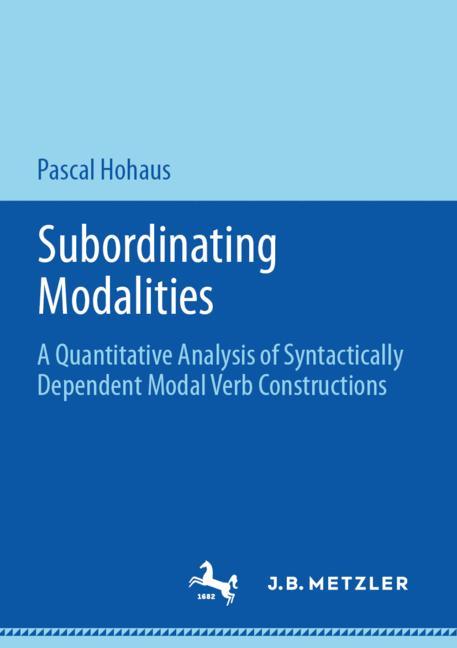
Subordinating Modalities
☆☆☆☆☆
(0 reviews)
Lowest price (incl. delivery)
108,99 USD
Typical price81,37 PLN
Lowest (90 days)59,99 PLN
Offers7
Last updated1주 전
Price history (90 days)
Full history
2026-08-08
2026-08-15
| 업데이트 일시 | 가격 |
|---|---|
| 2026-08-08 | 71,68 |
| 2026-08-15 | 59,99 |
| 판매자 | Product price | Delivery | 합계 | 재고 여부 | Updated | |
|---|---|---|---|---|---|---|
| SP SpringerNatureLink Shop INT | 79,99 USD | 29,00 USD | 108,99 USD | 구매 가능 | 6일 전 | View offer |
| SP SpringerNatureLink Shop INT | 84,99 USD | 25,00 USD | 109,99 USD | 구매 가능 | 6일 전 | View offer |
| SP SpringerNatureLink Shop INT | 84,99 USD | free | 84,99 USD | 구매 가능 | 6일 전 | View offer |
| SP SpringerNatureLink Shop INT | 74,99 GBP | free | 74,99 GBP | 구매 가능 | 6일 전 | View offer |
| SP SpringerNatureLink Shop INT | 99,99 USD | 25,00 USD | 124,99 USD | 구매 가능 | 6일 전 | View offer |
| SP SpringerNatureLink Shop INT | 99,99 USD | 25,00 USD | 124,99 USD | 구매 가능 | 6일 전 | View offer |
| SP Springer Nature Author | 99,99 USD | free | 99,99 USD | 구매 가능 | 1주 전 | View offer |
가격과 재고 여부는 변경될 수 있습니다. 마지막 업데이트: 08.08.2026 13:41.
0,0
☆☆☆☆☆
0 reviews
5★
0%
4★
0%
3★
0%
2★
0%
1★
0%
Product reviews
No reviews yet — be the first!
This study is concerned with the use of the English modals (may, might,can, could, shall, should, will, would and must) in adverbial, relative and complement clauses. It employs synchronic data from the British National Corpus and quantitative methods to investigate similarities and differences between the core modals, as well as modal-specific preferences in subordinate clauses. The main finding is that modal verbs in subordinate clauses may be conceived of as meso-constructions and that they qualify as micro-constructions once further syntagmatic features are considered. This allows for distinguishing modal verb phrases with different degrees of complexity, schematicity, productivity and subjectivity. Further applications give us insights into collocations, modal harmony, semantic preference, and the attraction of dynamic meaning to relative clauses.
Similar products
 50 Years of Philosophy and Medicine
from $107.30
50 Years of Philosophy and Medicine
from $107.30
 Understanding Cybersecurity Law and Digital Privacy
from $122.63
Understanding Cybersecurity Law and Digital Privacy
from $122.63
 Decisions in International Trade and Logistics
from $122.63
Decisions in International Trade and Logistics
from $122.63
 Advances in Economic Measurement
from $122.63
Advances in Economic Measurement
from $122.63
 Nanomaterials
from $137.96
Nanomaterials
from $137.96
 Sustainable Scaffolds-based Strategies in Tissue Engineering and Regenerative Medicine
from $162.87
Sustainable Scaffolds-based Strategies in Tissue Engineering and Regenerative Medicine
from $162.87
 Narratives in Educational Research
from $162.87
Narratives in Educational Research
from $162.87
 Environmental Biology of the Young Chinese Sturgeon
from $210.78
Environmental Biology of the Young Chinese Sturgeon
from $210.78