
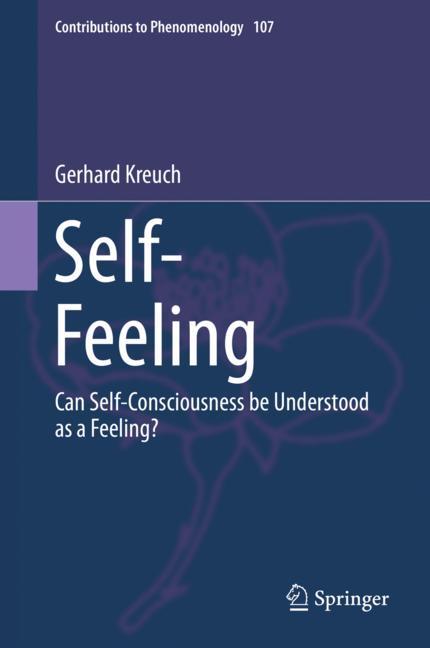
Self-Feeling
☆☆☆☆☆
(0 reviews)
Lowest price (incl. delivery)
59,50 EUR
Typical price5 173,58 PLN
Lowest (90 days)44,79 PLN
Offers2
Last updated21시간 전
Price history (90 days)
Full history
2026-08-08
2026-08-15
| 업데이트 일시 | 가격 |
|---|---|
| 2026-08-08 | 44,79 |
| 2026-08-15 | 10 295,00 |
| 판매자 | Product price | Delivery | 합계 | 재고 여부 | Updated | |
|---|---|---|---|---|---|---|
| SP Springer Nature Author | 59,50 EUR | free | 59,50 EUR | 구매 가능 | 1주 전 | View offer |
| SP SpringerNatureLink Shop INT | 10 295,00 JPY | free | 10 295,00 JPY | 구매 가능 | 21시간 전 | View offer |
가격과 재고 여부는 변경될 수 있습니다. 마지막 업데이트: 15.08.2026 07:56.
EAN
9783030307899
Springer Nature
0,0
☆☆☆☆☆
0 reviews
5★
0%
4★
0%
3★
0%
2★
0%
1★
0%
Product reviews
No reviews yet — be the first!
This monograph offers new insights into the connection between self-consciousness and emotion. It focuses on what fundamental “feelings of being” tell us about ourselves. The results enrich the philosophy of human affectivity and help shed new light on some pressing, current problems. The author seeks to understand self-consciousness as an affective phenomenon, namely as self-feeling. He identifies it as a pre-reflective, pre-propositional, bodily feeling that shapes our space of possibilities. It is the affective disclosure of individual existence. His account overcomes the difficulties of infinite regress and vicious circularity that reflective (or higher-order) accounts of self-consciousness struggle with. At the same time, it helps build a bridge between the basic level of self-consciousness and the higher level of more substantial thoughts about oneself. The title explores fundamental affectivity, Matthew Ratcliffe’s theory of existential feelings, features of self-feeling, and appropriateness and inappropriateness in self-interpretation. It also considers the contributions of the Heidelberg School of self-consciousness to current debates. The title provides students and researchers with a unique look into such vital philosophical questions as: What is self-consciousness? How do we know ourselves? It will also appeal to a wider audience interested in self-consciousness and/or human affectivity since it does not presuppose knowledge of the jargon.
Similar products
 Gamma Knife Neurosurgery in the Management of Intracranial Disorders
from $210.78
Gamma Knife Neurosurgery in the Management of Intracranial Disorders
from $210.78
 SDGs in Construction Economics and Organization
from $210.78
SDGs in Construction Economics and Organization
from $210.78
 Emerging Therapies in Neurorehabilitation III
from $210.78
Emerging Therapies in Neurorehabilitation III
from $210.78
 Ground Improvement Techniques
from $220.36
Ground Improvement Techniques
from $220.36
 Anomaly Detection in Video Surveillance
from $220.36
Anomaly Detection in Video Surveillance
from $220.36
 Mechanism and Machine Science
from $287.42
Mechanism and Machine Science
from $287.42
 Protein-Protein Interactions as New Drug Targets
from $287.42
Protein-Protein Interactions as New Drug Targets
from $287.42
 Proceedings of the 7th International Conference of Transportation Research Group of India (CTRG 2023
from $287.42
Proceedings of the 7th International Conference of Transportation Research Group of India (CTRG 2023
from $287.42