
Representation Learning for Natural Language Processing
☆☆☆☆☆
(0 reviews)
Lowest price (incl. delivery)
54,99 USD
Typical price158,97 PLN
Lowest (90 days)34,99 PLN
Offers8
Last updated6일 전
Price history (90 days)
Full history
2026-08-08
2026-08-15
| 업데이트 일시 | 가격 |
|---|---|
| 2026-08-08 | 39,99 |
| 2026-08-14 | 34,99 |
| 2026-08-15 | 51,99 |
| 판매자 | Product price | Delivery | 합계 | 재고 여부 | Updated | |
|---|---|---|---|---|---|---|
| SP SpringerNatureLink Shop INT | 39,99 USD | 15,00 USD | 54,99 USD | 구매 가능 | 6시간 전 | View offer |
| SP Springer Nature Author | 7 149,00 JPY | 25,00 JPY | 7 174,00 JPY | 구매 가능 | 6일 전 | View offer |
| SP SpringerNatureLink Shop INT | 49,99 USD | 29,00 USD | 78,99 USD | 구매 가능 | 5시간 전 | View offer |
| SP SpringerNatureLink Shop INT | 49,99 USD | 29,00 USD | 78,99 USD | 구매 가능 | 5시간 전 | View offer |
| SP SpringerNatureLink Shop INT | 49,99 USD | 15,00 USD | 64,99 USD | 구매 가능 | 5시간 전 | View offer |
| SP SpringerNatureLink Shop INT | 54,99 EUR | 25,00 EUR | 79,99 EUR | 구매 가능 | 4시간 전 | View offer |
| SP SpringerNatureLink Shop INT | 59,99 USD | 29,00 USD | 88,99 USD | 구매 가능 | 4시간 전 | View offer |
| SP SpringerNatureLink Shop INT | 59,99 USD | 25,00 USD | 84,99 USD | 구매 가능 | 4시간 전 | View offer |
가격과 재고 여부는 변경될 수 있습니다. 마지막 업데이트: 08.08.2026 23:09.
0,0
☆☆☆☆☆
0 reviews
5★
0%
4★
0%
3★
0%
2★
0%
1★
0%
Product reviews
No reviews yet — be the first!
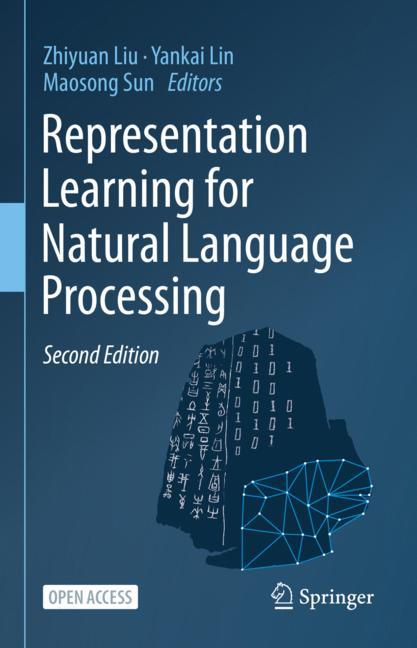
This book provides an overview of the recent advances in representation learning theory, algorithms, and applications for natural language processing (NLP), ranging from word embeddings to pre-trained language models. It is divided into four parts. Part I presents the representation learning techniques for multiple language entries, including words, sentences and documents, as well as pre-training techniques. Part II then introduces the related representation techniques to NLP, including graphs, cross-modal entries, and robustness. Part III then introduces the representation techniques for the knowledge that are closely related to NLP, including entity-based world knowledge, sememe-based linguistic knowledge, legal domain knowledge and biomedical domain knowledge. Lastly, Part IV discusses the remaining challenges and future research directions. The theories and algorithms of representation learning presented can also benefit other related domains such as machine learning, socialnetwork analysis, semantic Web, information retrieval, data mining and computational biology. This book is intended for advanced undergraduate and graduate students, post-doctoral fellows, researchers, lecturers, and industrial engineers, as well as anyone interested in representation learning and natural language processing. As compared to the first edition, the second edition (1) provides a more detailed introduction to representation learning in Chapter 1; (2) adds four new chapters to introduce pre-trained language models, robust representation learning, legal knowledge representation learning and biomedical knowledge representation learning; (3) updates recent advances in representation learning in all chapters; and (4) corrects some errors in the first edition. The new contents will be approximately 50%+ compared to the first edition. This is an open access book.
Similar products
 Climate Crisis and Changing Population Dynamics
from $128.39
Climate Crisis and Changing Population Dynamics
from $128.39
 Chapters in Education: Volume 1
from $128.39
Chapters in Education: Volume 1
from $128.39
 Human Centred Design for Systems
from $128.39
Human Centred Design for Systems
from $128.39
 Advancing the Green Agenda in the Transport and Logistics Sector in Global South Countries
from $128.39
Advancing the Green Agenda in the Transport and Logistics Sector in Global South Countries
from $128.39
 Narratives of Crisis and Futurity
from $128.39
Narratives of Crisis and Futurity
from $128.39
 AI-IoT for Smart Urban Planning and Sustainable Development
from $128.39
AI-IoT for Smart Urban Planning and Sustainable Development
from $128.39
 Clinical Hematology and Hemato-Oncology
from $128.39
Clinical Hematology and Hemato-Oncology
from $128.39
 Smart Hydrogels and Ferrogels
from $128.39
Smart Hydrogels and Ferrogels
from $128.39