
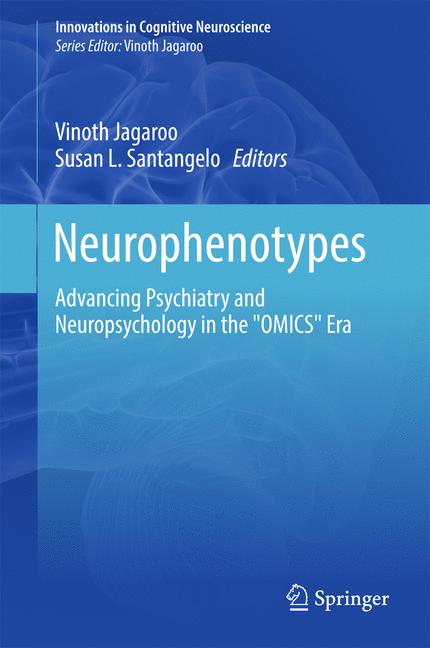
Neurophenotypes
☆☆☆☆☆
(0 reviews)
Lowest price (incl. delivery)
13 746,00 JPY
Typical price6 920,25 PLN
Lowest (90 days)113,50 PLN
Offers3
Last updated1주 전
| 판매자 | Product price | Delivery | 합계 | 재고 여부 | Updated | |
|---|---|---|---|---|---|---|
| SP SpringerNatureLink Shop INT | 13 727,00 JPY | 19,00 JPY | 13 746,00 JPY | 구매 가능 | 1주 전 | View offer |
| SP Springer Nature Author | 13 727,00 JPY | 19,00 JPY | 13 746,00 JPY | 구매 가능 | 1주 전 | View offer |
| SP SpringerNatureLink Shop INT | 113,50 EUR | free | 113,50 EUR | 구매 가능 | 1주 전 | View offer |
가격과 재고 여부는 변경될 수 있습니다. 마지막 업데이트: 08.08.2026 23:22.
EAN
9781461438465
Springer Nature
0,0
☆☆☆☆☆
0 reviews
5★
0%
4★
0%
3★
0%
2★
0%
1★
0%
Product reviews
No reviews yet — be the first!
The interest in ‘biomarkers’ seen across a spectrum of biomedical disciplines reflects the rise of molecular biology and genetics. A host of ‘omics’ disciplines in addition to genomics, marked by multidimensional data and complex analyses, and enabled by bioinformatics, have pushed the trajectory of biomarker development even further. They have also made more tractable the complex mappings of genotypes to phenotypes – genome-to-phenome mapping – to which the concept of a biomarker is central. Genomic investigations of the brain are beginning to reveal spectacular associations between genes and neural systems. Neural and cognitive phenomics are considered a necessary complement to genomics of the brain. Other major omics developments such as connectomics, the comprehensive mapping of neurons and neural networks, are heralding brain maps of unprecedented detail. Such developments are defining a new era of brain science. And in this new research environment, neural systems and cognitive operations are pressed for new kinds of definitions – that facilitate brain-behavioral alignment in an omics operating environment. This volume explores the topic of markers framed around the constructs of cognitive and neural systems. ‘Neurophenotype’ is a term adopted to describe a neural or cognitive marker that can be scientifically described within an associative framework – and while the genome-to-phenome framework is the most recognized of these, epigenetics and non-gene-regulated neural dynamics also suggest other frameworks. In either case, the term neurophenotype defines operational constructs of brain-behavioral domains that serve the integration of these domains with neuroscientific and omics models of the brain. The topic is critically important to psychiatry and neuropsychology: Neurophenotypes offer a ‘format’ and a ‘language’ by which psychiatry and neuropsychology can be in step with the brain sciences. They also bring a new challenge to the clinical neurosciences in terms of construct validation and refinement. Topics covered in the volume include: Brain and cognition in the omics era Phenomics, connectomics, and Research Domain Criteria Circuit-based neurophenotypes, and complications posed by non-gene regulated factors The legacy of the endophenotype concept – its utility and limitations Various potential neurophenotypes of relevance to clinical neuroscience, including Response Inhibition, Fear Conditioning and Extinction, Error Processing, Reward Dependence and Reward Deficiency, Face Perception, and Language Phenotypes Dynamic (electrophysiological) and computational neurophenotypes The challenge of a cultural shift for psychiatry and neuropsychology The volume may be especially relevant to researchers and clinical practitioners in psychiatry and neuropsychology and to cognitive neuroscientists interested in the intersection of neuroscience with genomics, phenomics and other omics disciplines.
Similar products
 50 Years of Philosophy and Medicine
from $107.30
50 Years of Philosophy and Medicine
from $107.30
 Understanding Cybersecurity Law and Digital Privacy
from $122.63
Understanding Cybersecurity Law and Digital Privacy
from $122.63
 Decisions in International Trade and Logistics
from $122.63
Decisions in International Trade and Logistics
from $122.63
 Advances in Economic Measurement
from $122.63
Advances in Economic Measurement
from $122.63
 Nanomaterials
from $137.96
Nanomaterials
from $137.96
 Sustainable Scaffolds-based Strategies in Tissue Engineering and Regenerative Medicine
from $162.87
Sustainable Scaffolds-based Strategies in Tissue Engineering and Regenerative Medicine
from $162.87
 Narratives in Educational Research
from $162.87
Narratives in Educational Research
from $162.87
 Environmental Biology of the Young Chinese Sturgeon
from $210.78
Environmental Biology of the Young Chinese Sturgeon
from $210.78