
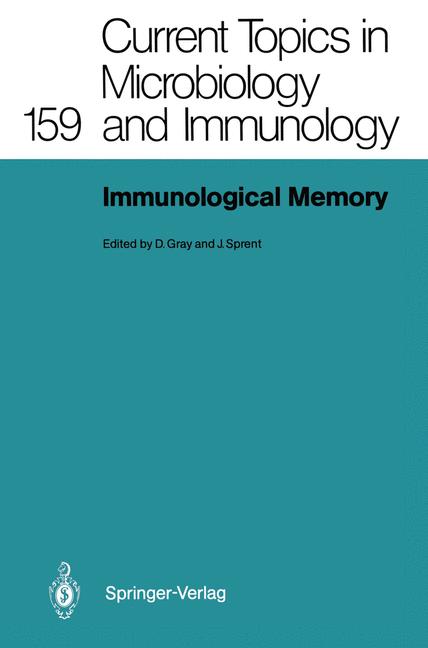
Immunological Memory
☆☆☆☆☆
(0 reviews)
Lowest price (incl. delivery)
11 458,00 JPY
Typical price1 751,17 PLN
Lowest (90 days)71,50 PLN
Offers7
Last updated6일 전
Price history (90 days)
Full history
2026-08-08
2026-08-15
| 업데이트 일시 | 가격 |
|---|---|
| 2026-08-08 | 84,99 |
| 2026-08-15 | 71,50 |
| 판매자 | Product price | Delivery | 합계 | 재고 여부 | Updated | |
|---|---|---|---|---|---|---|
| SP SpringerNatureLink Shop INT | 11 439,00 JPY | 19,00 JPY | 11 458,00 JPY | 구매 가능 | 7시간 전 | View offer |
| SP Springer Nature Author | 11 439,00 JPY | 25,00 JPY | 11 464,00 JPY | 구매 가능 | 6일 전 | View offer |
| SP SpringerNatureLink Shop INT | 84,99 USD | 25,00 USD | 109,99 USD | 구매 가능 | 13시간 전 | View offer |
| SP SpringerNatureLink Shop INT | 84,99 USD | 29,00 USD | 113,99 USD | 구매 가능 | 13시간 전 | View offer |
| SP SpringerNatureLink Shop INT | 85,59 USD | 19,00 USD | 104,59 USD | 구매 가능 | 13시간 전 | View offer |
| SP SpringerNatureLink Shop INT | 85,59 USD | free | 85,59 USD | 구매 가능 | 13시간 전 | View offer |
| SP SpringerNatureLink Shop INT | 94,00 EUR | 19,00 EUR | 113,00 EUR | 구매 가능 | 13시간 전 | View offer |
가격과 재고 여부는 변경될 수 있습니다. 마지막 업데이트: 08.08.2026 23:21.
0,0
☆☆☆☆☆
0 reviews
5★
0%
4★
0%
3★
0%
2★
0%
1★
0%
Product reviews
No reviews yet — be the first!
Although immunologists know rather a lot about the manif estation of immunological memory, an understanding of the mechanism of memory at cellular and biochemical levels eludes us. Indeed, as we shall see, it is not even clear which of the several models used to explain the working of memory approximates to the truth. It is in order to report on approaches to this problem and on recent experimental advances in the field of memory cells that this volume has been put together. In the past 4-5 years cell surface molecules that may enable us to define memory Band T cells have been identified. It may now be possible to ask how memory cells are generated and to define what signals are required during or after antigenic encounter for a cell to enter the memory cell pool rather than to terminally differentiate into an effector cell. The transition from virgin cell to memory cell is clearly accompanied by several biochemical changes. For B cells, isotype switching and somatic mutations (leading to affinity maturation) are well-defined phenomena, although the molecular mechanisms remain mys terious. Both have received attention in many excellent reviews of late and so are not considered in detail in this book. Neither switching nor somatic mutation is a feature of peripheral T-cell maturation; biochemical differences between virgin and mem ory T cells may only relate to differing activation requirements and possibly changes in the expression of accessory molecules.
Similar products
 50 Years of Philosophy and Medicine
from $107.30
50 Years of Philosophy and Medicine
from $107.30
 Understanding Cybersecurity Law and Digital Privacy
from $122.63
Understanding Cybersecurity Law and Digital Privacy
from $122.63
 Decisions in International Trade and Logistics
from $122.63
Decisions in International Trade and Logistics
from $122.63
 Advances in Economic Measurement
from $122.63
Advances in Economic Measurement
from $122.63
 Nanomaterials
from $137.96
Nanomaterials
from $137.96
 Sustainable Scaffolds-based Strategies in Tissue Engineering and Regenerative Medicine
from $162.87
Sustainable Scaffolds-based Strategies in Tissue Engineering and Regenerative Medicine
from $162.87
 Narratives in Educational Research
from $162.87
Narratives in Educational Research
from $162.87
 Environmental Biology of the Young Chinese Sturgeon
from $210.78
Environmental Biology of the Young Chinese Sturgeon
from $210.78