
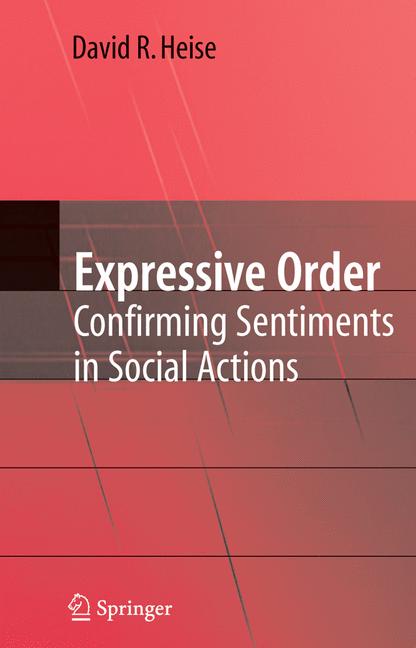
Expressive Order
☆☆☆☆☆
(0 reviews)
Lowest price (incl. delivery)
7 168,00 JPY
Typical price613,50 PLN
Lowest (90 days)35,99 PLN
Offers6
Last updated1주 전
Price history (90 days)
Full history
2026-08-08
2026-08-15
| 업데이트 일시 | 가격 |
|---|---|
| 2026-08-08 | 39,99 |
| 2026-08-14 | 35,99 |
| 2026-08-15 | 52,74 |
| 판매자 | Product price | Delivery | 합계 | 재고 여부 | Updated | |
|---|---|---|---|---|---|---|
| SP SpringerNatureLink Shop INT | 7 149,00 JPY | 19,00 JPY | 7 168,00 JPY | 구매 가능 | 1주 전 | View offer |
| SP Springer Nature Author | 7 149,00 JPY | free | 7 149,00 JPY | 구매 가능 | 1주 전 | View offer |
| SP SpringerNatureLink Shop INT | 49,99 USD | 25,00 USD | 74,99 USD | 구매 가능 | 1주 전 | View offer |
| SP SpringerNatureLink Shop INT | 54,99 USD | 19,00 USD | 73,99 USD | 구매 가능 | 1주 전 | View offer |
| SP SpringerNatureLink Shop INT | 54,99 USD | 25,00 USD | 79,99 USD | 구매 가능 | 1주 전 | View offer |
| SP SpringerNatureLink Shop INT | 59,00 EUR | 15,00 EUR | 74,00 EUR | 구매 가능 | 1주 전 | View offer |
가격과 재고 여부는 변경될 수 있습니다. 마지막 업데이트: 08.08.2026 23:08.
0,0
☆☆☆☆☆
0 reviews
5★
0%
4★
0%
3★
0%
2★
0%
1★
0%
Product reviews
No reviews yet — be the first!
Expressive Order introduces affect control theory to lay readers of sociology, and additionally guides sociology specialists into the theory's deep structure. Briefly, affect control theory proposes that individuals shape their social interactions so that emerging impressions reinforce sentiments about salient identities, behaviors, and settings. Emotions signal how the process of confirming sentiments is going for each individual. The theory explains behaviors, emotions, social labeling, and personality attributions in a wide variety of social contexts – including intimate relations, work-world interactions, courtrooms, and international relations. Part 1 of the book provides a plain-language exposition of the theory, along with numerous interpretive analyses of everyday situations. This is engaging and provocative reading for anyone interested in social relations, including undergraduates in and out of the social sciences. Part 2 presents the mathematical derivations that define sentiment-confirming behavior, labeling, attribution, and emotion. The mathematical solutions, conjoined with understandings about social institutions, are the basis of the theory's explanations. The derivations clarify the theory's assumptions and reasoning, as only mathematics can. Part 3 of Expressive Order describes the research program associated with the theory and the computer simulation software that is used in research. This part of the book offers a jump start for individuals wishing to use affect control theory in their own research.
Similar products
 50 Years of Philosophy and Medicine
from $107.30
50 Years of Philosophy and Medicine
from $107.30
 Understanding Cybersecurity Law and Digital Privacy
from $122.63
Understanding Cybersecurity Law and Digital Privacy
from $122.63
 Decisions in International Trade and Logistics
from $122.63
Decisions in International Trade and Logistics
from $122.63
 Advances in Economic Measurement
from $122.63
Advances in Economic Measurement
from $122.63
 Nanomaterials
from $137.96
Nanomaterials
from $137.96
 Sustainable Scaffolds-based Strategies in Tissue Engineering and Regenerative Medicine
from $162.87
Sustainable Scaffolds-based Strategies in Tissue Engineering and Regenerative Medicine
from $162.87
 Narratives in Educational Research
from $162.87
Narratives in Educational Research
from $162.87
 Environmental Biology of the Young Chinese Sturgeon
from $210.78
Environmental Biology of the Young Chinese Sturgeon
from $210.78