
Current Topics in Complement
☆☆☆☆☆
(0 reviews)

Lowest price (incl. delivery)
249,99 GBP
Typical price249,99 PLN
Lowest (90 days)249,99 PLN
Offers1
Last updated1일 전
| 판매자 | Product price | Delivery | 합계 | 재고 여부 | Updated | |
|---|---|---|---|---|---|---|
| SP Springer Nature Author | 249,99 GBP | free | 249,99 GBP | 구매 가능 | 1일 전 | View offer |
가격과 재고 여부는 변경될 수 있습니다. 마지막 업데이트: 08.08.2026 22:58.
0,0
☆☆☆☆☆
0 reviews
5★
0%
4★
0%
3★
0%
2★
0%
1★
0%
Product reviews
No reviews yet — be the first!
Complement has long been regarded as a pivotal effector arm of the innate im-mune response, eliciting important immunoregulatory functions in the context of inflammation and also serving as a vital link between the innate and adaptive immune response. In the post-genomic era, our knowledge of the innate immune system is enriched by findings that point to novel functions that do not strictly correlate with immunological defense and surveillance, immune modulation or inflammation. Several studies indicate that complement proteins exert functions that are either more complex than previously thought, or go well beyond the innate immune character of the system. The advent of high-throughput platforms for genome and proteome-wide profiling, together with the enormous amount of raw genetic information that has accumulated in the databases, have stirred new expectations in biomedical research. They have led complementologists to revisit established biological systems, such as the complement system, from a global and integrative perspec-tive. Complement research is now faced with the challenge of trying to integrate isolated biochemical pathways into complex gene and protein regulatory cir-cuits. In this respect, scientists from around the world convened at the Third Aegean Conferences Workshop on Complement Associated Diseases, Animal Models, and Therapeutics (June 5–10, 2005), to discuss recent advances in this fast evolving field. This volume represents a collection of topics on the "novel" functions of complement, pathophysiology, protein structures, design of complement inhibitors, and complement assays discussed during the conference.
Similar products
 Gamma Knife Neurosurgery in the Management of Intracranial Disorders
from $210.78
Gamma Knife Neurosurgery in the Management of Intracranial Disorders
from $210.78
 SDGs in Construction Economics and Organization
from $210.78
SDGs in Construction Economics and Organization
from $210.78
 Emerging Therapies in Neurorehabilitation III
from $210.78
Emerging Therapies in Neurorehabilitation III
from $210.78
 Ground Improvement Techniques
from $220.36
Ground Improvement Techniques
from $220.36
 Anomaly Detection in Video Surveillance
from $220.36
Anomaly Detection in Video Surveillance
from $220.36
 Mechanism and Machine Science
from $287.42
Mechanism and Machine Science
from $287.42
 Protein-Protein Interactions as New Drug Targets
from $287.42
Protein-Protein Interactions as New Drug Targets
from $287.42
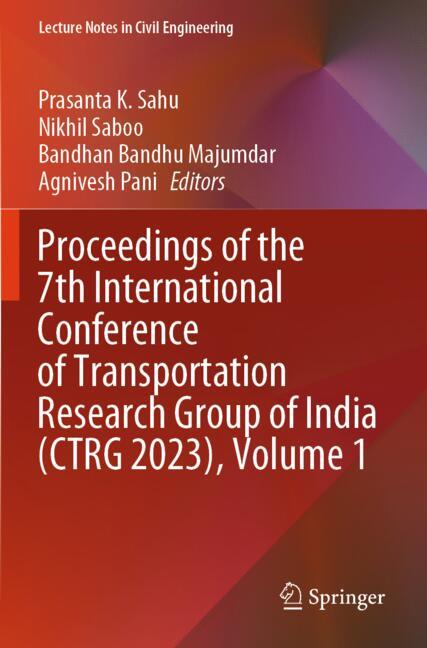 Proceedings of the 7th International Conference of Transportation Research Group of India (CTRG 2023
from $287.42
Proceedings of the 7th International Conference of Transportation Research Group of India (CTRG 2023
from $287.42