
Cell Death
☆☆☆☆☆
(0 reviews)
Lowest price (incl. delivery)
21 382,00 JPY
Typical price5 824,87 PLN
Lowest (90 days)157,74 PLN
Offers4
Last updated1주 전
Price history (90 days)
Full history
2026-08-08
2026-08-15
| 업데이트 일시 | 가격 |
|---|---|
| 2026-08-08 | 164,47 |
| 2026-08-15 | 157,74 |
| 판매자 | Product price | Delivery | 합계 | 재고 여부 | Updated | |
|---|---|---|---|---|---|---|
| SP SpringerNatureLink Shop INT | 21 382,00 JPY | free | 21 382,00 JPY | 구매 가능 | 6일 전 | View offer |
| SP Springer Nature Author | 21 382,00 JPY | 25,00 JPY | 21 407,00 JPY | 구매 가능 | 1주 전 | View offer |
| SP SpringerNatureLink Shop INT | 149,52 USD | 15,00 USD | 164,52 USD | 구매 가능 | 6일 전 | View offer |
| SP SpringerNatureLink Shop INT | 176,50 EUR | free | 176,50 EUR | 구매 가능 | 6일 전 | View offer |
가격과 재고 여부는 변경될 수 있습니다. 마지막 업데이트: 08.08.2026 23:33.
EAN
9781493943258
Springer Nature
0,0
☆☆☆☆☆
0 reviews
5★
0%
4★
0%
3★
0%
2★
0%
1★
0%
Product reviews
No reviews yet — be the first!
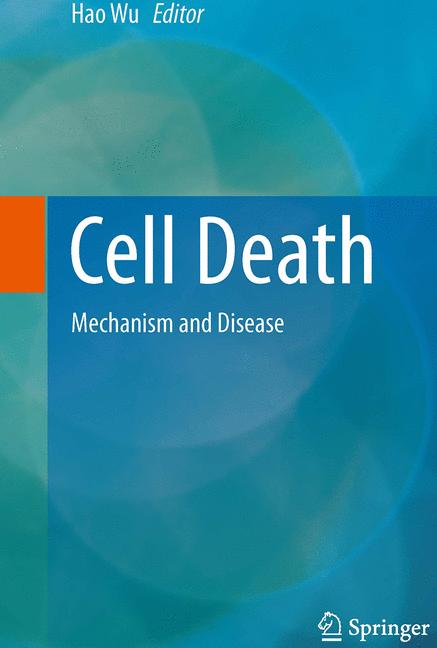
Beginning from centuries of anecdotal descriptions of cell death, such as those on the development of the midwife toad in 1842 by Carl Vogt, to modern-day investigations of cell death as a biological discipline, it has become accepted that cell death in multicellular organisms is a normal part of life. This book provides a comprehensive view of cell death, from its mechanisms of initiation and execution, to its implication in human disease and therapy. Physiological cell death plays critical roles in almost all aspects of biology, and the book details its roles in lymphocyte homeostasis, neuronal function, metabolism, and the DNA damage response. When physiological cell death goes awry, diseases can arise, and cancer is presented as a central paradigm for the consequences of derangements in the interplay between cell survival and cell death. At the same time, the potential promise of targeted therapies aimed at interdicting cell death machineries are also discussed extensively. The molecular mechanisms that underlie apoptotic cell death are illustrated from the perspectives of both the intrinsic, mitochondrial apoptotic pathway and the extrinsic, death receptor pathway. Key players in these pathways, such as the Bcl2 family proteins, cytochrome c, Apaf-1, caspases, death receptor adapter proteins, and inhibitor of apoptosis proteins, are presented from both functional and structural angles. Until only a few years ago, programmed cell death has been considered essentially synonymous with apoptosis. However, we now know that programmed cell death can also take other forms such as necrosis or necroptosis, and to this end, the mechanisms that underlie programmed necrosis in development and host defense are illustrated. The past twenty plus years have seen an incredible growth of research in cell death, with one breakthrough after another, and the legacy still goes on with constant new surprises and findings. Long live cell death!
Similar products
 50 Years of Philosophy and Medicine
from $107.30
50 Years of Philosophy and Medicine
from $107.30
 Understanding Cybersecurity Law and Digital Privacy
from $122.63
Understanding Cybersecurity Law and Digital Privacy
from $122.63
 Decisions in International Trade and Logistics
from $122.63
Decisions in International Trade and Logistics
from $122.63
 Advances in Economic Measurement
from $122.63
Advances in Economic Measurement
from $122.63
 Nanomaterials
from $137.96
Nanomaterials
from $137.96
 Sustainable Scaffolds-based Strategies in Tissue Engineering and Regenerative Medicine
from $162.87
Sustainable Scaffolds-based Strategies in Tissue Engineering and Regenerative Medicine
from $162.87
 Narratives in Educational Research
from $162.87
Narratives in Educational Research
from $162.87
 Environmental Biology of the Young Chinese Sturgeon
from $210.78
Environmental Biology of the Young Chinese Sturgeon
from $210.78