
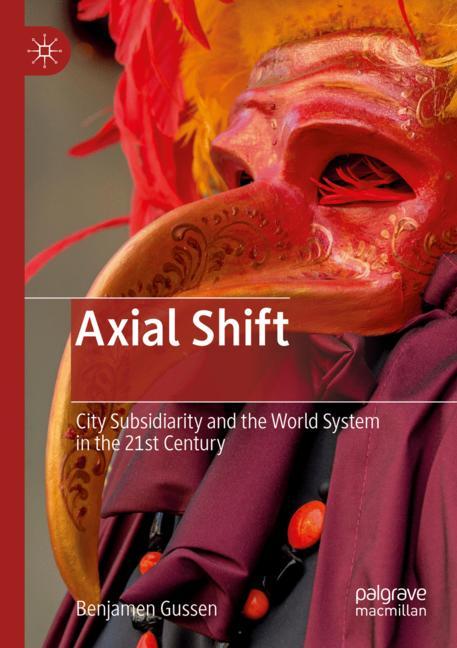
Axial Shift
☆☆☆☆☆
(0 reviews)
Lowest price (incl. delivery)
84,99 USD
Typical price1 089,81 PLN
Lowest (90 days)71,50 PLN
Offers7
Last updated1주 전
Price history (90 days)
Full history
2026-08-08
2026-08-15
| 업데이트 일시 | 가격 |
|---|---|
| 2026-08-08 | 84,99 |
| 2026-08-15 | 71,50 |
| 판매자 | Product price | Delivery | 합계 | 재고 여부 | Updated | |
|---|---|---|---|---|---|---|
| SP SpringerNatureLink Shop INT | 84,99 USD | free | 84,99 USD | 구매 가능 | 1주 전 | View offer |
| SP SpringerNatureLink Shop INT | 14 299,00 JPY | 15,00 JPY | 14 314,00 JPY | 구매 가능 | 1주 전 | View offer |
| SP Springer Nature Author | 14 299,00 JPY | 25,00 JPY | 14 324,00 JPY | 구매 가능 | 1주 전 | View offer |
| SP SpringerNatureLink Shop INT | 99,99 USD | 19,00 USD | 118,99 USD | 구매 가능 | 1주 전 | View offer |
| SP SpringerNatureLink Shop INT | 109,99 USD | free | 109,99 USD | 구매 가능 | 1주 전 | View offer |
| SP SpringerNatureLink Shop INT | 109,99 USD | free | 109,99 USD | 구매 가능 | 1주 전 | View offer |
| SP SpringerNatureLink Shop INT | 118,00 EUR | free | 118,00 EUR | 구매 가능 | 1주 전 | View offer |
가격과 재고 여부는 변경될 수 있습니다. 마지막 업데이트: 08.08.2026 23:21.
0,0
☆☆☆☆☆
0 reviews
5★
0%
4★
0%
3★
0%
2★
0%
1★
0%
Product reviews
No reviews yet — be the first!
This book uses historical analysis, constitutional economics, and complexity theory to furnish an account of city subsidiarity as a legal, ethical, political, and economic principle. The book contemplates subsidiarity as a constitutional principle, where cities would benefit from much wider local autonomy. Constitutional economics suggests an optimal limit to jurisdictional footprints (territories). This entails preference for political orders where sovereignty is shared between different cities rather states where capital cities dominate. The introduction of city subsidiarity as a constitutional principle holds the key to economic prosperity in a globalizing world. Moreover, insights from complexity theory suggest subsidiarity is the only effective response to the ‘problem of scale.’ It is a fitness trait that prevents highly complex systems from collapsing. The nation-state is a highly complex system withinwhich cities function as ‘attractors.’ The collapse of such systems would ensue if there were strong coupling between attractors. Such coupling obtains under legal monism. Only subsidiarity can make the eventuality of collapse improbable. The emergent and self-organizing properties of subsidiarity entail a shift in policy emphasis towards cities with a wide margin of autonomy.
Similar products
 50 Years of Philosophy and Medicine
from $107.30
50 Years of Philosophy and Medicine
from $107.30
 Understanding Cybersecurity Law and Digital Privacy
from $122.63
Understanding Cybersecurity Law and Digital Privacy
from $122.63
 Decisions in International Trade and Logistics
from $122.63
Decisions in International Trade and Logistics
from $122.63
 Advances in Economic Measurement
from $122.63
Advances in Economic Measurement
from $122.63
 Nanomaterials
from $137.96
Nanomaterials
from $137.96
 Sustainable Scaffolds-based Strategies in Tissue Engineering and Regenerative Medicine
from $162.87
Sustainable Scaffolds-based Strategies in Tissue Engineering and Regenerative Medicine
from $162.87
 Narratives in Educational Research
from $162.87
Narratives in Educational Research
from $162.87
 Environmental Biology of the Young Chinese Sturgeon
from $210.78
Environmental Biology of the Young Chinese Sturgeon
from $210.78