
Smart Cities
☆☆☆☆☆
(0 reviews)
Lowest price (incl. delivery)
140,70 EUR
Typical price145,37 PLN
Lowest (90 days)104,99 PLN
Offers3
Last updated1週間前
Price history (90 days)
Full history
2026-08-08
2026-08-15
| 更新日時 | 価格 |
|---|---|
| 2026-08-08 | 104,99 |
| 2026-08-15 | 140,70 |
| 販売者 | Product price | Delivery | 合計 | 在庫状況 | Updated | |
|---|---|---|---|---|---|---|
| SP SpringerNatureLink Shop INT | 140,70 EUR | free | 140,70 EUR | 在庫あり | 1日前 | View offer |
| SP Springer Nature Author | 140,70 EUR | free | 140,70 EUR | 在庫あり | 1週間前 | View offer |
| SP SpringerNatureLink Shop INT | 24 309,00 JPY | 25,00 JPY | 24 334,00 JPY | 在庫あり | 1日前 | View offer |
価格や在庫状況は変更される場合があります。 最終更新: 08.08.2026 22:44.
EAN
9783031598487
Springer Nature
0,0
☆☆☆☆☆
0 reviews
5★
0%
4★
0%
3★
0%
2★
0%
1★
0%
Product reviews
No reviews yet — be the first!
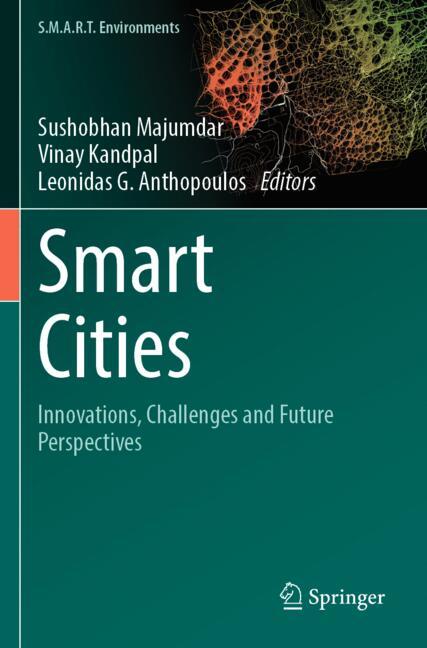
This book aims to integrate new technologies and adaptation tools into the process of smart city planning. It also emphasizes the value and importance of modern technologies such as IoT and data science as a smart technology for the formation of a smart city. The authors believe that various technologies in a smart city will reduce all the problems for the sustainable growth and future prospects of the city. The first section of this book discusses the innovation of new technologies (AI, data science, block chain, etc.) that has flourished in recent decades which will make the city smarter. This section also describes that block chain and IoT (Internet of Things) are two transformative technologies that can greatly impact smart cities by enhancing security, improving transparency, and enabling efficient management of resources. The second section of the book explains about the uses of AI tools and smart technologies (like waste management, public safety and security) for the development and management of smart cities. This chapter also describes AI-powered systems that are integrated into smart buildings to optimize energy usage, enhance occupant comfort, and improve building management. These systems can adjust lighting and HVAC settings based on occupancy, learn user preferences, and provide personalized energy efficiency recommendations. The third portion of the book investigates the recent challenges and barriers of smart city that have been faced by the smart cities in the recent decades. This section also describes various challenges and barriers for the implementation of IoT sensor, AI technologies, etc., for the formation of a smart city. The future prospects of a smart city are the main theme of the last chapter. In this section, an attempt has been made about the future vision and outlook of the smart city. This chapter also describes different approaches (like smart grid, societal smart city, smart city model, etc.) for the future planning and management of the city.
Similar products
 50 Years of Philosophy and Medicine
from $107.30
50 Years of Philosophy and Medicine
from $107.30
 Understanding Cybersecurity Law and Digital Privacy
from $122.63
Understanding Cybersecurity Law and Digital Privacy
from $122.63
 Decisions in International Trade and Logistics
from $122.63
Decisions in International Trade and Logistics
from $122.63
 Advances in Economic Measurement
from $122.63
Advances in Economic Measurement
from $122.63
 Nanomaterials
from $137.96
Nanomaterials
from $137.96
 Sustainable Scaffolds-based Strategies in Tissue Engineering and Regenerative Medicine
from $162.87
Sustainable Scaffolds-based Strategies in Tissue Engineering and Regenerative Medicine
from $162.87
 Narratives in Educational Research
from $162.87
Narratives in Educational Research
from $162.87
 Environmental Biology of the Young Chinese Sturgeon
from $210.78
Environmental Biology of the Young Chinese Sturgeon
from $210.78