
Python for Data Science
☆☆☆☆☆
(0 reviews)
Lowest price (incl. delivery)
75,20 EUR
Typical price8 007,00 PLN
Lowest (90 days)8 007,00 PLN
Offers2
Last updated15時間前
| 販売者 | Product price | Delivery | 合計 | 在庫状況 | Updated | |
|---|---|---|---|---|---|---|
| SP SpringerNatureLink Shop INT | 46,20 EUR | 29,00 EUR | 75,20 EUR | 在庫あり | 1日前 | View offer |
| SP Springer Nature Author | 8 007,00 JPY | 25,00 JPY | 8 032,00 JPY | 在庫あり | 15時間前 | View offer |
価格や在庫状況は変更される場合があります。 最終更新: 08.08.2026 23:17.
EAN
9783031524738
Springer Nature
0,0
☆☆☆☆☆
0 reviews
5★
0%
4★
0%
3★
0%
2★
0%
1★
0%
Product reviews
No reviews yet — be the first!
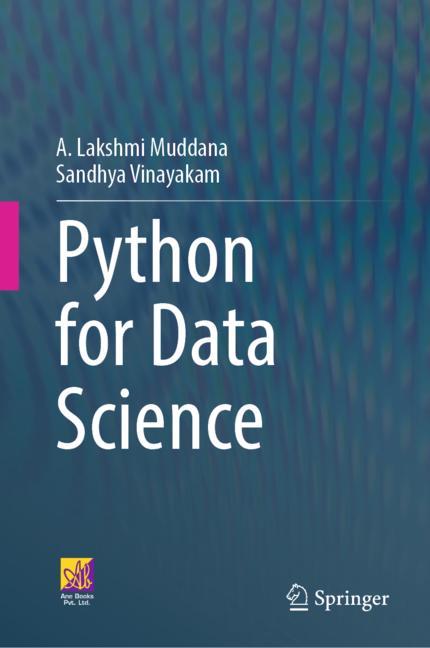
The book is designed to serve as a textbook for courses offered to undergraduate and graduate students enrolled in data science. This book aims to help the readers understand the basic and advanced concepts for developing simple programs and the fundamentals required for building machine learning models. The book covers basic concepts like data types, operators, and statements that enable the reader to solve simple problems. As functions are the core of any programming, a detailed illustration of defining & invoking functions and recursive functions is covered. Built-in data structures of Python, such as strings, lists, tuples, sets, and dictionary structures, are discussed in detail with examples and exercise problems. Files are an integrated part of programming when dealing with large data. File handling operations are illustrated with examples and a case study at the end of the chapter. Widely used Python packages for data science, such as Pandas, Data Visualization libraries, and regular expressions, are discussed with examples and case studies at the end of the chapters. The book also contains a chapter on SQLite3, a small relational database management system of Python, to understand how to create and manage databases. As AI applications are becoming popular for developing intelligent solutions to various problems, the book includes chapters on Machine Learning and Deep Learning. They cover the basic concepts, example applications, and case studies using popular frameworks such as SKLearn and Keras on public datasets
Similar products
 Patient Safety Coaching
from $91.97
Patient Safety Coaching
from $91.97
 Ethnography and Diversity
from $69.30
Ethnography and Diversity
from $69.30
 Smart Villages
from $91.97
Smart Villages
from $91.97
 Nuclear Non-Proliferation in International Law - Volume VI
from $91.97
Nuclear Non-Proliferation in International Law - Volume VI
from $91.97
 The Price of Freedom
from $91.97
The Price of Freedom
from $91.97
 Eco-Social Policy in the OECD and the World Bank
from $91.97
Eco-Social Policy in the OECD and the World Bank
from $91.97
 Special Topics in Policing
from $122.58
Special Topics in Policing
from $122.58
 Music from the Heart
from $91.97
Music from the Heart
from $91.97