
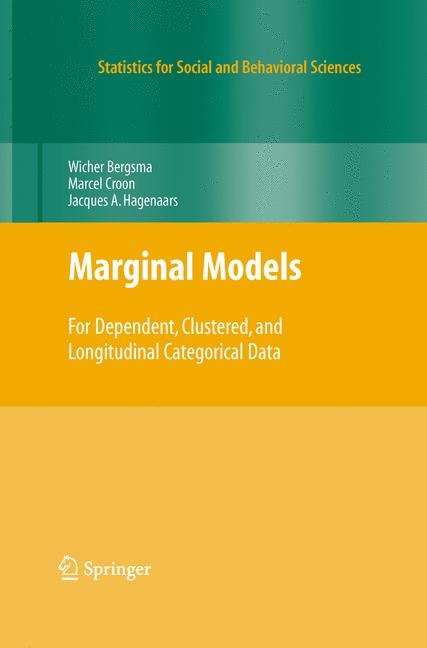
Marginal Models
☆☆☆☆☆
(0 reviews)
Lowest price (incl. delivery)
14 324,00 JPY
Typical price1 203,09 PLN
Lowest (90 days)89,99 PLN
Offers6
Last updated1週間前
Price history (90 days)
Full history
2026-08-08
2026-08-15
| 更新日時 | 価格 |
|---|---|
| 2026-08-08 | 89,99 |
| 2026-08-15 | 89,99 |
| 販売者 | Product price | Delivery | 合計 | 在庫状況 | Updated | |
|---|---|---|---|---|---|---|
| SP SpringerNatureLink Shop INT | 14 299,00 JPY | 25,00 JPY | 14 324,00 JPY | 在庫あり | 3日前 | View offer |
| SP Springer Nature Author | 14 299,00 JPY | 15,00 JPY | 14 314,00 JPY | 在庫あり | 1週間前 | View offer |
| SP SpringerNatureLink Shop INT | 99,99 USD | free | 99,99 USD | 在庫あり | 3日前 | View offer |
| SP SpringerNatureLink Shop INT | 109,99 USD | free | 109,99 USD | 在庫あり | 3日前 | View offer |
| SP SpringerNatureLink Shop INT | 109,99 USD | free | 109,99 USD | 在庫あり | 3日前 | View offer |
| SP SpringerNatureLink Shop INT | 118,00 EUR | free | 118,00 EUR | 在庫あり | 3日前 | View offer |
価格や在庫状況は変更される場合があります。 最終更新: 08.08.2026 23:23.
0,0
☆☆☆☆☆
0 reviews
5★
0%
4★
0%
3★
0%
2★
0%
1★
0%
Product reviews
No reviews yet — be the first!
Marginal Models for Dependent, Clustered, and Longitudinal Categorical Data provides a comprehensive overview of the basic principles of marginal modeling and offers a wide range of possible applications. Marginal models are often the best choice for answering important research questions when dependent observations are involved, as the many real world examples in this book show. In the social, behavioral, educational, economic, and biomedical sciences, data are often collected in ways that introduce dependencies in the observations to be compared. For example, the same respondents are interviewed at several occasions, several members of networks or groups are interviewed within the same survey, or, within families, both children and parents are investigated. Statistical methods that take the dependencies in the data into account must then be used, e.g., when observations at time one and time two are compared in longitudinal studies. At present, researchers almost automatically turn to multi-level models or to GEE estimation to deal with these dependencies. Despite the enormous potential and applicability of these recent developments, they require restrictive assumptions on the nature of the dependencies in the data. The marginal models of this book provide another way of dealing with these dependencies, without the need for such assumptions, and can be used to answer research questions directly at the intended marginal level. The maximum likelihood method, with its attractive statistical properties, is used for fitting the models. This book has mainly been written with applied researchers in mind. It includes many real world examples, explains the types of research questions for which marginal modeling is useful, and provides a detailed description of how to apply marginal models for a great diversity of research questions. All these examples are presented on the book's website (www.cmm.st), along with user friendly programs.
Similar products
 50 Years of Philosophy and Medicine
from $107.30
50 Years of Philosophy and Medicine
from $107.30
 Understanding Cybersecurity Law and Digital Privacy
from $122.63
Understanding Cybersecurity Law and Digital Privacy
from $122.63
 Decisions in International Trade and Logistics
from $122.63
Decisions in International Trade and Logistics
from $122.63
 Advances in Economic Measurement
from $122.63
Advances in Economic Measurement
from $122.63
 Nanomaterials
from $137.96
Nanomaterials
from $137.96
 Sustainable Scaffolds-based Strategies in Tissue Engineering and Regenerative Medicine
from $162.87
Sustainable Scaffolds-based Strategies in Tissue Engineering and Regenerative Medicine
from $162.87
 Narratives in Educational Research
from $162.87
Narratives in Educational Research
from $162.87
 Environmental Biology of the Young Chinese Sturgeon
from $210.78
Environmental Biology of the Young Chinese Sturgeon
from $210.78