
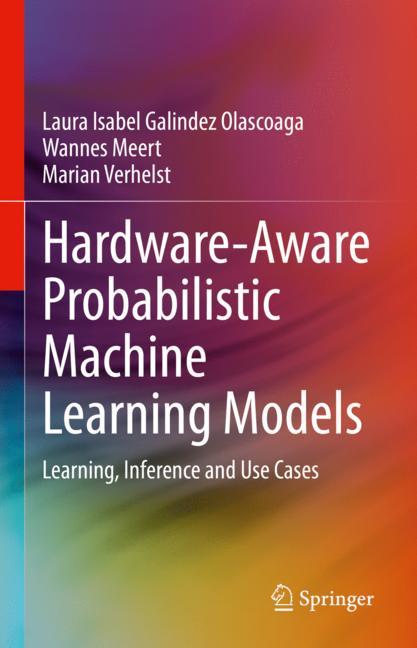
Hardware-Aware Probabilistic Machine Learning Models
☆☆☆☆☆
(0 reviews)
Lowest price (incl. delivery)
11 464,00 JPY
Typical price402,28 PLN
Lowest (90 days)30,79 PLN
Offers6
Last updated1週間前
Price history (90 days)
Full history
2026-08-08
2026-08-15
| 更新日時 | 価格 |
|---|---|
| 2026-08-08 | 34,99 |
| 2026-08-14 | 30,79 |
| 2026-08-15 | 38,49 |
| 販売者 | Product price | Delivery | 合計 | 在庫状況 | Updated | |
|---|---|---|---|---|---|---|
| SP SpringerNatureLink Shop INT | 11 439,00 JPY | 25,00 JPY | 11 464,00 JPY | 在庫あり | 4日前 | View offer |
| SP Springer Nature Author | 11 439,00 JPY | 19,00 JPY | 11 458,00 JPY | 在庫あり | 1週間前 | View offer |
| SP SpringerNatureLink Shop INT | 79,99 USD | free | 79,99 USD | 在庫あり | 4日前 | View offer |
| SP SpringerNatureLink Shop INT | 89,99 USD | free | 89,99 USD | 在庫あり | 4日前 | View offer |
| SP SpringerNatureLink Shop INT | 89,99 USD | free | 89,99 USD | 在庫あり | 4日前 | View offer |
| SP SpringerNatureLink Shop INT | 87,99 EUR | 15,00 EUR | 102,99 EUR | 在庫あり | 4日前 | View offer |
価格や在庫状況は変更される場合があります。 最終更新: 08.08.2026 13:00.
0,0
☆☆☆☆☆
0 reviews
5★
0%
4★
0%
3★
0%
2★
0%
1★
0%
Product reviews
No reviews yet — be the first!
This book proposes probabilistic machine learning models that represent the hardware properties of the device hosting them. These models can be used to evaluate the impact that a specific device configuration may have on resource consumption and performance of the machine learning task, with the overarching goal of balancing the two optimally. The book first motivates extreme-edge computing in the context of the Internet of Things (IoT) paradigm. Then, it briefly reviews the steps involved in the execution of a machine learning task and identifies the implications associated with implementing this type of workload in resource-constrained devices. The core of this book focuses on augmenting and exploiting the properties of Bayesian Networks and Probabilistic Circuits in order to endow them with hardware-awareness. The proposed models can encode the properties of various device sub-systems that are typically not considered by other resource-aware strategies, bringing about resource-saving opportunities that traditional approaches fail to uncover. The performance of the proposed models and strategies is empirically evaluated for several use cases. All of the considered examples show the potential of attaining significant resource-saving opportunities with minimal accuracy losses at application time. Overall, this book constitutes a novel approach to hardware-algorithm co-optimization that further bridges the fields of Machine Learning and Electrical Engineering.
Similar products
 50 Years of Philosophy and Medicine
from $107.30
50 Years of Philosophy and Medicine
from $107.30
 Understanding Cybersecurity Law and Digital Privacy
from $122.63
Understanding Cybersecurity Law and Digital Privacy
from $122.63
 Decisions in International Trade and Logistics
from $122.63
Decisions in International Trade and Logistics
from $122.63
 Advances in Economic Measurement
from $122.63
Advances in Economic Measurement
from $122.63
 Nanomaterials
from $137.96
Nanomaterials
from $137.96
 Sustainable Scaffolds-based Strategies in Tissue Engineering and Regenerative Medicine
from $162.87
Sustainable Scaffolds-based Strategies in Tissue Engineering and Regenerative Medicine
from $162.87
 Narratives in Educational Research
from $162.87
Narratives in Educational Research
from $162.87
 Environmental Biology of the Young Chinese Sturgeon
from $210.78
Environmental Biology of the Young Chinese Sturgeon
from $210.78