
Dimensionality Reduction in Data Science
☆☆☆☆☆
(0 reviews)
Lowest price (incl. delivery)
64,70 EUR
Typical price592,29 PLN
Lowest (90 days)44,93 PLN
Offers3
Last updated5日前
Price history (90 days)
Full history
2026-08-08
2026-08-15
| 更新日時 | 価格 |
|---|---|
| 2026-08-08 | 44,93 |
| 2026-08-15 | 49,70 |
| 販売者 | Product price | Delivery | 合計 | 在庫状況 | Updated | |
|---|---|---|---|---|---|---|
| SP SpringerNatureLink Shop INT | 49,70 EUR | 15,00 EUR | 64,70 EUR | 在庫あり | 5日前 | View offer |
| SP SpringerNatureLink Shop INT | 8 579,00 JPY | 19,00 JPY | 8 598,00 JPY | 在庫あり | 5日前 | View offer |
| SP Springer Nature Author | 8 579,00 JPY | free | 8 579,00 JPY | 在庫あり | 1週間前 | View offer |
価格や在庫状況は変更される場合があります。 最終更新: 15.08.2026 01:33.
EAN
9783031053733
Springer Nature
0,0
☆☆☆☆☆
0 reviews
5★
0%
4★
0%
3★
0%
2★
0%
1★
0%
Product reviews
No reviews yet — be the first!
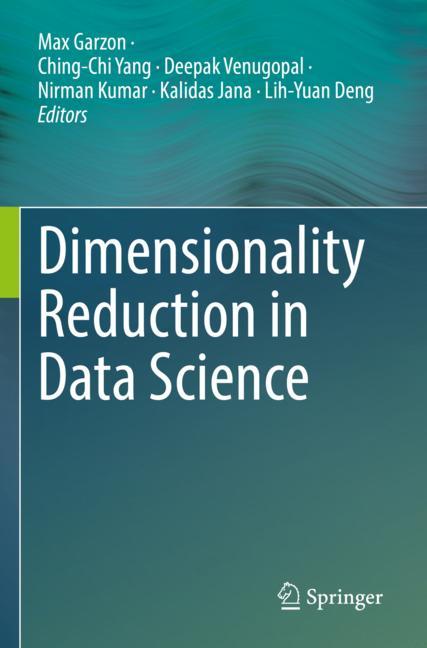
This book provides a practical and fairly comprehensive review of Data Science through the lens of dimensionality reduction, as well as hands-on techniques to tackle problems with data collected in the real world. State-of-the-art results and solutions from statistics, computer science and mathematics are explained from the point of view of a practitioner in any domain science, such as biology, cyber security, chemistry, sports science and many others. Quantitative and qualitative assessment methods are described to implement and validate the solutions back in the real world where the problems originated. The ability to generate, gather and store volumes of data in the order of tera- and exo bytes daily has far outpaced our ability to derive useful information with available computational resources for many domains. This book focuses on data science and problem definition, data cleansing, feature selection and extraction,statistical, geometric, information-theoretic, biomolecular and machine learning methods for dimensionality reduction of big datasets and problem solving, as well as a comparative assessment of solutions in a real-world setting. This book targets professionals working within related fields with an undergraduate degree in any science area, particularly quantitative. Readers should be able to follow examples in this book that introduce each method or technique. These motivating examples are followed by precise definitions of the technical concepts required and presentation of the results in general situations. These concepts require a degree of abstraction that can be followed by re-interpreting concepts like in the original example(s). Finally, each section closes with solutions to the original problem(s) afforded by these techniques, perhaps in various ways to compare and contrast dis/advantages to other solutions.
Similar products
 50 Years of Philosophy and Medicine
from $107.30
50 Years of Philosophy and Medicine
from $107.30
 Understanding Cybersecurity Law and Digital Privacy
from $122.63
Understanding Cybersecurity Law and Digital Privacy
from $122.63
 Decisions in International Trade and Logistics
from $122.63
Decisions in International Trade and Logistics
from $122.63
 Advances in Economic Measurement
from $122.63
Advances in Economic Measurement
from $122.63
 Nanomaterials
from $137.96
Nanomaterials
from $137.96
 Sustainable Scaffolds-based Strategies in Tissue Engineering and Regenerative Medicine
from $162.87
Sustainable Scaffolds-based Strategies in Tissue Engineering and Regenerative Medicine
from $162.87
 Narratives in Educational Research
from $162.87
Narratives in Educational Research
from $162.87
 Environmental Biology of the Young Chinese Sturgeon
from $210.78
Environmental Biology of the Young Chinese Sturgeon
from $210.78