
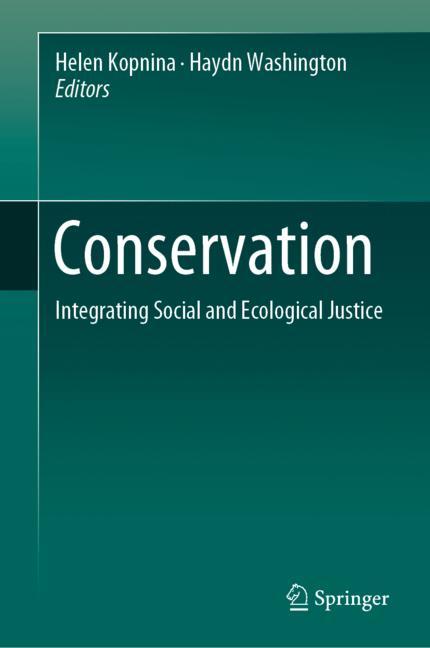
Conservation
☆☆☆☆☆
(0 reviews)
Lowest price (incl. delivery)
16 015,00 JPY
Typical price4 102,75 PLN
Lowest (90 days)132,00 PLN
Offers2
Last updated1週間前
Price history (90 days)
Full history
2026-08-08
2026-08-15
| 更新日時 | 価格 |
|---|---|
| 2026-08-08 | 132,00 |
| 2026-08-15 | 132,00 |
| 販売者 | Product price | Delivery | 合計 | 在庫状況 | Updated | |
|---|---|---|---|---|---|---|
| SP Springer Nature Author | 16 015,00 JPY | free | 16 015,00 JPY | 在庫あり | 1週間前 | View offer |
| SP SpringerNatureLink Shop INT | 132,00 EUR | free | 132,00 EUR | 在庫あり | 2日前 | View offer |
価格や在庫状況は変更される場合があります。 最終更新: 08.08.2026 23:27.
EAN
9783030139056
Springer Nature
0,0
☆☆☆☆☆
0 reviews
5★
0%
4★
0%
3★
0%
2★
0%
1★
0%
Product reviews
No reviews yet — be the first!
This book provides keys to decrypt current political debates on the environment in light of the theories that support them, and provides tools to better understand and manage environmental conflicts and promote environmentally friendly behaviour. As we work towards global sustainability at a time when efforts to conserve biodiversity and combat climate change correspond with land grabs by large corporations, food insecurity, and human displacement. While we seek to reconcile more-than-human relations and responsibilities in the Anthropocene, we also struggle to accommodate social justice and the increasingly global desire for economic development. These and other challenges fundamentally alter the way social scientists relate to communities and the environment. This book takes as its point of departure today’s pressing environmental challenges, particularly the loss of biodiversity, and the role of communities in protected areas conservation. In its chapters,the authors discuss areas of tension between local livelihoods and international conservation efforts, between local communities and wildlife, and finally between traditional ways of living and ‘modernity’. The central premise of this book is while these tensions cannot be easily resolved they can be better understood by considering both social and ecological effects, in equal measure. While environmental problems cannot be seen as purely ecological because they always involve people, who bring to the environmental table their different assumptions about nature and culture, so are social problems connected to environmental constraints. While nonhumans cannot verbally bring anything to this negotiating table, aside from vast material benefits that society relies on, the distinct perspective of this book is that there is a need to consider the role of nonhumans as equally important stakeholders – albeit without a voice. This book develops an argument that human-environmental relationships are set within ecological reality and ecological ethics and rather than being mutually constitutive processes, humans have obligate dependence on nature, not vice versa. This would enable an ethical position encompassing the needs of other species and giving simultaneous (without one being subordinated to another) consideration to justice for humans and non-humans alike. The book is accessible to both social scientists and conservation specialists, and intends to contribute to strengthening interdisciplinary collaborations in the field of conservation.
Similar products
 50 Years of Philosophy and Medicine
from $107.30
50 Years of Philosophy and Medicine
from $107.30
 Understanding Cybersecurity Law and Digital Privacy
from $122.63
Understanding Cybersecurity Law and Digital Privacy
from $122.63
 Decisions in International Trade and Logistics
from $122.63
Decisions in International Trade and Logistics
from $122.63
 Advances in Economic Measurement
from $122.63
Advances in Economic Measurement
from $122.63
 Nanomaterials
from $137.96
Nanomaterials
from $137.96
 Sustainable Scaffolds-based Strategies in Tissue Engineering and Regenerative Medicine
from $162.87
Sustainable Scaffolds-based Strategies in Tissue Engineering and Regenerative Medicine
from $162.87
 Narratives in Educational Research
from $162.87
Narratives in Educational Research
from $162.87
 Environmental Biology of the Young Chinese Sturgeon
from $210.78
Environmental Biology of the Young Chinese Sturgeon
from $210.78