
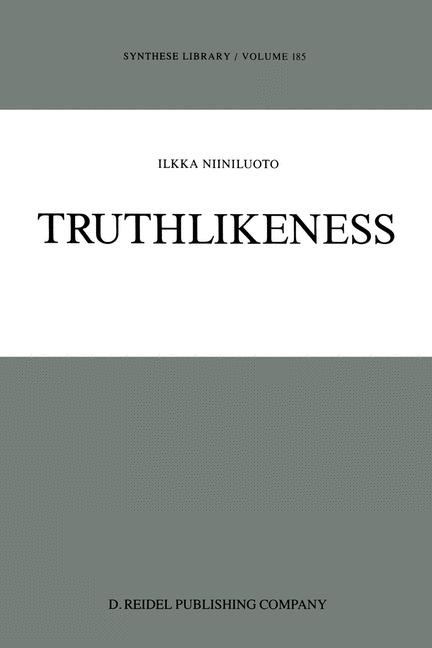
Truthlikeness
☆☆☆☆☆
(0 reviews)
Lowest price (incl. delivery)
31 478,00 JPY
Typical price4 701,75 PLN
Lowest (90 days)228,79 PLN
Offers4
Last updated3 giorni fa
Price history (90 days)
Full history
2026-08-08
2026-08-15
| Aggiornato il | Prezzo |
|---|---|
| 2026-08-08 | 228,79 |
| 2026-08-15 | 232,09 |
| Venditore | Product price | Delivery | Totale | Disponibilità | Updated | |
|---|---|---|---|---|---|---|
| SP Springer Nature Author | 31 459,00 JPY | 19,00 JPY | 31 478,00 JPY | Disponibile | 1 settimana fa | View offer |
| SP SpringerNatureLink Shop INT | 239,00 USD | 15,00 USD | 254,00 USD | Disponibile | 3 giorni fa | View offer |
| SP SpringerNatureLink Shop INT | 239,00 USD | free | 239,00 USD | Disponibile | 3 giorni fa | View offer |
| SP SpringerNatureLink Shop INT | 260,00 EUR | 15,00 EUR | 275,00 EUR | Disponibile | 3 giorni fa | View offer |
I prezzi e la disponibilità possono variare. Ultimo aggiornamento: 15.08.2026 07:24.
EAN
9789401081702
Springer Nature
0,0
☆☆☆☆☆
0 reviews
5★
0%
4★
0%
3★
0%
2★
0%
1★
0%
Product reviews
No reviews yet — be the first!
The modern discussion on the concept of truthlikeness was started in 1960. In his influential Word and Object, W. V. O. Quine argued that Charles Peirce's definition of truth as the limit of inquiry is faulty for the reason that the notion 'nearer than' is only "defined for numbers and not for theories". In his contribution to the 1960 International Congress for Logic, Methodology, and Philosophy of Science at Stan ford, Karl Popper defended the opposite view by defining a compara tive notion of verisimilitude for theories. was originally introduced by the The concept of verisimilitude Ancient sceptics to moderate their radical thesis of the inaccessibility of truth. But soon verisimilitudo, indicating likeness to the truth, was confused with probabilitas, which expresses an opiniotative attitude weaker than full certainty. The idea of truthlikeness fell in disrepute also as a result of the careless, often confused and metaphysically loaded way in which many philosophers used - and still use - such concepts as 'degree of truth', 'approximate truth', 'partial truth', and 'approach to the truth'. Popper's great achievement was his insight that the criticism against truthlikeness - by those who urge that it is meaningless to speak about 'closeness to truth' - is more based on prejudice than argument.
Similar products
 50 Years of Philosophy and Medicine
from $107.30
50 Years of Philosophy and Medicine
from $107.30
 Understanding Cybersecurity Law and Digital Privacy
from $122.63
Understanding Cybersecurity Law and Digital Privacy
from $122.63
 Decisions in International Trade and Logistics
from $122.63
Decisions in International Trade and Logistics
from $122.63
 Advances in Economic Measurement
from $122.63
Advances in Economic Measurement
from $122.63
 Nanomaterials
from $137.96
Nanomaterials
from $137.96
 Sustainable Scaffolds-based Strategies in Tissue Engineering and Regenerative Medicine
from $162.87
Sustainable Scaffolds-based Strategies in Tissue Engineering and Regenerative Medicine
from $162.87
 Narratives in Educational Research
from $162.87
Narratives in Educational Research
from $162.87
 Environmental Biology of the Young Chinese Sturgeon
from $210.78
Environmental Biology of the Young Chinese Sturgeon
from $210.78