
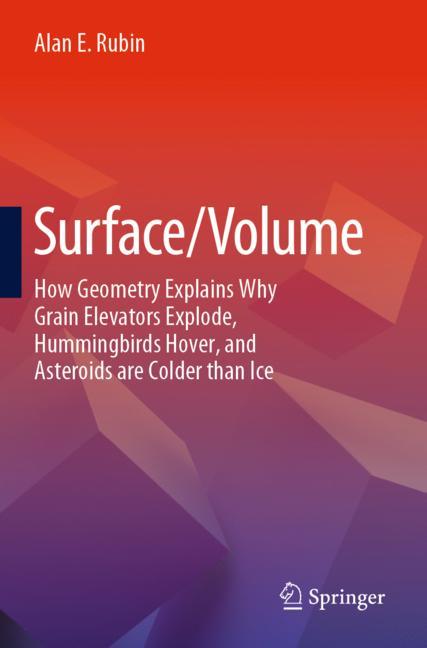
Surface/Volume
☆☆☆☆☆
(0 reviews)
Lowest price (incl. delivery)
29,05 EUR
Typical price202,80 PLN
Lowest (90 days)18,01 PLN
Offers3
Last updated22 ore fa
Price history (90 days)
Full history
2026-08-07
2026-08-08
| Aggiornato il | Prezzo |
|---|---|
| 2026-08-07 | 18,01 |
| 2026-08-08 | 26,21 |
| Venditore | Product price | Delivery | Totale | Disponibilità | Updated | |
|---|---|---|---|---|---|---|
| SP SpringerNatureLink Shop INT | 29,05 EUR | free | 29,05 EUR | Disponibile | 19 ore fa | View offer |
| SP Springer Nature Author | 5 004,00 JPY | 25,00 JPY | 5 029,00 JPY | Disponibile | 5 ore fa | View offer |
| VI VitalSource | 199,24 ZAR | 15,00 ZAR | 214,24 ZAR | Disponibile | 22 ore fa | View offer |
I prezzi e la disponibilità possono variare. Ultimo aggiornamento: 08.08.2026 05:21.
EAN
9783031237485
Springer Nature
0,0
☆☆☆☆☆
0 reviews
5★
0%
4★
0%
3★
0%
2★
0%
1★
0%
Product reviews
No reviews yet — be the first!
This book explains that diffusion, osmosis, dissolution, evaporation, and heat loss all preferentially affect small bodies due to their high surface/volume ratios. Because surface area increases as the square of length, but volume (and mass) increase as the cube, large objects have low surface/volume ratios and small objects have high surface/volume ratios. This simple physical constraint governs much of the physical world. It accounts for why the Earth has active volcanoes, but the Moon does not, why the human brain has numerous folds, why deciduous trees lose their leaves every Fall, and why nanoparticles of gold melt at surprisingly low temperatures. It is a phenomenon well known to every scientist, but this book is the first comprehensive treatment of this effect.
Similar products
 Patient Safety Coaching
from $91.97
Patient Safety Coaching
from $91.97
 Ethnography and Diversity
from $69.30
Ethnography and Diversity
from $69.30
 Smart Villages
from $91.97
Smart Villages
from $91.97
 Nuclear Non-Proliferation in International Law - Volume VI
from $91.97
Nuclear Non-Proliferation in International Law - Volume VI
from $91.97
 The Price of Freedom
from $91.97
The Price of Freedom
from $91.97
 Eco-Social Policy in the OECD and the World Bank
from $91.97
Eco-Social Policy in the OECD and the World Bank
from $91.97
 Special Topics in Policing
from $122.58
Special Topics in Policing
from $122.58
 Music from the Heart
from $91.97
Music from the Heart
from $91.97