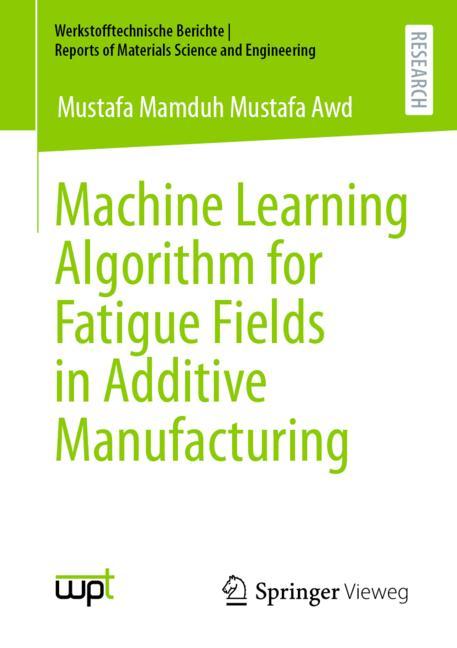
Machine Learning Algorithm for Fatigue Fields in Additive Manufacturing
☆☆☆☆☆
(0 reviews)
Lowest price (incl. delivery)
14 314,00 JPY
- Offers
- 6
- Last updated
- 3 mesi fa
| Venditore | Product price | Delivery | Totale | Disponibilità | Updated | |
|---|---|---|---|---|---|---|
| SpringerNatureLink Shop INT | Product price 14 299,00 JPY ▲ 25,0% | Delivery 15,00 JPY | Totale 14 314,00 JPY | Disponibilità Disponibile | Updated 3 mesi fa | View offer |
| SpringerNatureLink Shop INT | Product price 99,99 USD | Delivery 19,00 USD | Totale 118,99 USD | Disponibilità Disponibile | Updated 3 mesi fa | View offer |
| SpringerNatureLink Shop INT | Product price 109,99 USD | Delivery 25,00 USD | Totale 134,99 USD | Disponibilità Disponibile | Updated 3 mesi fa | View offer |
| …and 2 more variants from this seller (prices from 99,99 JPY to 14 299,00 JPY) | ||||||
| Springer Nature Author | Product price 14 299,00 JPY ▲ 25,0% | Delivery free | Totale 14 299,00 JPY | Disponibilità Disponibile | Updated 3 mesi fa | View offer |
I prezzi e la disponibilità possono variare. Ultimo aggiornamento: 08.08.2026 23:21.
0,0
☆☆☆☆☆
0 reviews
5★
0%
4★
0%
3★
0%
2★
0%
1★
0%
Product reviews
No reviews yet — be the first!
Fatigue failure of structures used in transportation, industry, medical equipment, and electronic components needs to build a link between cutting-edge experimental characterization and probabilistically grounded numerical and artificially intelligent tools. The physics involved in this process chain is computationally prohibitive to comprehend using traditional computation methods. Using machine learning and Bayesian statistics, a defect-correlated estimate of fatigue strength was developed. Fatigue, which is a random variable, is studied in a Bayesian-based machine learning algorithm. The stress-life model was used based on the compatibility condition of life and load distributions. The defect-correlated assessment of fatigue strength was established using the proposed machine learning and Bayesian statistics algorithms. It enabled the mapping of structural and process-induced fatigue characteristics into a geometry-independent load density chart across a wide range of fatigue regimes.
Similar products