
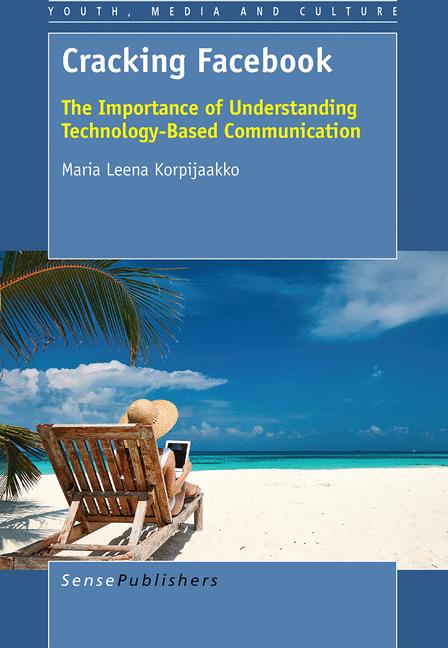
Cracking Facebook
☆☆☆☆☆
(0 reviews)
Lowest price (incl. delivery)
5 020,00 JPY
Typical price244,06 PLN
Lowest (90 days)18,01 PLN
Offers3
Last updated1 settimana fa
Price history (90 days)
Full history
2026-08-07
2026-08-14
| Aggiornato il | Prezzo |
|---|---|
| 2026-08-07 | 18,01 |
| 2026-08-08 | 37,45 |
| 2026-08-14 | 30,99 |
| Venditore | Product price | Delivery | Totale | Disponibilità | Updated | |
|---|---|---|---|---|---|---|
| SP Springer Nature Author | 5 005,00 JPY | 15,00 JPY | 5 020,00 JPY | Disponibile | 1 settimana fa | View offer |
| SP SpringerNatureLink Shop INT | 30,99 GBP | 19,00 GBP | 49,99 GBP | Disponibile | 4 giorni fa | View offer |
| VI VitalSource | 227,70 ZAR | 19,00 ZAR | 246,70 ZAR | Disponibile | 1 settimana fa | View offer |
I prezzi e la disponibilità possono variare. Ultimo aggiornamento: 08.08.2026 05:32.
EAN
9789463002110
Springer Nature
0,0
☆☆☆☆☆
0 reviews
5★
0%
4★
0%
3★
0%
2★
0%
1★
0%
Product reviews
No reviews yet — be the first!
This book presents a Facebook study on members of the Cusp Generation, or those born before the “great digital divide” of 1995. This delineation allows for a discussion on the possible socio-cultural implications of Facebook use for people of all ages. Members of the Cusp Generation are in a unique position as “part digital natives” to easily acquire and use new media technologies, while being more critically aware of the personal, social, and cultural effects that may arise from them thanks to having some memory of the pre-digital era. Drawing on identity theories rooted in critical theory and cultural studies, the author shows that there are potential constrictions on people’s agency in their Facebook use caused by consumer discourse, Facebook’s hyperreal nature and structure, psychological predispositions, and the potential for avatar attachment. In raising concerns over the impacts of technology-based communication, this book explores how the medium of Facebook extends and exacerbates processes of offline social reproduction and discusses how the positive social and political aspects of Facebook can be enhanced. The findings contribute to academic discussions in the fields of cultural studies and Education and can be applied to the development of critical media literacy for curriculum and pedagogy.
Similar products
 50 Years of Philosophy and Medicine
from $107.30
50 Years of Philosophy and Medicine
from $107.30
 Understanding Cybersecurity Law and Digital Privacy
from $122.63
Understanding Cybersecurity Law and Digital Privacy
from $122.63
 Decisions in International Trade and Logistics
from $122.63
Decisions in International Trade and Logistics
from $122.63
 Advances in Economic Measurement
from $122.63
Advances in Economic Measurement
from $122.63
 Nanomaterials
from $137.96
Nanomaterials
from $137.96
 Sustainable Scaffolds-based Strategies in Tissue Engineering and Regenerative Medicine
from $162.87
Sustainable Scaffolds-based Strategies in Tissue Engineering and Regenerative Medicine
from $162.87
 Narratives in Educational Research
from $162.87
Narratives in Educational Research
from $162.87
 Environmental Biology of the Young Chinese Sturgeon
from $210.78
Environmental Biology of the Young Chinese Sturgeon
from $210.78