
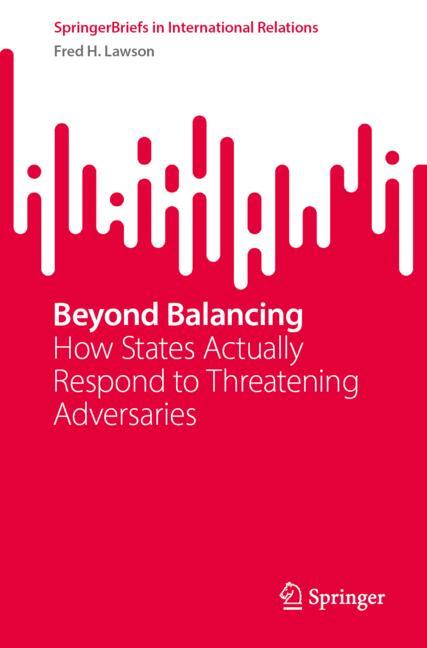
Beyond Balancing
☆☆☆☆☆
(0 reviews)
Lowest price (incl. delivery)
37,45 EUR
Typical price347,81 PLN
Lowest (90 days)33,70 PLN
Offers4
Last updated1 settimana fa
Price history (90 days)
Full history
2026-08-08
2026-08-15
| Aggiornato il | Prezzo |
|---|---|
| 2026-08-08 | 33,70 |
| 2026-08-14 | 46,79 |
| 2026-08-15 | 37,45 |
| Venditore | Product price | Delivery | Totale | Disponibilità | Updated | |
|---|---|---|---|---|---|---|
| SP SpringerNatureLink Shop INT | 37,45 EUR | free | 37,45 EUR | Disponibile | 5 giorni fa | View offer |
| SP SpringerNatureLink Shop INT | 6 434,00 JPY | 19,00 JPY | 6 453,00 JPY | Disponibile | 5 giorni fa | View offer |
| SP Springer Nature Author | 6 434,00 JPY | free | 6 434,00 JPY | Disponibile | 1 settimana fa | View offer |
| VI VitalSource | 48,14 EUR | 29,00 EUR | 77,14 EUR | Disponibile | 1 settimana fa | View offer |
I prezzi e la disponibilità possono variare. Ultimo aggiornamento: 08.08.2026 09:17.
EAN
9783032103291
Springer Nature
0,0
☆☆☆☆☆
0 reviews
5★
0%
4★
0%
3★
0%
2★
0%
1★
0%
Product reviews
No reviews yet — be the first!
This Brief revisits the question of whether states tend to resist a threatening adversary. It begins by assessing one influential contribution to the debate that offers an elegant reformulation of the problem, and then advances a plausible alternative analytical framework. It surveys three situations in which several states faced the choice of mobilizing against or aligning with a prospective aggressor. In each case, proximity to the expansionist state and the clarity of the danger it posed to the existing order might well have prompted adjacent states to engage in balancing. The fact that balancing did not predominate in any of these situations challenges the orthodox view of how states respond to evident threats and compels a reconsideration of the circumstances under which bandwagoning is likely to occur in the anarchic international arena. Building on influential studies of bandwagoning in international politics, the volume reassesses states' responses to aggressive adversaries. It offers an alternative explanation for why states often—indeed, usually—choose not to resist aggressors, and illustrates this argument by revisiting East Asia in 1931 and Central and Eastern Europe in 1938. It also provides a new perspective on the reactions of the Arab Gulf states to the abrogation of the Joint Comprehensive Plan of Action.
Similar products
 50 Years of Philosophy and Medicine
from $107.30
50 Years of Philosophy and Medicine
from $107.30
 Understanding Cybersecurity Law and Digital Privacy
from $122.63
Understanding Cybersecurity Law and Digital Privacy
from $122.63
 Decisions in International Trade and Logistics
from $122.63
Decisions in International Trade and Logistics
from $122.63
 Advances in Economic Measurement
from $122.63
Advances in Economic Measurement
from $122.63
 Nanomaterials
from $137.96
Nanomaterials
from $137.96
 Sustainable Scaffolds-based Strategies in Tissue Engineering and Regenerative Medicine
from $162.87
Sustainable Scaffolds-based Strategies in Tissue Engineering and Regenerative Medicine
from $162.87
 Narratives in Educational Research
from $162.87
Narratives in Educational Research
from $162.87
 Environmental Biology of the Young Chinese Sturgeon
from $210.78
Environmental Biology of the Young Chinese Sturgeon
from $210.78