
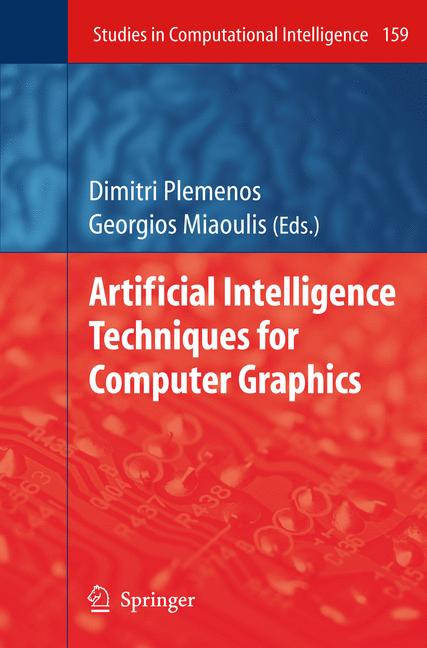
Artificial Intelligence Techniques for Computer Graphics
☆☆☆☆☆
(0 reviews)
Lowest price (incl. delivery)
14 318,00 JPY
Typical price658,93 PLN
Lowest (90 days)84,99 PLN
Offers2
Last updated22 ore fa
| Venditore | Product price | Delivery | Totale | Disponibilità | Updated | |
|---|---|---|---|---|---|---|
| SP Springer Nature Author | 14 299,00 JPY | 19,00 JPY | 14 318,00 JPY | Disponibile | 22 ore fa | View offer |
| SP SpringerNatureLink Shop INT | 109,99 USD | 15,00 USD | 124,99 USD | Disponibile | 1 giorno fa | View offer |
I prezzi e la disponibilità possono variare. Ultimo aggiornamento: 08.08.2026 23:21.
0,0
☆☆☆☆☆
0 reviews
5★
0%
4★
0%
3★
0%
2★
0%
1★
0%
Product reviews
No reviews yet — be the first!
The purpose of this volume is to present current work of the Intelligent Computer Graphics community, a community growing up year after year. Indeed, if at the beg- ning of Computer Graphics the use of Artificial Intelligence techniques was quite unknown, more and more researchers all over the world are nowadays interested in intelligent techniques allowing substantial improvements of traditional Computer Graphics methods. The other main contribution of intelligent techniques in Computer Graphics is to allow invention of completely new methods, often based on automation of a lot of tasks assumed in the past by the user in an imprecise and (human) time consuming manner. The history of research in Computer Graphics is very edifying. At the beginning, due to the slowness of computers in the years 1960, the unique research concern was visualisation. The purpose of Computer Graphics researchers was to find new visua- sation algorithms, less and less time consuming, in order to reduce the enormous time required for visualisation. A lot of interesting algorithms were invented during these first years of research in Computer Graphics. The scenes to be displayed were very simple because the computing power of computers was very low. So, scene modelling was not necessary and scenes were designed directly by the user, who had to give co-ordinates of vertices of scene polygons.
Similar products
 Patient Safety Coaching
from $91.97
Patient Safety Coaching
from $91.97
 Ethnography and Diversity
from $69.30
Ethnography and Diversity
from $69.30
 Smart Villages
from $91.97
Smart Villages
from $91.97
 Nuclear Non-Proliferation in International Law - Volume VI
from $91.97
Nuclear Non-Proliferation in International Law - Volume VI
from $91.97
 The Price of Freedom
from $91.97
The Price of Freedom
from $91.97
 Eco-Social Policy in the OECD and the World Bank
from $91.97
Eco-Social Policy in the OECD and the World Bank
from $91.97
 Special Topics in Policing
from $122.58
Special Topics in Policing
from $122.58
 Music from the Heart
from $91.97
Music from the Heart
from $91.97