
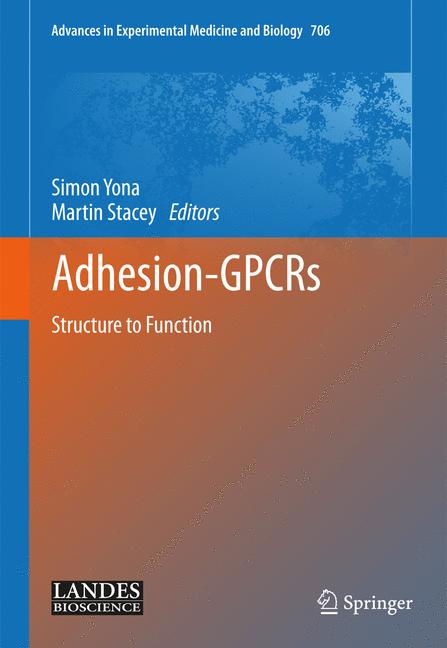
Adhesion‑GPCRs
☆☆☆☆☆
(0 reviews)
Lowest price (incl. delivery)
146,69 USD
Typical price2 749,97 PLN
Lowest (90 days)117,69 PLN
Offers7
Last updated1 settimana fa
Price history (90 days)
Full history
2026-08-08
2026-08-15
| Aggiornato il | Prezzo |
|---|---|
| 2026-08-08 | 117,69 |
| 2026-08-15 | 117,69 |
| Venditore | Product price | Delivery | Totale | Disponibilità | Updated | |
|---|---|---|---|---|---|---|
| SP SpringerNatureLink Shop INT | 117,69 USD | 29,00 USD | 146,69 USD | Disponibile | 5 giorni fa | View offer |
| SP SpringerNatureLink Shop INT | 21 449,00 JPY | 25,00 JPY | 21 474,00 JPY | Disponibile | 5 giorni fa | View offer |
| SP Springer Nature Author | 21 449,00 JPY | 15,00 JPY | 21 464,00 JPY | Disponibile | 1 settimana fa | View offer |
| SP SpringerNatureLink Shop INT | 149,99 USD | free | 149,99 USD | Disponibile | 5 giorni fa | View offer |
| SP SpringerNatureLink Shop INT | 169,99 USD | 29,00 USD | 198,99 USD | Disponibile | 5 giorni fa | View offer |
| SP SpringerNatureLink Shop INT | 169,99 USD | 15,00 USD | 184,99 USD | Disponibile | 5 giorni fa | View offer |
| SP SpringerNatureLink Shop INT | 177,00 EUR | free | 177,00 EUR | Disponibile | 5 giorni fa | View offer |
I prezzi e la disponibilità possono variare. Ultimo aggiornamento: 08.08.2026 23:28.
0,0
☆☆☆☆☆
0 reviews
5★
0%
4★
0%
3★
0%
2★
0%
1★
0%
Product reviews
No reviews yet — be the first!
Upon completion of the human genome project over 800 G protein-coupled receptor 1 (GPCR) genes, subdivided into five categories, were identified. These receptors sense a diverse array of stimuli, including peptides, ions, lipid analogues, light and odour, in a discriminating fashion. Subsequently, they transduce a signal from the ligand–receptor complex into numerous cellular responses. The importance of GPCRs is further reflected in the fact that they constitute the most common target for therapeutic drugs across a 2 wide range of human disorders. Phylogenetic analysis of GPCRs produced the GRAFS classification system, which subdivides GPCRs into five discrete families: glutamate, rhodopsin, adhesion, frizzled/taste2 and secretin receptors. The adhesion-GPCR family 2 can be further subdivided into eight groups. The field of adhesion-GPCR biology has indeed become large enough to require a volume dedicated solely to this field. The contributors to this book have made a courageous effort to address the key concepts of adhesion-GPCR biology, including the evolution and biochemistry of adhesion-GPCRs; there are extensive discussions on the functional nature of these receptors during development, the immune response and tumourgenesis. Finally, there are chapters dedicated to adhesion-GPCR signalling, an area of intense investigation.
Similar products
 50 Years of Philosophy and Medicine
from $107.30
50 Years of Philosophy and Medicine
from $107.30
 Understanding Cybersecurity Law and Digital Privacy
from $122.63
Understanding Cybersecurity Law and Digital Privacy
from $122.63
 Decisions in International Trade and Logistics
from $122.63
Decisions in International Trade and Logistics
from $122.63
 Advances in Economic Measurement
from $122.63
Advances in Economic Measurement
from $122.63
 Nanomaterials
from $137.96
Nanomaterials
from $137.96
 Sustainable Scaffolds-based Strategies in Tissue Engineering and Regenerative Medicine
from $162.87
Sustainable Scaffolds-based Strategies in Tissue Engineering and Regenerative Medicine
from $162.87
 Narratives in Educational Research
from $162.87
Narratives in Educational Research
from $162.87
 Environmental Biology of the Young Chinese Sturgeon
from $210.78
Environmental Biology of the Young Chinese Sturgeon
from $210.78