
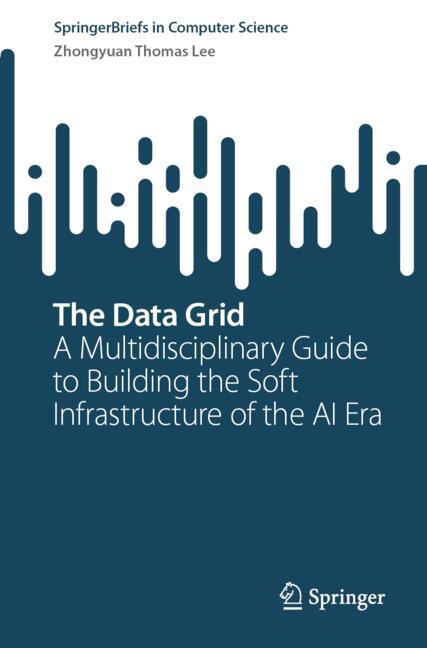
The Data Grid
☆☆☆☆☆
(0 reviews)
Lowest price (incl. delivery)
7 168,00 JPY
Typical price492,24 PLN
Lowest (90 days)35,99 PLN
Offers6
Last updated1 minggu yang lalu
Price history (90 days)
Full history
2026-08-08
2026-08-15
| Diperbarui Pada | Harga |
|---|---|
| 2026-08-08 | 39,99 |
| 2026-08-14 | 35,99 |
| 2026-08-15 | 51,99 |
| Penjual | Product price | Delivery | Total | Ketersediaan | Updated | |
|---|---|---|---|---|---|---|
| SP SpringerNatureLink Shop INT | 7 149,00 JPY | 19,00 JPY | 7 168,00 JPY | Tersedia | 3 hari yang lalu | View offer |
| SP Springer Nature Author | 7 149,00 JPY | 19,00 JPY | 7 168,00 JPY | Tersedia | 1 minggu yang lalu | View offer |
| SP SpringerNatureLink Shop INT | 49,99 USD | 29,00 USD | 78,99 USD | Tersedia | 3 hari yang lalu | View offer |
| SP SpringerNatureLink Shop INT | 54,99 USD | 19,00 USD | 73,99 USD | Tersedia | 3 hari yang lalu | View offer |
| SP SpringerNatureLink Shop INT | 54,99 USD | free | 54,99 USD | Tersedia | 3 hari yang lalu | View offer |
| SP SpringerNatureLink Shop INT | 59,00 EUR | 15,00 EUR | 74,00 EUR | Tersedia | 3 hari yang lalu | View offer |
Harga dan ketersediaan dapat berubah. Terakhir Diperbarui: 08.08.2026 23:08.
0,0
☆☆☆☆☆
0 reviews
5★
0%
4★
0%
3★
0%
2★
0%
1★
0%
Product reviews
No reviews yet — be the first!
As industries transition from the automation focus of Industry 4.0 to the human–AI collaboration of Industry 5.0, artificial intelligence stands at the forefront. Yet the lasting capability of intelligent systems is rooted in a deeper layer: robust data infrastructures. The Data Grid argues that AI’s true scalability and reliability hinge not just on algorithms, but on stable, governed, and semantically structured data systems. Across industries, fragmented and inconsistent data foundations constrain AI’s potential. By redefining data as infrastructure' imbued with stability, scalability, and lifecycle continuity, this volume establishes the structural foundation for sustainable intelligence. Drawing from systems engineering, industrial engineering, reliability theory, and risk management, this book offers a cross-disciplinary framework for building AI-native data infrastructures. While data engineering originates from computer and software engineering, in the infrastructure context, it is not and should not be confined to these disciplines. It shows how principles such as determinism, fault isolation, boundary control, and semantic layering can be adapted for enterprise-level data environments. Supported by engineering analysis and practical case studies, the book redefines data not as a static resource but as a continuously flowing soft infrastructure: an engineered backbone for resilient, long-term intelligent systems.
Similar products
 50 Years of Philosophy and Medicine
from $107.30
50 Years of Philosophy and Medicine
from $107.30
 Understanding Cybersecurity Law and Digital Privacy
from $122.63
Understanding Cybersecurity Law and Digital Privacy
from $122.63
 Decisions in International Trade and Logistics
from $122.63
Decisions in International Trade and Logistics
from $122.63
 Advances in Economic Measurement
from $122.63
Advances in Economic Measurement
from $122.63
 Nanomaterials
from $137.96
Nanomaterials
from $137.96
 Sustainable Scaffolds-based Strategies in Tissue Engineering and Regenerative Medicine
from $162.87
Sustainable Scaffolds-based Strategies in Tissue Engineering and Regenerative Medicine
from $162.87
 Narratives in Educational Research
from $162.87
Narratives in Educational Research
from $162.87
 Environmental Biology of the Young Chinese Sturgeon
from $210.78
Environmental Biology of the Young Chinese Sturgeon
from $210.78