
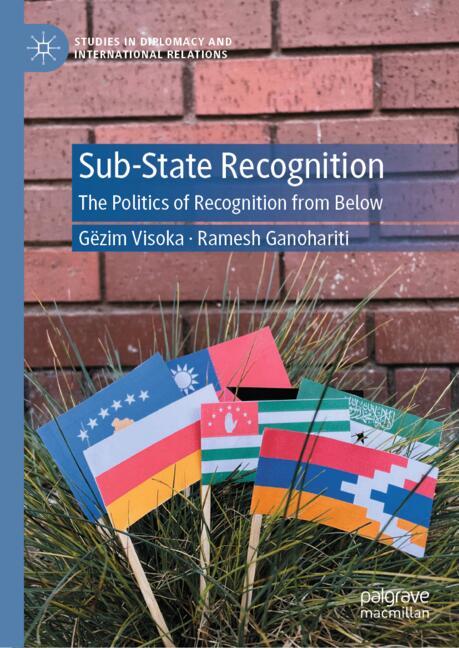
Sub-State Recognition
☆☆☆☆☆
(0 reviews)
Lowest price (incl. delivery)
14 328,00 JPY
Typical price922,09 PLN
Lowest (90 days)59,99 PLN
Offers6
Last updated3 hari yang lalu
Price history (90 days)
Full history
2026-08-08
2026-08-15
| Diperbarui Pada | Harga |
|---|---|
| 2026-08-08 | 84,99 |
| 2026-08-15 | 59,99 |
| Penjual | Product price | Delivery | Total | Ketersediaan | Updated | |
|---|---|---|---|---|---|---|
| SP SpringerNatureLink Shop INT | 14 299,00 JPY | 29,00 JPY | 14 328,00 JPY | Tersedia | 3 hari yang lalu | View offer |
| SP Springer Nature Author | 14 299,00 JPY | free | 14 299,00 JPY | Tersedia | 1 minggu yang lalu | View offer |
| SP SpringerNatureLink Shop INT | 99,99 USD | free | 99,99 USD | Tersedia | 3 hari yang lalu | View offer |
| SP SpringerNatureLink Shop INT | 109,99 USD | 29,00 USD | 138,99 USD | Tersedia | 3 hari yang lalu | View offer |
| SP SpringerNatureLink Shop INT | 109,99 USD | 25,00 USD | 134,99 USD | Tersedia | 3 hari yang lalu | View offer |
| SP SpringerNatureLink Shop INT | 118,00 EUR | free | 118,00 EUR | Tersedia | 3 hari yang lalu | View offer |
Harga dan ketersediaan dapat berubah. Terakhir Diperbarui: 15.08.2026 01:36.
0,0
☆☆☆☆☆
0 reviews
5★
0%
4★
0%
3★
0%
2★
0%
1★
0%
Product reviews
No reviews yet — be the first!
This book examines the rise of sub-state recognition in the theory and practice of international relations and diplomacy. Sub-state recognition occurs when non-sovereign entities, such as regions, cities, or local governments, recognize or support an aspirant state or entity seeking independence or international recognition. Drawing on original empirical data, the book conceptualizes sub-state recognition as a pluriversal diplomatic approach and traces the actors, justifications, and effects in practice. We argue that sub-state recognition manifests as a compensatory and remedial engagement between aspirant states and sub-state entities that shape the dynamics of contested statehood, alter the conservative international recognition regime from the bottom up, and streamline the formation of decentralized approaches to diplomatic recognition. We find that sub-state recognition is a co-constitutive practice that helps aspirant states compensate for the lack of external sovereignty and enables sub-state entities granting such recognition to consolidate their foreign policy identity and regional autonomy. While sub-state recognition does not legally establish an aspirant entity as a state, it may emerge as a crucial symbolic and performative step towards building national consensus for formal recognition by the central government and the international community. Accordingly, the book contributes to expanding and decentring scholarly and policy focus on state recognition by demonstrating that the agency and pathways to diplomatic recognition are more dispersed and decentralized than previously acknowledged.
Similar products
 50 Years of Philosophy and Medicine
from $107.30
50 Years of Philosophy and Medicine
from $107.30
 Understanding Cybersecurity Law and Digital Privacy
from $122.63
Understanding Cybersecurity Law and Digital Privacy
from $122.63
 Decisions in International Trade and Logistics
from $122.63
Decisions in International Trade and Logistics
from $122.63
 Advances in Economic Measurement
from $122.63
Advances in Economic Measurement
from $122.63
 Nanomaterials
from $137.96
Nanomaterials
from $137.96
 Sustainable Scaffolds-based Strategies in Tissue Engineering and Regenerative Medicine
from $162.87
Sustainable Scaffolds-based Strategies in Tissue Engineering and Regenerative Medicine
from $162.87
 Narratives in Educational Research
from $162.87
Narratives in Educational Research
from $162.87
 Environmental Biology of the Young Chinese Sturgeon
from $210.78
Environmental Biology of the Young Chinese Sturgeon
from $210.78