
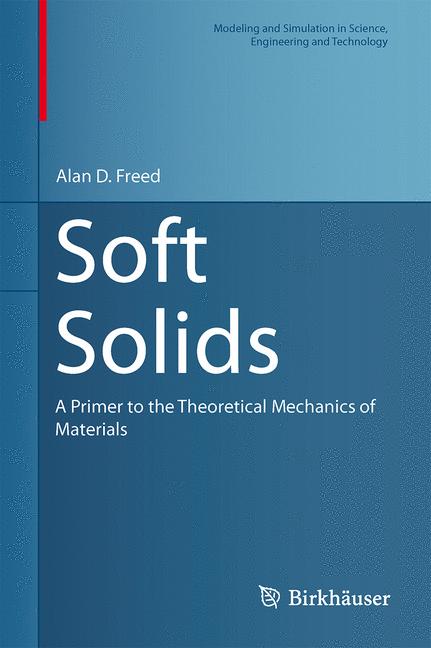
Soft Solids
☆☆☆☆☆
(0 reviews)
Lowest price (incl. delivery)
75,28 USD
Typical price61,63 PLN
Lowest (90 days)43,99 PLN
Offers7
Last updated1 minggu yang lalu
Price history (90 days)
Full history
2026-08-08
2026-08-15
| Diperbarui Pada | Harga |
|---|---|
| 2026-08-08 | 49,99 |
| 2026-08-14 | 43,99 |
| 2026-08-15 | 54,99 |
| Penjual | Product price | Delivery | Total | Ketersediaan | Updated | |
|---|---|---|---|---|---|---|
| SP SpringerNatureLink Shop INT | 50,28 USD | 25,00 USD | 75,28 USD | Tersedia | 4 hari yang lalu | View offer |
| SP SpringerNatureLink Shop INT | 84,99 USD | 29,00 USD | 113,99 USD | Tersedia | 4 hari yang lalu | View offer |
| SP SpringerNatureLink Shop INT | 84,99 USD | 29,00 USD | 113,99 USD | Tersedia | 4 hari yang lalu | View offer |
| SP SpringerNatureLink Shop INT | 74,99 GBP | 29,00 GBP | 103,99 GBP | Tersedia | 4 hari yang lalu | View offer |
| SP SpringerNatureLink Shop INT | 99,99 USD | 25,00 USD | 124,99 USD | Tersedia | 4 hari yang lalu | View offer |
| SP SpringerNatureLink Shop INT | 99,99 USD | free | 99,99 USD | Tersedia | 4 hari yang lalu | View offer |
| SP Springer Nature Author | 99,99 USD | free | 99,99 USD | Tersedia | 1 minggu yang lalu | View offer |
Harga dan ketersediaan dapat berubah. Terakhir Diperbarui: 08.08.2026 13:38.
0,0
☆☆☆☆☆
0 reviews
5★
0%
4★
0%
3★
0%
2★
0%
1★
0%
Product reviews
No reviews yet — be the first!
This textbook presents the physical principles pertinent to the mathematical modeling of soft materials used in engineering practice, including both man-made materials and biological tissues. It is intended for seniors and masters-level graduate students in engineering, physics or applied mathematics. It will also be a valuable resource for researchers working in mechanics, biomechanics and other fields where the mechanical response of soft solids is relevant. Soft Solids: A Primer to the Theoretical Mechanics of Materials is divided into two parts. Part I introduces the basic concepts needed to give both Eulerian and Lagrangian descriptions of the mechanical response of soft solids. Part II presents two distinct theories of elasticity and their associated theories of viscoelasticity. Seven boundary-value problems are studied over the course of the book, each pertaining to an experiment used to characterize materials. These problems are discussed at the end of each chapter, giving students the opportunity to apply what they learned in the current chapter and to build upon the material in prior chapters.
Similar products
 50 Years of Philosophy and Medicine
from $107.30
50 Years of Philosophy and Medicine
from $107.30
 Understanding Cybersecurity Law and Digital Privacy
from $122.63
Understanding Cybersecurity Law and Digital Privacy
from $122.63
 Decisions in International Trade and Logistics
from $122.63
Decisions in International Trade and Logistics
from $122.63
 Advances in Economic Measurement
from $122.63
Advances in Economic Measurement
from $122.63
 Nanomaterials
from $137.96
Nanomaterials
from $137.96
 Sustainable Scaffolds-based Strategies in Tissue Engineering and Regenerative Medicine
from $162.87
Sustainable Scaffolds-based Strategies in Tissue Engineering and Regenerative Medicine
from $162.87
 Narratives in Educational Research
from $162.87
Narratives in Educational Research
from $162.87
 Environmental Biology of the Young Chinese Sturgeon
from $210.78
Environmental Biology of the Young Chinese Sturgeon
from $210.78