
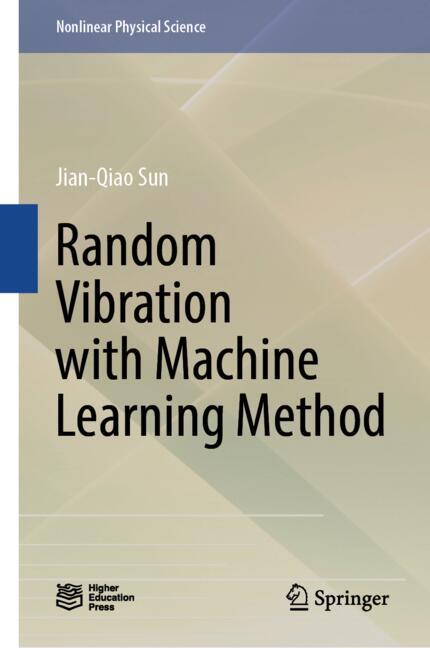
Random Vibration with Machine Learning Method
☆☆☆☆☆
(0 reviews)
Lowest price (incl. delivery)
14 318,00 JPY
Typical price978,92 PLN
Lowest (90 days)71,50 PLN
Offers6
Last updated1 minggu yang lalu
Price history (90 days)
Full history
2026-08-08
2026-08-15
| Diperbarui Pada | Harga |
|---|---|
| 2026-08-08 | 84,99 |
| 2026-08-15 | 71,50 |
| Penjual | Product price | Delivery | Total | Ketersediaan | Updated | |
|---|---|---|---|---|---|---|
| SP SpringerNatureLink Shop INT | 14 299,00 JPY | 19,00 JPY | 14 318,00 JPY | Tersedia | 23 jam yang lalu | View offer |
| SP Springer Nature Author | 14 299,00 JPY | 19,00 JPY | 14 318,00 JPY | Tersedia | 1 minggu yang lalu | View offer |
| SP SpringerNatureLink Shop INT | 99,99 USD | 19,00 USD | 118,99 USD | Tersedia | 1 hari yang lalu | View offer |
| SP SpringerNatureLink Shop INT | 109,99 USD | 29,00 USD | 138,99 USD | Tersedia | 1 hari yang lalu | View offer |
| SP SpringerNatureLink Shop INT | 109,99 USD | 15,00 USD | 124,99 USD | Tersedia | 1 hari yang lalu | View offer |
| SP SpringerNatureLink Shop INT | 118,00 EUR | 19,00 EUR | 137,00 EUR | Tersedia | 1 hari yang lalu | View offer |
Harga dan ketersediaan dapat berubah. Terakhir Diperbarui: 08.08.2026 23:21.
0,0
☆☆☆☆☆
0 reviews
5★
0%
4★
0%
3★
0%
2★
0%
1★
0%
Product reviews
No reviews yet — be the first!
The book presents the theoretical foundation of random vibration of dynamic systems and new machine learning methods for the analysis of linear and nonlinear random vibration problems. This is the first book on the market that introduces the tools of artificial intelligence, i.e. neural networks, to engineering problems of random vibration. The first part of the book briefly reviews probability theory, stochastic processes, spectral analysis of stochastic processes, stochastic calculus, and a brief and general discussion of the response process viewed as a mapping of random excitation and uncertainties, equations for response probability distribution and reliability problems. The second part of the book presents studies of linear and nonlinear random vibration problems. In particular, the radial basis neural networks solution is introduced. Extensive examples are presented to demonstrate the neural network solution. Data-driven random vibration problems are also discussed, including density estimation, model identification and model-free generalized cell mapping. Finally, Monte Carlo simulation is discussed from a new perspective. This book can be adopted as an advanced reference book of an undergraduate random vibration class. The entire book is an excellent choice for a graduate random vibration course, and is also a good reference book for practice engineers and researchers.
Similar products
 50 Years of Philosophy and Medicine
from $107.30
50 Years of Philosophy and Medicine
from $107.30
 Understanding Cybersecurity Law and Digital Privacy
from $122.63
Understanding Cybersecurity Law and Digital Privacy
from $122.63
 Decisions in International Trade and Logistics
from $122.63
Decisions in International Trade and Logistics
from $122.63
 Advances in Economic Measurement
from $122.63
Advances in Economic Measurement
from $122.63
 Nanomaterials
from $137.96
Nanomaterials
from $137.96
 Sustainable Scaffolds-based Strategies in Tissue Engineering and Regenerative Medicine
from $162.87
Sustainable Scaffolds-based Strategies in Tissue Engineering and Regenerative Medicine
from $162.87
 Narratives in Educational Research
from $162.87
Narratives in Educational Research
from $162.87
 Environmental Biology of the Young Chinese Sturgeon
from $210.78
Environmental Biology of the Young Chinese Sturgeon
from $210.78