
Intersecting Interregionalism
☆☆☆☆☆
(0 reviews)
Lowest price (incl. delivery)
103,99 USD
Typical price1 131,13 PLN
Lowest (90 days)71,50 PLN
Offers7
Last updated1 minggu yang lalu
Price history (90 days)
Full history
2026-08-08
2026-08-15
| Diperbarui Pada | Harga |
|---|---|
| 2026-08-08 | 84,99 |
| 2026-08-15 | 71,50 |
| Penjual | Product price | Delivery | Total | Ketersediaan | Updated | |
|---|---|---|---|---|---|---|
| SP SpringerNatureLink Shop INT | 84,99 USD | 19,00 USD | 103,99 USD | Tersedia | 5 hari yang lalu | View offer |
| SP SpringerNatureLink Shop INT | 14 299,00 JPY | 29,00 JPY | 14 328,00 JPY | Tersedia | 5 hari yang lalu | View offer |
| SP Springer Nature Author | 14 299,00 JPY | free | 14 299,00 JPY | Tersedia | 1 minggu yang lalu | View offer |
| SP SpringerNatureLink Shop INT | 99,99 USD | 25,00 USD | 124,99 USD | Tersedia | 5 hari yang lalu | View offer |
| SP SpringerNatureLink Shop INT | 109,99 USD | free | 109,99 USD | Tersedia | 5 hari yang lalu | View offer |
| SP SpringerNatureLink Shop INT | 109,99 USD | 19,00 USD | 128,99 USD | Tersedia | 5 hari yang lalu | View offer |
| SP SpringerNatureLink Shop INT | 118,00 EUR | free | 118,00 EUR | Tersedia | 5 hari yang lalu | View offer |
Harga dan ketersediaan dapat berubah. Terakhir Diperbarui: 08.08.2026 23:21.
0,0
☆☆☆☆☆
0 reviews
5★
0%
4★
0%
3★
0%
2★
0%
1★
0%
Product reviews
No reviews yet — be the first!
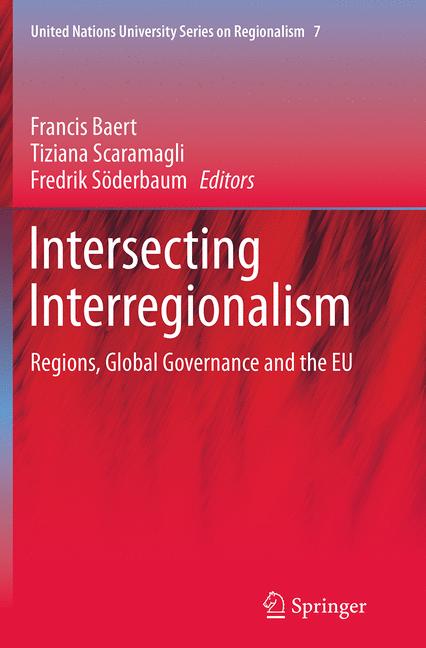
This book has two mutually reinforcing aims/parts. The first aim is to contribute to a more productive debate between different theoretical standpoints. There is surprisingly little theoretical and conceptual debate in this burgeoning field, which is one major reason for the failure to fully grasp the diversity of today’s interregionalism. Too often theorists speak past each other, without really engaging with alternative theoretical perspectives or competing research results. Indeed, this book constitutes the first systematic attempt to bring together leading theories and theorists of interregionalism. Leading scholars from around the world develop their own distinctive theoretical perspectives on interregionalism, with a particular emphasis on the dynamic relationship between regionalism and interregionalism. These highly acclaimed theorists have all been associated over the years with a variety of disciplines, institutions, schools and debates and so bring a rich set of insights andconnections to this pioneering project. The second part of the book ‘unpacks’ and problematises the region, the driving actors and institutions that are engaged in interregional relations. There is a strong tendency in the field to treat regions as coherent units actors in an interregional relationship, and such simplified notions about ‘regions’ and ‘regional organisations’ necessarily result in superficial and misleading understandings of interregionalism. This part of the book connects the theoretical discussion in the first part with a manageable empirical object.
Similar products
 50 Years of Philosophy and Medicine
from $107.30
50 Years of Philosophy and Medicine
from $107.30
 Understanding Cybersecurity Law and Digital Privacy
from $122.63
Understanding Cybersecurity Law and Digital Privacy
from $122.63
 Decisions in International Trade and Logistics
from $122.63
Decisions in International Trade and Logistics
from $122.63
 Advances in Economic Measurement
from $122.63
Advances in Economic Measurement
from $122.63
 Nanomaterials
from $137.96
Nanomaterials
from $137.96
 Sustainable Scaffolds-based Strategies in Tissue Engineering and Regenerative Medicine
from $162.87
Sustainable Scaffolds-based Strategies in Tissue Engineering and Regenerative Medicine
from $162.87
 Narratives in Educational Research
from $162.87
Narratives in Educational Research
from $162.87
 Environmental Biology of the Young Chinese Sturgeon
from $210.78
Environmental Biology of the Young Chinese Sturgeon
from $210.78