Error, Ambiguity, and Creativity
☆☆☆☆☆
(0 reviews)
Lowest price (incl. delivery)
7 149,00 JPY
- Offers
- 6
- Last updated
- 3 bulan yang lalu
| Penjual | Product price | Delivery | Total | Ketersediaan | Updated | |
|---|---|---|---|---|---|---|
| SpringerNatureLink Shop INT | Product price 7 149,00 JPY ▲ 25,0% | Delivery free | Total 7 149,00 JPY | Ketersediaan Tersedia | Updated 3 bulan yang lalu | View offer |
| SpringerNatureLink Shop INT | Product price 49,99 USD | Delivery 15,00 USD | Total 64,99 USD | Ketersediaan Tersedia | Updated 3 bulan yang lalu | View offer |
| SpringerNatureLink Shop INT | Product price 54,99 USD | Delivery free | Total 54,99 USD | Ketersediaan Tersedia | Updated 3 bulan yang lalu | View offer |
| …and 2 more variants from this seller (prices from 49,99 JPY to 7 149,00 JPY) | ||||||
| Springer Nature Author | Product price 7 149,00 JPY ▲ 25,0% | Delivery free | Total 7 149,00 JPY | Ketersediaan Tersedia | Updated 3 bulan yang lalu | View offer |
Harga dan ketersediaan dapat berubah. Terakhir Diperbarui: 08.08.2026 23:08.
0,0
☆☆☆☆☆
0 reviews
5★
0%
4★
0%
3★
0%
2★
0%
1★
0%
Product reviews
No reviews yet — be the first!
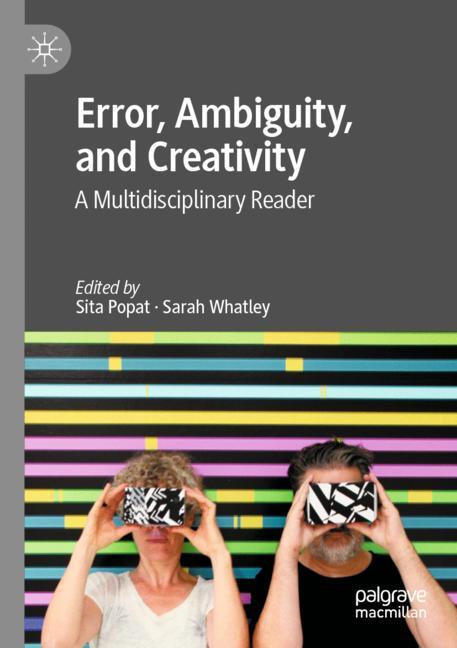
This book offers a set of eleven discipline-specific chapters from across the arts, humanities, psychology, and medicine. Each contributor considers the creative potential of error and/or ambiguity, defining these terms in the particular context of that discipline and exploring their values and applications. Themes include error in choreography, poetry, media art, healthcare, psychology, critical typography and mixed reality performance. The book emerges from a core question of how dance research and HCI can inform each other through consideration of error, ambiguity and ‘messiness’ as methodological tools. The digital age had heralded the possibility that error could be eradicated by the logic of computers but several chapters focus on glitch in arts practices that exploit errors in computer programmes, or even create programmes specifically to produce errors. Together, the chapters explore how error can take us somewhere different or somewhere new, to develop a new, more interestingway of working.
Similar products