
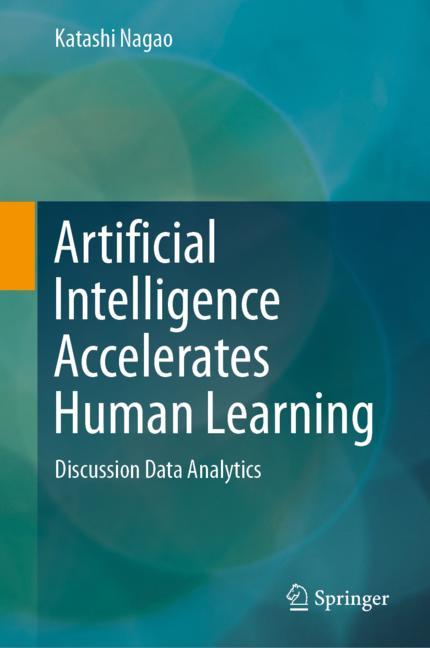
Artificial Intelligence Accelerates Human Learning
☆☆☆☆☆
(0 reviews)
Lowest price (incl. delivery)
20 048,00 JPY
Typical price2 013,57 PLN
Lowest (90 days)117,69 PLN
Offers6
Last updated9 jam yang lalu
Price history (90 days)
Full history
2026-08-08
2026-08-15
| Diperbarui Pada | Harga |
|---|---|
| 2026-08-08 | 117,69 |
| 2026-08-15 | 119,99 |
| Penjual | Product price | Delivery | Total | Ketersediaan | Updated | |
|---|---|---|---|---|---|---|
| SP SpringerNatureLink Shop INT | 20 019,00 JPY | 29,00 JPY | 20 048,00 JPY | Tersedia | 5 jam yang lalu | View offer |
| SP Springer Nature Author | 20 019,00 JPY | 25,00 JPY | 20 044,00 JPY | Tersedia | 6 hari yang lalu | View offer |
| SP SpringerNatureLink Shop INT | 139,99 USD | 15,00 USD | 154,99 USD | Tersedia | 8 jam yang lalu | View offer |
| SP SpringerNatureLink Shop INT | 159,99 USD | free | 159,99 USD | Tersedia | 8 jam yang lalu | View offer |
| SP SpringerNatureLink Shop INT | 159,99 USD | 19,00 USD | 178,99 USD | Tersedia | 8 jam yang lalu | View offer |
| SP SpringerNatureLink Shop INT | 165,50 EUR | 25,00 EUR | 190,50 EUR | Tersedia | 7 jam yang lalu | View offer |
Harga dan ketersediaan dapat berubah. Terakhir Diperbarui: 15.08.2026 04:23.
0,0
☆☆☆☆☆
0 reviews
5★
0%
4★
0%
3★
0%
2★
0%
1★
0%
Product reviews
No reviews yet — be the first!
Focusing on students’ presentations and discussions in laboratory seminars, this book presents case studies on evidence-based education using artificial intelligence (AI) technologies. It proposes a system to help users complete research activities, and a machine-learning method that makes the system suitable for long-term operation by performing data mining for discussions and automatically extracting essential tasks. By illustrating the complete process – proposal, implementation, and operation – of applying machine learning techniques to real-world situations, the book will inspire researchers and professionals to develop innovative new applications for education. The book is divided into six chapters, the first of which provides an overview of AI research and practice in education. In turn, Chapter 2 describes a mechanism for applying data analytics to student discussions and utilizing the results for knowledge creation activities such as research. Based on discussion data analytics, Chapter 3 describes a creative activity support system that effectively utilizes the analytical results of the discussion for subsequent activities. Chapter 4 discusses the incorporation of a gamification method to evaluate and improve discussion skills while maintaining the motivation to participate in the discussion. Chapters 5 and 6 describe an advanced learning environment for honing students’ discussion and presentation skills. Two important systems proposed here are a presentation training system using virtual reality technologies, and an interactive presentation/discussion training system using a humanoid robot. In the former, the virtual space is constructed by measuring the three-dimensional shape of the actual auditorium, presentations are performed in the same way as in the real world, and the AI as audience automatically evaluates the presentation and provides feedback. In the latter, a humanoid robot makes some remarks on and asks questions about students’ presentations, and the students practice responding to it.
Similar products
 50 Years of Philosophy and Medicine
from $107.30
50 Years of Philosophy and Medicine
from $107.30
 Understanding Cybersecurity Law and Digital Privacy
from $122.63
Understanding Cybersecurity Law and Digital Privacy
from $122.63
 Decisions in International Trade and Logistics
from $122.63
Decisions in International Trade and Logistics
from $122.63
 Advances in Economic Measurement
from $122.63
Advances in Economic Measurement
from $122.63
 Nanomaterials
from $137.96
Nanomaterials
from $137.96
 Sustainable Scaffolds-based Strategies in Tissue Engineering and Regenerative Medicine
from $162.87
Sustainable Scaffolds-based Strategies in Tissue Engineering and Regenerative Medicine
from $162.87
 Narratives in Educational Research
from $162.87
Narratives in Educational Research
from $162.87
 Environmental Biology of the Young Chinese Sturgeon
from $210.78
Environmental Biology of the Young Chinese Sturgeon
from $210.78