
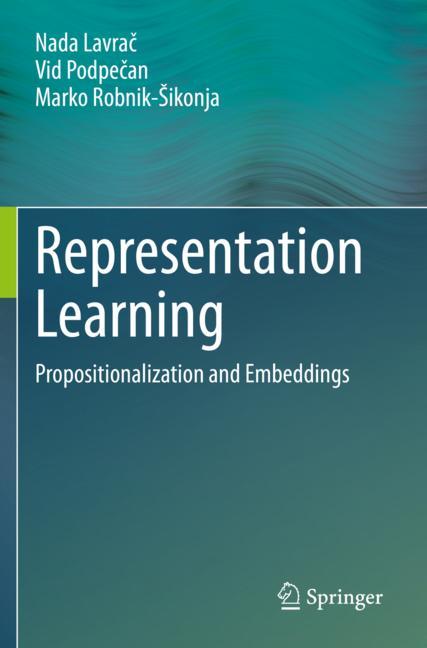
Representation Learning
☆☆☆☆☆
(0 reviews)
Lowest price (incl. delivery)
21 468,00 JPY
Typical price2 939,28 PLN
Lowest (90 days)128,39 PLN
Offers6
Last updated6 दिन पहले
Price history (90 days)
Full history
2026-08-08
2026-08-15
| अपडेट किया गया | कीमत |
|---|---|
| 2026-08-08 | 128,39 |
| 2026-08-15 | 128,39 |
| विक्रेता | Product price | Delivery | कुल | उपलब्धता | Updated | |
|---|---|---|---|---|---|---|
| SP SpringerNatureLink Shop INT | 21 449,00 JPY | 19,00 JPY | 21 468,00 JPY | उपलब्ध | 3 घंटे पहले | View offer |
| SP Springer Nature Author | 21 449,00 JPY | 19,00 JPY | 21 468,00 JPY | उपलब्ध | 6 दिन पहले | View offer |
| SP SpringerNatureLink Shop INT | 149,99 USD | 15,00 USD | 164,99 USD | उपलब्ध | 5 घंटे पहले | View offer |
| SP SpringerNatureLink Shop INT | 169,99 USD | 15,00 USD | 184,99 USD | उपलब्ध | 5 घंटे पहले | View offer |
| SP SpringerNatureLink Shop INT | 169,99 USD | 19,00 USD | 188,99 USD | उपलब्ध | 5 घंटे पहले | View offer |
| SP SpringerNatureLink Shop INT | 177,00 EUR | 15,00 EUR | 192,00 EUR | उपलब्ध | 4 घंटे पहले | View offer |
कीमतें और उपलब्धता बदल सकती हैं। अंतिम अपडेट: 08.08.2026 23:28.
0,0
☆☆☆☆☆
0 reviews
5★
0%
4★
0%
3★
0%
2★
0%
1★
0%
Product reviews
No reviews yet — be the first!
This monograph addresses advances in representation learning, a cutting-edge research area of machine learning. Representation learning refers to modern data transformation techniques that convert data of different modalities and complexity, including texts, graphs, and relations, into compact tabular representations, which effectively capture their semantic properties and relations. The monograph focuses on (i) propositionalization approaches, established in relational learning and inductive logic programming, and (ii) embedding approaches, which have gained popularity with recent advances in deep learning. The authors establish a unifying perspective on representation learning techniques developed in these various areas of modern data science, enabling the reader to understand the common underlying principles and to gain insight using selected examples and sample Python code. The monograph should be of interest to a wide audience, ranging from data scientists, machine learning researchers and students to developers, software engineers and industrial researchers interested in hands-on AI solutions.
Similar products
 50 Years of Philosophy and Medicine
from $107.30
50 Years of Philosophy and Medicine
from $107.30
 Understanding Cybersecurity Law and Digital Privacy
from $122.63
Understanding Cybersecurity Law and Digital Privacy
from $122.63
 Decisions in International Trade and Logistics
from $122.63
Decisions in International Trade and Logistics
from $122.63
 Advances in Economic Measurement
from $122.63
Advances in Economic Measurement
from $122.63
 Nanomaterials
from $137.96
Nanomaterials
from $137.96
 Sustainable Scaffolds-based Strategies in Tissue Engineering and Regenerative Medicine
from $162.87
Sustainable Scaffolds-based Strategies in Tissue Engineering and Regenerative Medicine
from $162.87
 Narratives in Educational Research
from $162.87
Narratives in Educational Research
from $162.87
 Environmental Biology of the Young Chinese Sturgeon
from $210.78
Environmental Biology of the Young Chinese Sturgeon
from $210.78