
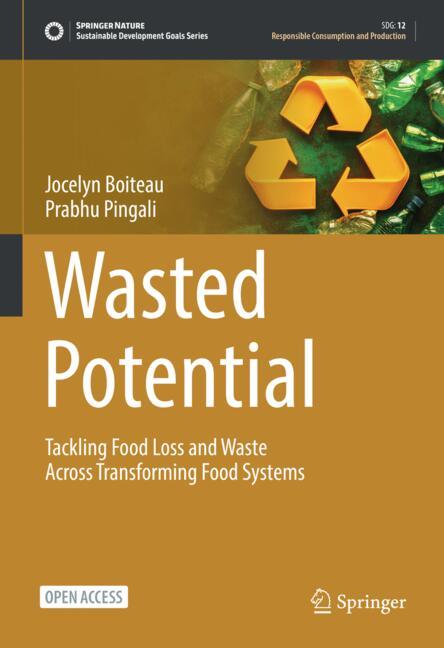
Wasted Potential
☆☆☆☆☆
(0 reviews)
Lowest price (incl. delivery)
44,00 USD
Typical price423,09 PLN
Lowest (90 days)19,00 PLN
Offers9
Last updatedvor 1 Woche
Price history (90 days)
Full history
2026-08-07
2026-08-15
| Aktualisiert am | Preis |
|---|---|
| 2026-08-07 | 19,00 |
| 2026-08-08 | 49,99 |
| 2026-08-14 | 44,99 |
| 2026-08-15 | 51,99 |
| Verkäufer | Product price | Delivery | Gesamt | Verfügbarkeit | Updated | |
|---|---|---|---|---|---|---|
| WO Woot! | 19,00 USD | 25,00 USD | 44,00 USD | Verfügbar | vor 2 Wochen | View offer |
| SP SpringerNatureLink Shop INT | 7 149,00 JPY | 15,00 JPY | 7 164,00 JPY | Verfügbar | vor 6 Tagen | View offer |
| SP Springer Nature Author | 7 149,00 JPY | 25,00 JPY | 7 174,00 JPY | Verfügbar | vor 1 Woche | View offer |
| SP SpringerNatureLink Shop INT | 49,99 USD | free | 49,99 USD | Verfügbar | vor 6 Tagen | View offer |
| SP SpringerNatureLink Shop INT | 49,99 USD | 19,00 USD | 68,99 USD | Verfügbar | vor 6 Tagen | View offer |
| SP SpringerNatureLink Shop INT | 54,99 EUR | free | 54,99 EUR | Verfügbar | vor 6 Tagen | View offer |
| SP SpringerNatureLink Shop INT | 59,99 USD | 15,00 USD | 74,99 USD | Verfügbar | vor 6 Tagen | View offer |
| SP SpringerNatureLink Shop INT | 59,99 USD | free | 59,99 USD | Verfügbar | vor 6 Tagen | View offer |
| SP SpringerNatureLink Shop INT | 59,99 USD | 19,00 USD | 78,99 USD | Verfügbar | vor 6 Tagen | View offer |
Preise und Verfügbarkeit können sich ändern. Zuletzt aktualisiert: 08.08.2026 11:24.
0,0
☆☆☆☆☆
0 reviews
5★
0%
4★
0%
3★
0%
2★
0%
1★
0%
Product reviews
No reviews yet — be the first!
This open access book examines how food systems reforms can support efforts to achieve SDG 12 by reducing food loss and waste in support of sustainable, safe, and nutritious diets in countries at different points of structural transformation. To achieve responsible production and consumption and support safe and nutritious diets, sustainable food system transformations are needed. Strategies to achieve this transformation focus on increasing production and supply of nutrient-rich foods; efficiently moving food along the value chain to make healthy foods accessible; ensuring that quality diets are affordable; and driving demand for healthy diets via informed food choice. By 2030, the United Nations aims to halve food waste and reduce food loss as part of Sustainable Development Goal target 12.3. Preventing food loss and waste, both in terms of food quantity and food quality, aligns with strategies to promote sustainable diets for all. The authors of this volume approach food loss and waste is in three unique important ways. First, while previous literature on the topic has focused on loss at the retail and consumer stages, this volume uses a food systems lens to examine food loss and waste across the entire range of actors and activities, from production to consumption. This enables an examination of feedback loops between food loss and food security as shifts in food systems occur at different stages of structural transformation. Second, while examining food loss and waste globally, the authors focus particularly on low- and middle-income countries. In doing so, they explore entry points for food loss and waste investment and intervention priorities to deliver healthy diets under different food system contexts. This is in contrast with the existing literature, which primarily uses cases from the U.S. and Europe to examine the phenomenon. Third, this book explores both the quantitative and qualitative dimensions of food loss and waste, using the latest evidence of measurement and prevention across disciplines and across all stages of structural transformation. ‘Wasted Potential provides a rigorous and much needed systems perspective on food loss and waste, expertly bridging the gaps between food security, environmental sustainability, and economic development. Boiteau and Pingali offer a clear, actionable roadmap for aligning food system transformation with global development goals. Their comprehensive approach to tackling food loss and waste brings much-needed coherence to a fragmented field and offers practical guidance for future action to policymakers, researchers, and development practitioners.’ – Jessica Fanzo, Professor of Climate and Director of the Food for Humanity Initiative, Columbia Climate School. The support of the Tata-Cornell Institute made this book possible.
Similar products
 FUJIFILM X-S20 (26 MP, 6.2K 30P, FHD 240P 10x Slo mo, AI Processing,IBIS System, VLOG Mode) with Free TG-BT1 Bluetooth Tripod Hand Grip
from $851.68
FUJIFILM X-S20 (26 MP, 6.2K 30P, FHD 240P 10x Slo mo, AI Processing,IBIS System, VLOG Mode) with Free TG-BT1 Bluetooth Tripod Hand Grip
from $851.68
 Samsung QN75QN9DAAFXZA
from $1,479.99
Samsung QN75QN9DAAFXZA
from $1,479.99
 Lenovo ThinkPad T14 Gen 6 21QJ00CRUS 14 Copilot+ PC Notebook - WUXGA - AMD Ryzen AI 5 PRO 340-16 GB - 256 GB SSD - English Keyboard - Gray
from $800.01
Lenovo ThinkPad T14 Gen 6 21QJ00CRUS 14 Copilot+ PC Notebook - WUXGA - AMD Ryzen AI 5 PRO 340-16 GB - 256 GB SSD - English Keyboard - Gray
from $800.01
 Generation Lighting Generation Lighting-Katie-8 Li
from $1,194.05
Generation Lighting Generation Lighting-Katie-8 Li
from $1,194.05
 Samsung QN75LST9TAFXZA
from $4,799.99
Samsung QN75LST9TAFXZA
from $4,799.99
 Apple Apple 2023 MacBook Pro - B Grade
from $1,849.99
Apple Apple 2023 MacBook Pro - B Grade
from $1,849.99
 CyberpowerPC CyberPowerPC Gamer Xtreme Gaming PC
from $849.99
CyberpowerPC CyberPowerPC Gamer Xtreme Gaming PC
from $849.99
 MSI Stealth 14 AI Studio Ultra 7 RTX 4060
from $1,019.99
MSI Stealth 14 AI Studio Ultra 7 RTX 4060
from $1,019.99