
Edge Intelligence
☆☆☆☆☆
(0 reviews)
Lowest price (incl. delivery)
9 309,00 JPY
Typical price988,76 PLN
Lowest (90 days)48,68 PLN
Offers3
Last updatedvor 20 Stunden
| Verkäufer | Product price | Delivery | Gesamt | Verfügbarkeit | Updated | |
|---|---|---|---|---|---|---|
| SP Springer Nature Author | 9 294,00 JPY | 15,00 JPY | 9 309,00 JPY | Verfügbar | vor 9 Stunden | View offer |
| VI VitalSource | 69,54 EUR | free | 69,54 EUR | Verfügbar | vor 1 Tag | View offer |
| SP SpringerNatureLink Shop INT | 71,49 EUR | 25,00 EUR | 96,49 EUR | Verfügbar | vor 20 Stunden | View offer |
Preise und Verfügbarkeit können sich ändern. Zuletzt aktualisiert: 08.08.2026 12:03.
EAN
9783031221545
Springer Nature
0,0
☆☆☆☆☆
0 reviews
5★
0%
4★
0%
3★
0%
2★
0%
1★
0%
Product reviews
No reviews yet — be the first!
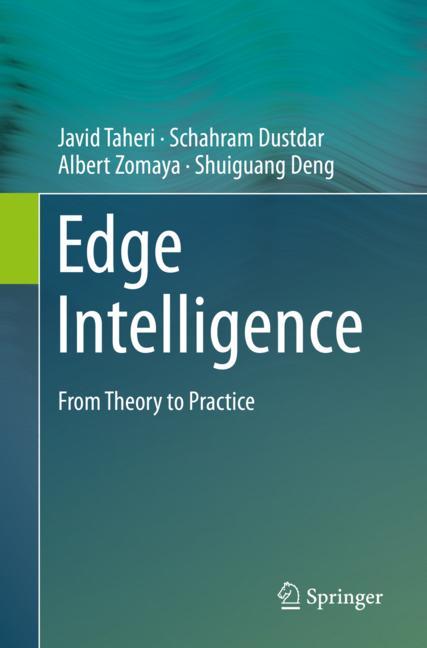
This graduate-level textbook is ideally suited for lecturing the most relevant topics of Edge Computing and its ties to Artificial Intelligence (AI) and Machine Learning (ML) approaches. It starts from basics and gradually advances, step-by-step, to ways AI/ML concepts can help or benefit from Edge Computing platforms. The book is structured into seven chapters; each comes with its own dedicated set of teaching materials (practical skills, demonstration videos, questions, lab assignments, etc.). Chapter 1 opens the book and comprehensively introduces the concept of distributed computing continuum systems that led to the creation of Edge Computing. Chapter 2 motivates the use of container technologies and how they are used to implement programmable edge computing platforms. Chapter 3 introduces ways to employ AI/ML approaches to optimize service lifecycles at the edge. Chapter 4 goes deeper in the use of AI/ML and introduces ways to optimize spreading computational tasks alongedge computing platforms. Chapter 5 introduces AI/ML pipelines to efficiently process generated data on the edge. Chapter 6 introduces ways to implement AI/ML systems on the edge and ways to deal with their training and inferencing procedures considering the limited resources available at the edge-nodes. Chapter 7 motivates the creation of a new orchestrator independent object model to descriptive objects (nodes, applications, etc.) and requirements (SLAs) for underlying edge platforms. To provide hands-on experience to students and step-by-step improve their technical capabilities, seven sets of Tutorials-and-Labs (TaLs) are also designed. Codes and Instructions for each TaL is provided on the book website, and accompanied by videos to facilitate their learning process.